Showing posts with label 4G. Show all posts

20190326

Triple Play, Triple Aggregation

SK Telecom confirmed April 5 as the date of its 5G launch - as soon as Samsung Galaxy S10 5G handsets are delivered (monthly plans expected around KRW55,000 / $49 per month). 

As expected, promoting a 'Social VR' experience well ahead of 5G ("Ready Player oksusu Social VR?") turned out to be a smart move to detect the levels of bandwidth required for an optimal user experience (e.g. 4G LTE too slow for rapid eye / head movements): Korea's leading MNO intends to leverage 5G compression technologies to speed up VR sessions by 30%, and to combine 5G with 4G and wifi where available to allow the download of a 2 Gb movie in only 4 seconds, dubbing the concept 'Triple Aggregation'.

While operators work hard to make the most of their costly pipes, other players parade with seemingly effortless solutions, but will Google Stadia fulfill its category killer potential? Announced at the Game Developers Conference by Sundar Pichai himself, the cloud-based platform and its Stadia Controler would love to piggyback the kind of boosters SKT has in store, but regardless, YouTube and Google Home integration will definitely help.

Apple had to react, but could only display an Apple Arcade that smells like 1980s spirit. Yeah! exclusive games! only on iOS, Mac, Apple TV! to download from your Apple Store! 

Even if that's in a different field, Apple TV+ is also about defending the Apple creative ecosystem. Maybe they will eventually netflixize their game the Alphabet way.

Anyway, Cupertino pulled a much more interesting card with their Apple Card, which should quickly allow them to show us some money.


mot-bile 2019

* see "SKT says 5G network is tested, ready to go"


20180303

Moonshots and Wineyardshots - MWC meets Salon de l'Agriculture

Mobile World Congress 2018 was more about improvements than game-changing innovations.

As announced, LG abandoned the arms race to focus on software upgrades instead of new hardware. Now you can record their ultra-slomo evolution with your Samsung Galaxy S9 (+).

While Sony joins the headjack-free craze (Sony Xperia XZ2), Nokia slides back to Matrix, reviving its iconic banana (8110 via HMD Global).

And by the time Nok-Nok rolls-out a ultra-light 4G network across the Moon with Google and Vodafone, 5G will be all the rage at home.

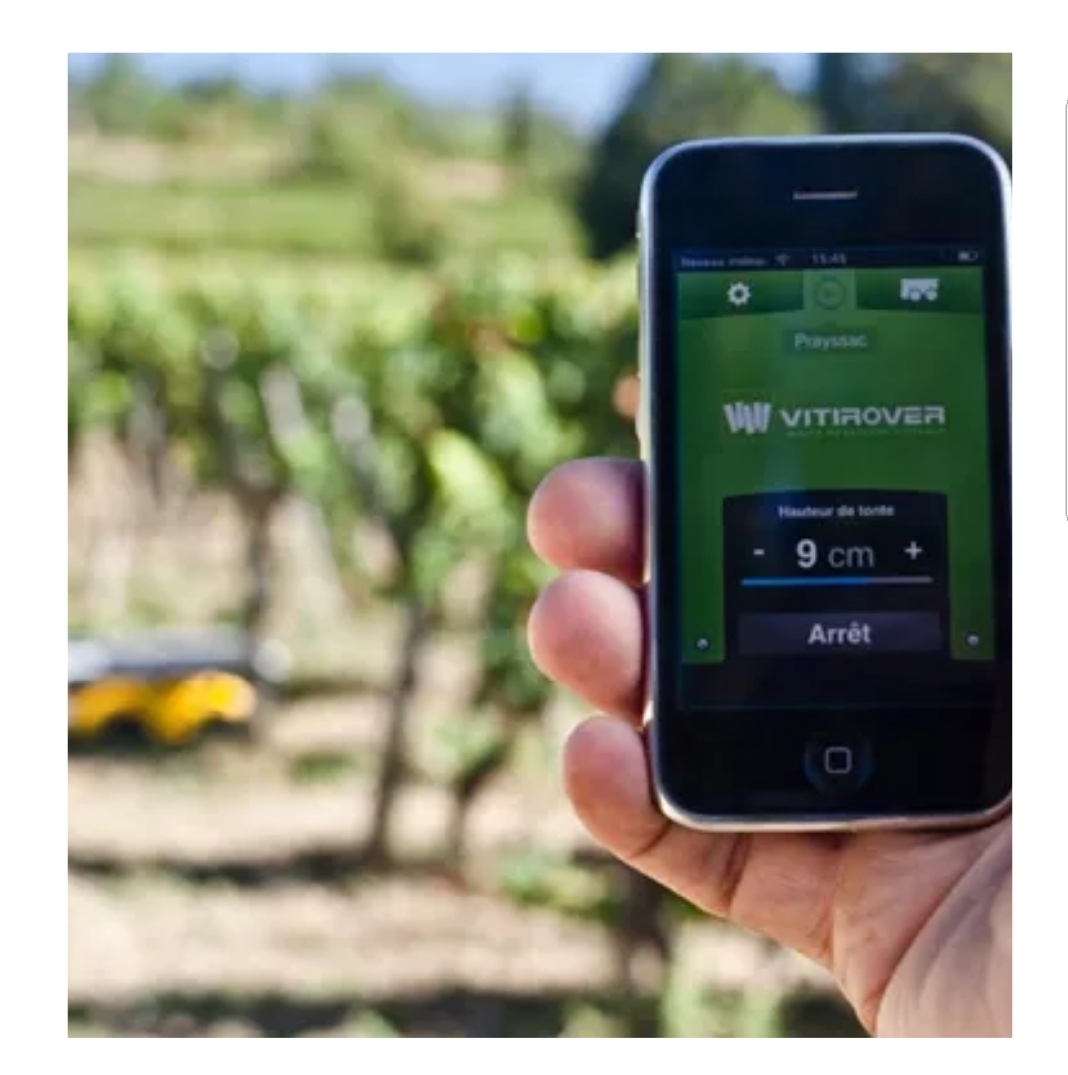
Anyway, why wait for Audi Quattro rovers  to crisscross Earth's spinoff? VitiRover smart lawnmowers already roam French wineyards. This Saint-Emilion-based startup provides autonomous, solar-powered, A.I.-loaded marvels that clean the place without breaking a sweat. Bonus: they can survive - and even reduce - DNA-altering levels of pesticides.


Note that VitiRover's team also includes a human Robot Shepherd. A refreshing retro touch our scary A.I. era.

mot-bile 2018


20150604

Korea's fourth license reload

According to The Korea Herald (May 29), the Korean government is considering reviving the project of a fourth MNO license as part of a plan to stimulate the market.

Is there a need for another 4G network? Korea is well covered with LTE to LTE-A, beefed-up locally through pervasive femtocells and WiFi. And the three incumbents don't want to sit on their laurels: Korea Telecom promised 5G trials for the 2018 Pyeongchang Olympics, and SK Telecom announced a partnership with Google on augmented reality ("T-AR for Project Tango").

Is there a need for more competition? It depends on the profile of the new player, and the impacts on a M-VNO ecosystem that, at long last, is biting into a pie still dominated by SK Telecom, Korea Telecom, and LG U+.

According to the Ministry of Science, ICT and Future Planning (MSIP), M-VNOs were claiming a 8.8% market share as of April 21 (up from 2.9% in June 2012), thanks to prices on average 57% cheaper than the MNOs.


But it's not as if you had one fourth player with a 8.8% market share, big enough to contest the leaders on more profitable segments. Today, Korea has 27 M-VNOs, most struggling to make their first profit, and likely to never see it. Significantly, their number of subscribers started to explode when they targeted more discount-seeking audiences (the youth, Chinese migrant workers...).

A perennial candidate for the 4th spot is actually a consortium of M-VNOs: KMI (Korea Mobile Internet) revived their candidacy in October 2013, and defending the existing M-VNO ecosystem could be a stronger argument today. In December 2011, the Korea Communications Commission not only rejected KMI's bid, but also that of IST (Internet Space Time lost the backing of Hyundai Group at a critical moment). Note that the KCC also canceled the auction for the WiBro spectrum. I explained a few months earlier ("A Kbiz MNO ? SMEs vs Korea Inc") how the attempt by the Korea Federation of Small and Medium Businesses (Kbiz) to enter the market looked more like a lobbying stunt to push WiBro.

A much bigger fish could also seek the fourth license, with more brand power. Typically, CJ Group is already a major player in telecom, IPTV, or multimedia contents. It has the money to invest on new networks (Daum Kakao or Naver would need serious backing), the customer bases to leverage, and the contents to fill the pipes..., but don't bet on price wars with fellow chaebol on the juiciest segments. 
 
A true new entrant from overseas? Global MNOs know how difficult it would be in a country where foreign majors are seldom allowed to take or maintain leading positions (see retail for example: Carrefour and Wal-Mart already gone, Tesco on the back seat). But joining a consortium, or creating one remains a rare opportunity for international platforms to push their solutions in an otherwise locked Korean market. And nowadays, the dominant platforms do not necessarily belong to telecom operators...

Anyway, expect more lobbying ahead of the government's guidelines, expected by the end of June.


mot-bile 2015

* "Consortium to bid for 4th mobile carrier in S. Korea" (Yonhap News - 2013/10/08)


20140213

Tomorrow won't be about Samsung v. Apple any more than the present is about Microsoft v. Nokia

Over the past weeks, Samsung buried the hatchet with Ericsson, before signing cross-license agreements with Google, and then Cisco, days after a similar deal between the last two (note that Google sold Motorola to Lenovo in almost the same breath, but this is not about hardware - Big G keeps the bulk of the patent portfolio).

Samsung and Google concluded in their press release ("Samsung and Google Sign Global Patent License Agreement" - 20140127) that "there is more to gain from cooperating than engaging in unnecessary patent disputes". A clear memo to Apple, and food for thought - and juries - ahead of the next bouts in court between Suwon and Cupertino.


"Samsung and Google are showing the rest of the industry that there is more to gain from cooperating than engaging in unnecessary patent disputes". Follow my eyes...

Again*, I'm not taking sides here. It's just that I'm interested in innovation dynamics, and that I don't like to see lawyers or finance people set the agenda in that field. Such partnerships don't put them out of the equation, but allow innovators to keep their eyes on the ball.

And key players to prepare for what comes next. 5G standardization, for instance, or the still open internet of things, domains where Google and Samsung don't want to become the Microsoft and Nokia of yesterday, leaders who were supposedly the best positioned for convergence and pervasive internet...

Samsung outqualcommed the Americans for 4G but now, the Korean needs to build a common platform with them and what's left of Europe before China Inc or other players try to claim their own time slot.

Tomorrow won't be about Samsung v. Apple any more than the present is about Microsoft v. Nokia

mot-bile 2014

* see "Apple - the end of the affair" or "Omnipatent v. Impatent"


20120723

VoLTE pricing updates

Korean MNOs are still scratching their heads to find the optimal pricing system for Voice over LTE. LTE has been around for a while, but voice is basically using older routes (VoIP, 3G...).

VoLTE is not totally transparent for the user: theoretically, connections will come much quicklier, and sound quality will improve ("HD voice"). Of course, with the boom in smart device usages, the massive transfer of voice to data scares network owners. And the government is adding some pressure to prevent consumers from being charged too dearly (said consumers happen to vote for the next President this December).

One thing is sure: unlimited plans will not be offered as easily, and operators cannot abandon totally the time reference (minutes). More than ever, in-network calling will be promoted.

MNOs met to find common ground in the future, following the disclosure by KT of key elements of their LTE strategy ("HD Mobile Wonderland") and roadmap:
- "HD Voice" trials are under way for KT, with 300 testers and a target TTM of October 2012.
- August 1, 2012: LTE-only rate plans (see below), LTE roaming.
- September 2012: LTE upgrade for ABC Services (Always Best Connected is about seamless 3G and WiFi)
- October 2012: Joyn (HD "Rich Communications Suite") -  HD Games by the end of the year
- November 2012: Olleh TV LTE upgrade from 500Kbps to 2Mbps
- Q3 2013 Multi Carrier LTE starting in Seoul. Quad Antenna


KT's LTE Warp, a service twice faster than standard LTE, already covers 84 cities nationwide, and all KTX lines. The operator aims at 4 million LTE subs by EOY 2012 (1.4 M nowadays), and stopped introducing new 3G smartphones. Note that Samsung Galaxy Note II LTE is also expected for October, and that KT's latest promotions are already preparing the transition, leveraging on the successful launch of Samsung Galaxy III LTE.

The LTE rates introduced in July ranged from KRW 37,400 to 137,500 (USD 37.5 to 119.6):
. LTE-340 (750 MB, 160 mn) adds a discount of KRW 7,700, and if you take the KRW 924,000 Galaxy III for a 24 month engagement, it will cost you KRW 68,200 (USD 59.3)
. LTE-1250 (25 GB, 1250 mn)  adds a discount of KRW 33,000, plus KRW 32,000 for the smartphone, which adds up to KRW 141,667 per month (USD 123.2) over 2 years.
If you replace your phone, KT throws in a lot of free on-network calls to keep you onboard.

The LTE rates starting on August 1 allow data roll over:
. LTE-G650 (KRW 65,000): 6GB, 350 minutes + 3000 minutes in-network
. LTE-G750 (KRW 75,000): 10GB, 450 + 3000 minutes in-network
. LTE-1250 (KRW 125,000): 25GB, 1250 minutes + unlimited in-network (KT wired/wireless)
Now if they could do something about international calls...


mot-bile 2012


20110804

Huawei Vision : a view from the cloud

Huawei Vision runs on Android 2.3 but comes with a 160 Gigabyte spot in the cloud for every owner, positioning the Chinese player at the strategic gateway between that soft spot and its own hardware (scheduled for September in China, along with 4G). Apps agregation starts with the usual suspects : music, images or video that you may not want to transfer forever from laptop to laptop or to XX century storage solutions (ie CDs, DVDs).

Hardly disruptive : Alibaba just launched a similar concept, and of course Apple made a splash with its iCloud earlier this year. But Huawei was supposed to be essentially about hardware.

Sounds like that business model may not be sustainable anymore. Clouds may pass in the sky, replaced with new UFOs, but the truth is starting to sink in : smartphones are not much smarter than computers, and differenciation is getting more and more difficult every year. Worse : product cycles are even shorter and being cool never lasts long.

Food for thought for Samsung, who's been threatened by the Nokia syndrome even before claiming the leadership in handsets. But at least the Finns did venture into new business models. Never forget that OVI preceded Apple's App Store iOs by one year.

Of course, back then, Jorma Ollila was already gone, and Steve Jobs still cool.


mot-bile 2011


20110719

A Kbiz MNO ? SMEs vs Korea Inc

The Korea Federation of Small and Medium Businesses (KFSB or Kbiz) wants to join SK Telecom, Korea Tecom and LG U+ (LG Telecom) as Korea's fourth mobile network operator.

This bid looks like a complete joke : a Kbiz-led consortium of 900 small businesses would invest about KRW 100 bn (USD 94 M) in "4G Wibro". How could it succeed where much stronger players failed and where MVNOs themselves cannot thrive* ?

Kbiz claims 2.7 million SMEs, but I don't see this greenfield player take those demanding customers from the big boys.

WiBro, a WMAN technology competing with WiMax, remains a Koreano-Korean thing with a convenient 4G label. Typically, KT is advertising about their "4G WiBro" coverage as SKT launches its LTE as the "real 4G", but eventually all 3 MNOs will implement LTE. Note that KT is also willing to close its 2G CDMA networks and proposing nice 3G/4G plans to die hard users, some of which have been keeping prehistoric handsets because of unbeatable unlimited rates.

Kbiz needs Samsung to propose WiBro, and that could be the actual aim of the game : not the candidacy to a license, but the PR operation behind the announcement.

Samsung is the ultimate chaebol, the perfect symbol of those almighties who rule over Korean economy and are often blamed for the weakness of the nation's SME ecosystem. Worse : they create their own SMEs to benefit from pro-SME incentives and suck even more value from the market. Even LEE Myung-bak, the CEO president who came from Hyundai Engineering and Construction, is campaigning about a 'fair society' where chaebols would allow small fish to survive.

I don't know if Kbiz will really go all the way, or if Samsung will pretend to play their game for image's sake... but Korean market remains fun to observe.

mot-bile 2011

* see "
Korea : Onse Telecom wants to be a MVNO", "Korea Telecom signs the country's first MVNOs"...


20110420

Apple heart(break)s Samsung

Copycats. That's how Apple sees iPhone / iPad rivals. The main culprit and market share holder with its Galaxy lines, Samsung would have infringed no less than 10 patents, 2 trademarks, and 3 trade dress. As much as it hates suing a good client (Apple devices scream "Samsung Inside" from many angles), Samsung will file a counter-suit for less specific motives.

Nokia, HTC, or Motorola also have two-way legal battles with Cupertino, who also faces lawsuits from H-W Technology, or Robocast.

It's like a poke game : sue me ? suits me: I poke back. Forget hardware, OS, platform, or app wars : lawyer layer's all the rage now, and that's where innovation will come from...

Speaking of upgrades : LTE will be commercialized in July 2011 by SK Telecom and LG U+. Korea Telecom will follow suit (no lawyer needed) the following year : if they haven't decided yet with which infrastructure, they can until then rely on a strong nationwide Wifi presence to absorb the smartphone boom (unlimited wireless data plans include free access to Nespot). LG Telecom is probably eager to switch as quickly as possible to a more universal technology than the CDMA allowed by its own 3G license.

4G in SK ? 3G in NK ! On the other side of the DMC, North Korea's mobile market keeps booming : 430,000 subs EOY 2010, not much for a 24 M strong country, but quite big for a place with so few strong people. Mobility reaches far beyond the first nomenklatura circles : this is the place where not so long ago, only a few priviledged people were allowed to have a radio, locked on official frequencies. Here, suits to be feared are less of the law than of the military kind.

mot-bile 2011


20100825

15 Gigas of fame for metroPCS : Samsung Craft 4G LTE (SCH-R900)

Samsung confirmed today to Yonhap that metroPCS Wireless Inc., a CDMA player, would launch its SCH-R900 4G model (LTE with 3G CDMA) in the US. The gizmo had been announced by metroPCS last March, and approved by the FCC last month (leaks for geeks included).

At the OS level, Android remains a favorite.

At the network level, metroPCS has rolled out LTE on places where people love to show off : Las Vegas and Dallas.

At the pricing level, observers expect a $300 price tag, but even more interesting to see will be how aggressively this MNO, specialized in discount and prepaid, will price data. The Texas-based company operates on major US markets, and claims over 7 million subs.

Verizon Wireless & co won't let it enjoy TTM leadership for too long, and they will roll out more aggressively.

Until then, great opportunity to shine. How about Warholian 15 Gigas, the data equivalent to the 15 minutes of fame ?

mot-bile 2010


20100708

Cisco Cius ? Put it on my Samsung Galaxy Tab

With its Android based Galaxy series, Samsung seems to have packaged a nice alternative to the iPhone / iPad duet. Or is it the whole industry that's growing tired of the Cupertino arrogance ?

Anyway, the Galaxy S is already selling very well in Korea (over 200,000 units within days) and overseas (the top 5 MNOs went for it, 100 worldwide), and NTT DoCoMo already announced the launch of Galaxy Tab in October 2010 (LG's tablet is still expected in Q4).

Meanwhile, Cisco gave a new shot at the business tablet concept : the Cisco Cius is expected H1 2011. Also based on Android, the Cius looks much smaller than the 7 Inch Galaxy Tab, and seems to focus on video calls : "HD video (720p) with Cisco TelePresence solution interoperability for lifelike video communication with the simplicity of a phone call"*... That, of course, is provided you're connected to a big pipe, say Wi-Fi for instance.

Funny how Wi-Fi coverage is getting popular again : MNOs are abandoning flat rates for data... and all hopes that LTE can support the boom in heavy mobile / nomadic usages.

Cisco also throws in EVO 4G, Bluetooth, USB, the last one a sure bet.

But I would rather bet on RIM than Cisco for a hit in business circles, even if the BlackBerry Tablet is supposed to rely on the Blackberry handset for connectivity. Actually, that major drawback for the enduser could prove an excellent argument for CIOs and CFOs.

Nevermind that geeky CEO.


mot-bile 2010

* other applications apabilities (see
Cisco Cius website) :
• 802.11a/b/g/n Wi-Fi, 3G/4G data and Bluetooth 3.0 help employees stay connected on and off-campus
• Virtual desktop client enables highly secure access to cloud-based business applications
• Android operating system, with access Android marketplace applications
• Collaboration applications including Cisco Quad, Cisco Show and Share, WebEx, Presence, and IM
Tablet Highlights:
• 7” diagonal, high-resolution color screen with contact-based touch targets delivers an elegant, intuitive experience
• HD Soundstation supports Bluetooth and USB peripherals, 10/100/1000 wired connectivity and a handset option
• Detachable and serviceable 8-hour battery for a full day of work
• Highly secure remote connections with Cisco AnyConnect Security VPN Client
• HD audio with wideband support (tablet, HD Soundstation)


20100327

Broadband by Google "small dot" com : cloudy, with chances of bitballs

mot-bile 2010 - Over 190,000 individuals and 1,100 communities contributed to Google's request for information about its "experimental fiber network"*.

Of course, the aim of this RFI was to optimize the buzz, to impress the FCC, and to scare competitors : the only thing Big G keeps saying about its "Ultra high speed broadband" project is that it will reach 1 Gbps FTTH (don't expect Google Broadband to be con-TISPated**), and that the "experience" will involve between 50,000 and 500,000 customers (small figures for a boolean search, but half a million sounds like a Warren Beatty kind of testbed).

So instead of a network coverage map, Google delivered this splendid PR map where "each small dot represents a government response, and each large dot represents locations where more than 1,000 residents submitted a nomination" :


And "wherever we decide to build" is up to us guys.

Said guys are in Vegas (along with Google, of course) at the CTIA show, listening to T-mobile about 3G++, Verizon Wireless about LTE, and Sprint about "4G" WiMAX***. All making plans to prevent network overloads courtesy iPhone, Android et al.

Next thing you know your Ma and Pa CLEC / coop telco looks attractive again because Google needs a really rural testbed in Armpit, ND or any other "small dot" on their map to tell the FCC they're not only rolling out fiber in San Mateo or Houston.

Wheather forecasts ? Cloudy, with chances of bitballs.

* "
Next steps for our experimental fiber network" (Official Google Blog 20100326). Note that the number of communities almost doubled between the 3/26/2010 10:00:00 AM post and its 3/26/2010 05:26:00 AM update.
** "
Google TiSP - US Open at Flushing Windows"
*** "
HTC EVO 4G : Sprinting to 4G... or rather 4G WiMAX/3G EV-DO Rev. A"


20100324

HTC EVO 4G : Sprinting to 4G... or rather 4G WiMAX/3G EV-DO Rev. A

Sprint unveiled the HTC EVO 4G at CTIA : "America's first 4G phone" will be "Coming Summer 2010", and offer "3G/4G mobile hotspot capability-extend the power of the Now Network"*.

4G ?!? Don't expect LTE but simply 4G WiMAX combined with 3G EV-DO Rev. A. Yes, WiMAX got the 4G label**, just like DECT was 3G ITUwise.

But this HTC EVO is far from being a dud, dude. It also features :
- from Google : Android 2.1, Android Market (30,000 apps up to now), and among Google mobile services clearly advertised by Sprint : Google Talk and Google Voice.
- from HTC : a 4.3-inch screen ("with unique kickstand for easy media viewing", a connection "to your HDTV so you can watch HD movies" on a bigger screen), HTC Sense UI (with "social networking integration with Facebook, Twitter, Flickr and more"), 1,500 mAh Lithium battery, dual cameras (8 megapixel primary, 1.3 megapixel front-facing), proximity and motion sensors, digital compass, 1 GB ROM, 512 MB RAM
- from Qualcomm : 1 GHz Snapdragon processor
- from the air : Wi-Fi, GPS Navigation, Stereo Bluetooth, FM radio
- for the plug-ins : microSD Card slot, micro USB, 3.5 mm headset jack, HDMI output...
- from Sprint : Now Network, Sprint TV...

Yeah. The operator is not doing much beyond rolling out his 27-market WiMAX network and putting a sticker on the phone. The real PR winners here are HTC, Qualcomm (stuck to its proprietary 3G but associated to "4G"), and even more Google : Android starts outhyping iPhone, and Google mobile VoIP gets a front seat.

Hoping that Sprint's networks and HTC's batteries won't spoil the fun.

mot-bile 2010

* see
now.sprint.com/evo
** as we saw earlier ("
Aloha's long goodbye, Standards Wars Episode 4G and the phantom menace"), the ITU has been kind to WiMAX.


20091216

TeliaSonera 4G LTE, with a little elf from my friends

mot-bile 2009 - TeliaSonera launched commercially 4G LTE in Stockholm (Ericsson network) and Oslo (Huawei network) with a Samsung 4G USB key. Roll out will continue over 2010 : the 4 biggest cities in Norway, the top 25 cities and vacation areas in Sweden.

Of course, handsets are not ready yet, and the MNO makes good use of this technical and PR stunt to draw new partners : "Evaluation of suppliers for TeliaSonera's common 4G core network and radio networks in the Nordic and Baltic countries is in progress and vendors will be selected in the beginning of 2010*"... Too late to save the face of a well known Finnish vendor called Nokia. Sonera comes from Finland and TeliaSonera was awarded a license there last month, but the group is based in Sweden and proceeded with the Chinese champion along with Ericsson.

Of course, TeliaSonera is likely to select buyers as well as vendors. And the likes of France Telecom could also feel the 4G acceleration.

This operation has been smoothly run for months, without overhyping. TeliaSonera even launched ahead of schedule. No big deal. A non-event, almost.

Far from the complex launch of 3G by NTT DoCoMo but then again, technical, commercial, and political challenges were completely different.

And back then, NTT DoCoMo was claiming the world and calling smaller fishes to join his big pond. Here, TeliaSonera is clearly calling a bigger fish : hey Santa, please hire me in your workshop ! look, been a good elf, uh ? I showed you the goods, now show me the money.


* "
TeliaSonera first in the world with 4G services" (20091212)


20090806

IPTV in Korea, an update

Korea Communications Commission (KCC) is now one year old, and IPTV eventually gaining ground.

Korea's 3 IP operators totalled 595,000 IPTV subs at the end of July 2009. They're still dwarfed by cablecos (ie CJ Hello Vision boasts about 800,000 cable TV subs, C&M 700,000), but they gained 26% in one month and 58% over the past two months. And cablecos are feeling the heat as IP players plan to extend the technological wars into new territories.

As we saw earlier*, Korea's 3 IPTV players are also Korea's 3 MNOs. They cannot market VoIP as aggressively as they'd like to, nor propose as wide a choice of TV channels as cablecos, but they keep extending their TV offers, and their triple play offers are claiming new converts.

With 22% of the IPTV market, SK Broadband (SK Telecom) is still lagging behind Qook (KT/KTF, 46%) and LG Dacom (LG Telecom, 32% MS), but it led the small pack with a 35% market share for July and at such a pace, positions could very much change dramatically before the end of the year.

KT intends to remain confortably at the top, and will put more pressure on its competitors by pushing voice over WiBro.

Stuck with cdma2000 for 3G, LG Telecom is speeding up the preparation of LTE (announced for 2013), with the help of its cousin LG Electronics, who will provide NTT DoCoMo with "4G" chips as early as next year for the first LTE devices. LG Telecom can also count on Qualcomm to quicken the transition from cdma2000 to LTE.

In partnership with the National Information Society Agency (NIA), KCC recently announced "Giga Internet" service trials for 2,000 households by the end of 2012. The idea is to lift Korea Inc from the 100M "standard" to 1 Giga all the way across the value chain, with new networks, new devices, and new IPTV services (3D, multi-angle, HD Home CCTV, TV multimedia messenger...). One consortium will be led by KT (the leading "telco") and the other by CJ Hello Vision (the leading "cableco").

Concentration seems bound to accelerate. Most Korea Cable Television and Telecommunications Association (KCTA) operators are not fitted for this kind of race, and some players may be up for grabs for powerful new entrants : controversial new media laws allow press groups and conglomerates to invest in broadcasting, and not all of them may be satisfied with a partner's seat.

mot-bile 2009

* see "
One stop selling", "IPTV wars and WiBro truce", "IPTV in Korea"


20090204

License IV

France went for a hybrid or double-stage solution to their 3G dilemma : since no 4th operator could enter the market without a ticket discount for all players (see "3G license part III - France's fourth wedding or a funeral ?"), the Government and NRA ARCEP decided to split the remaining spectrum.

The potential new entrant will get 5 MHz of 2.1 GHz + 5 MHz of 900 MHz (call for tender expected by EOY 2009), and lawmakers will discuss about what to do of the last 10 MHz of 2.1 GHz, probably putting back incumbents in the loop (friendly auction ?), and about how much this license will cost. I guess a little bit more than the EUR 10,000 a year needed for a Licence IV, which allows bars to sell alcohol without dishes (I mean dishes for food, not for satellite access).

The almost concomitant consultation about 4G allows incumbents to fry some fish or remain one step ahead. Analogic TV spectrum (the 2.6 GHz and 790-862 MHz bands favored by LTE) will be freed in November 2011.

An ambitious new entrant should position itself on both 3G and 4G, as well as on the fixed broadband last mile, where ARCEP is carefully monitoring the development of FTTH / FTTO : trials are under way (until March 31st), and a precise regulatory framework will be published before this summer.

Without a claim by Iliad/Free, the Regulator wouldn't have reserved 3M numbers starting with 06 for the new entrant, who would then have mostly to rely on 07 numbers, soon to be devoted to the same purpose.

Strong of more than 4M subscribers and on the way to 5M by EOY 2011, Iliad-Free remains the front runner and main lobbyist for the 4th license. The company already brought major disruptions to the French market, starting with their ISP business model as none Networks, and most dramatically by introducing the successful home "box" concept, now implemented by all incumbents (Orange Livebox, SFR Box, Bouygues Bbox). In an agressive lobbying campaign, Free announced 1,000 euros savings per year per household with 3 mobile subscriptions. With brand new pipes to fill, unlimited offers seem likely.

But it may take a new and wealthy partner (not a commodity nowadays) to build the said pipes : optic fibers were already a major challenge on the fixed access with a EUR 1bn CAPEX planned by 2012, but covering a country as geographically challenging as France with a 3G network is quite another.

That, or another disruptive "none Networks" model... not to mention "other networks" : Free already holds the only national WiMAX license*.


Or "another player", or course. Foreign (ie Orascom and the usual suspect...), national (some day, Carlyle will have to monetize Numericable's 4M subs), or more probably a combo of the two. But the deepest pockets could hesitate between player #4 and player #3, should Martin Bouygues seize the opportunity of this reshuffle to sell its mobile arm.

Yet another scenario ? No one goes for the network. Incumbents won't accept too cheap a price tag nor too loose coverage obligations for the new entrant... even if Bouygues Telecom was not precisely crushed for being behind schedule.

---
addendum 20090205

The price tag is eventually EUR 206M per 5MHz, similar to the 619M paid by each incumbent for their 15MHz load. Free may only take 5MHz, but the Government reminded the audience the existence of coverage obligations, insisting on a contribution for rural areas...


20080311

Mobile TV for WIMAX, lingo-free

What's in a name... From IPWireless to NextWave Wireless* and from TDtv to MXtv, the TDD champion abandons the techno lingo for a vocabulary fitter for this meshy / cloudy / blurred world.

Let's forget about the recent controversy about WiMAX, TDD (now), and FDD (soon according to Bill Gateses, someday according to Steve Jobses, maybe according to Arun Sarins, never according to WiMAX haters) ; let's forget about that fabled path towards 4G**: this is about next gen "waves", about giving you the "MAX", about TV on the go.

If you enjoy techno lingo and old style hardware, you can also try Huawei's E510 HSUPA datacard. If your device still has the slot for it next June the 5th.


** see "3G & 4G - WiMAX flirts with ITU" (20070303)


20071029

Aloha's long goodbye, Standards Wars Episode 4G and the phantom menace

Here's AT&T's farewell gift for Aloha Partner, a phantom company full of spectrum, meant from the start* as an empty shell for sale : $2.5bn.

Here's the ITU's gift for WiMAX promoters : OFDMA / 802.16 joins FDMA, TDMA and CDMA in the IMT-2000 3G family just on time for the IMT-advanced kick-off. The 3GSM crew already knew this promising rival would be casted for Standards Wars Episode 4G, but this means intel & Co are here to stay beyond a phantom menace.

Here's 3's gift for Qualcomm : the Skypephone uses the Brew platform. San Diego joins Cupertino in the hype zone. Up North, Redmond is just starting to scratch the surface - a third Halo and a phantomatic 1.6% of Facebook**.


* see "
Hiwire - Aloha Partners, Goodbye Stranger" (20060502)
** see "Microsoft outpervasived by Facebook and RIM" (20071025)


20060901

TD-SCDMA in Korea

A few years ago, Korea felt proud to be, along with Japan, the only Asian country without any Chinese minority. That became a handicap after 1992 and the Chinese boom, so Incheon and Busan built from scratch actuals Chinatowns within their city limits in order to lure their precious neighbors.
These days, from a technological point of view, Seoul tends to play Beijing over Washington : the Government makes Microsoft and Qualcomm suffer and doesn't hesitate to risk its own jewels (CDMA2000 lead, KTX bullet trains) in order to please the Empire. The result can look weird : Seoul invested a lot to destroy an ugly overpass and restore the Cheonggyecheon, urban planners are wondering how they will get rid of existing overway / subway lines (ie Nowon - Sanggye)... but the city decided nonetheless to build an overway Maglev line in Gangnam only because it could help the country get juicy contracts in China.
So no one should be surprised when Korea's leading cellco announces test TD-SCDMA base stations in Seoul for next year. SK Telecom just signed a MOU with China's NDRC (National Development and Reform Commission) to jointly develop 3G, 4G and beyond the Chinese way, along with all their Korea, Inc partners (hardware, software, middleware, content...). Qualcomm is going to love this.


PS / Quizz : "The Host" (Gaemul), Bong Joon-ho's last flick, is breaking all the local box office records... can you tell which radiation will create the next 802.1x pound Han river monster : cdma, cdma2000, EV-DO, W-CDMA, HSDPA, WiFi, WiBro, TD-SCDMA, all of the above, none of the above ?


20060711

Long Term Evolution and short term profits

NTT DoCoMo keep pushing LTE, 3GPP's new label for Super3G (beyond HSDPA and HSUPA - the last step before 4G), and sets an aggressive calendar : specs completed by the end of next year, TTM by the year of 2009.
Not far from DoCoMo's home turf, both KTF and SKT launched HSDPA and WiBro. The former techno is meant to become nationwide and the latter devoted to dense urban areas only... which means pretty much the same both sides of the Han river. But for the moment, WiBro is only a laptop thing (over 300 bucks per PC card plus a 30 per month plan). Since the Korean netiquette prevents people from using their handsets in the subway (definitely a change for the better for passengers), I'm not so sure everyone will connect everywhere that soon. I'd bet a few more bucks on mini mobile TV players for short sessions.
At home, even HSDPA cannot beat FTTH in the appateu areas.
Did you know Korea still represented 37% of all license fees collected by Qualcomm last year ? No wonder their armies of lobbyists keep redeeming their Morning Calm miles to and from Incheon these days. Microsoft also remain under the Korean regulator's fire as well but still have more to lose in Europe, where Viviane Reding could furthermore help broadband multiservice providers catch up financially with MNOs (international roaming charges definitely cannot remain that high that long).


20060228

DoCoMo 4G The Wizard of Hz - Orange Landline Landmines - BT's FRED for free - Swisscom's 5in1 for 99

Bubbles start popping again. Vodafone concede their assets were overevaluated, Florentino Perez concedes the wealthiest club on earth may not the healthiest, and BT concede their disruptive "broadband dialtone" concept won't be free.
Following an interview in "Mail on Sunday", some believed BT would invest big sums in their 21st Century Network (21CN), plus £12M just for VoIP, just to offer broadband to anyone who wants to plug in. Make that "unlimited" instead of "free". Cardiff will go live by the end of the year and the rest of the 21CN (some 30 countries) in 2008, one year ahead of schedule. The aim of the game is for people to meet with FRED (BT's Fantastically Really Easy to use Device concept). Just like in your mid-90s slides, FRED sells convergence, optimized consumer experience, or seamless multidevice environments.
The difference is FRED does sell : BT Movio (to Virgin Mobile), BT Fusion handsets (BT Broadband at home, your MNO on the go - 13,000 units sold to date), BT Equinox (fixed-line SMS), internet radio (PC based and soon an enhanced TV based version with teleshopping, televoting and telewhatevering thanks to a new red button)... FRED will even launch - this spring - the already cult Bluephone (see "
Bluephone : a 2,005 pound gorilla or a GNOME ?" 20050316).

Another former PTT keeps talking convergence and furthermore, acting accordingly. Swisscom's HSDPA coverage will reach 20% of the population mid-2006 and about 40% by the end of the year. That's the equivalent of Switzerland's main cities : it will cover more surface on the industry's newspapers than on the local maps but far enough for the operator's new devices to make sense. Less glamour than FRED, but truly "ready to use" : there is a Swisscom Unlimited PC Card 5in1 (GPRS, EDGE, UMTS, HSDPA and WLAN) with a CHFR 99 / month plan, but also an Unlimited Laptops solution developped with Fujitsu Siemens and Acer (embedded SIM, one touch connection, various plans including a CHFR 5 / hour concept, TTM June 2006).

Orange are a former PTT too, through France Telecom's DNA. As expected, they now claim to be "an integrated communications provider" and intend to become "the total communications provider". Orange Landline for Business means fixed line service for SMEs with one stop shopping and billing, simplified supply chain and service support models, convergent packages and bundles, discounted rates between Orange fixed and Orange mobile number ranges or to 'Business Circle' numbers (top 10 landline contacts), Orange Business customer service with a Landline Performance Promise...
But Orange Landline for Business also means Orange Landmine for Partners : the F/MNO controls the whole chain and intends to lock the customer's entry points as fully as it does in France.


How about the mother of all PTTs ? NTT DoCoMo have been talking 4G even before releasing 3G. We knew from the start they meant business because of their capacity problems : even HSDPA / HSUPA cannot solve them and DoC is bound to lead once more in commercial TTM. From time to time, the Alchemist skillfully displays a few glimpses of his witchcraft : "by increasing the number of MIMO transmission antennas from four to six and by using 64-QAM (NB : Quadrature Amplitude Modulation), data volume per transmission was increased from four bits to six bits. As a result, DoCoMo achieved a maximum speed of 2.5Gbps, which is faster than the International Telecommunication Union Radiocommunication Sector (ITU-R)'s proposed standard". The Wizard of Hz also pushed frequency spectrum efficiency to 25 bps per Hertz, the limit as defined by WINNER (the EU's Wireless world INitiative NEw Radio). In other words : I've been working on 4G on my own according to the rules and the guidelines of standardization bodies, but I've already beaten their expectations. So you'd better follow me if you want to go further and quicklier.
Technology's always been the MNO's main hobby, but they have some 50 million consumers to please and a few technologies to sell before they get obsolete (i-mode, V-Live, i-motion, FOMA...). So the DoCoMo - Nippon Television Network Corporation JV (each partner injecting 5 bn Yens) will start on April 3 under the D.N. dream partners LLP name. What's in a name... the Master Of DYI finally understanding what kind of partnerships he really needs to succeed ?


Copyright Stephane MOT 2003-2025 HOME - Today's wireless headlines - Korea wireless news - all posts (full list) - useful links - stephanemot.com (personal portal)
my books : "dragedies" - "La Ligue des Oublies"
my other sites : blogules - blogules (VF) - Seoul Village - footlog - Citizen Came - Copyright Stephane MOT 2003-2022