Showing posts with label 5G. Show all posts

20201210

Europe's Semiconductor Relief Fund

European Commissioner for Internal Market Thierry Breton announced a joint declaration from 17 EU members on "A European Initiative on Processors and semiconductor technologies 'to strengthen Europe’s capabilities to design and eventually fabricate the next generation of trusted, low-power processors'. 

Why now? 

In spite of the pandemic, the global market is expected to grow by 5.1% in 2020 (+8.4% next year*), but thanks to Asia Pacific and the Americas, who are clearly driving it. NXP (Netherlands-USA) and Infineon (Germany) are no match for the big guns from the States or South Korea, and Europe's biggest player, STMicroelectronics, doesn't even belong to the EU (Switzerland). 6G looms on the horizon, and China is all the more ambitious that solutions are urgently needed for Huawei and ZTE, even after Trump leaves the White House. 

Semiconductor supply is critical for global competitivity, and the joint declaration stresses some of its strengths and weaknesses:

"Today Europe has notable strengths in specific areas of the semiconductor industry, such as power electronics, RF technologies, smart sensors for embedded AI, microcontrollers, low-power technologies, secure components and semiconductor manufacturing equipment. European chipmakers enjoy a strong global presence in vertical markets such as embedded systems for automotive and industrial manufacturing. Europe also has a strong technological position in mobile networks including current 5G and emerging 6G technologies. However, Europe’s share of the 440 B€ global semiconductor market is around 10%, well below its economic standing. Europe is increasingly dependent on chips produced in other regions of the world - notably those used for electronic communications, data-processing and compute tasks, including processors."

So it looks more than a defensive move than clear and immediate danger for Samsung and Co. The memo clearly identifies an opportunity: 'some of the $145bn 20% of the European Recovery and Resilience plans should go to digital transition; this is up to 145B€ over the next 2 to 3 years.'

The local ecosystem obviously lobbied efficiently to get 17 members on board at a significant moment. And they found a powerful voice in Thierry Breton, a former Mr Turnaround for Bull, France Telecom, Thomson, and Atos,

Will it be enough? It certainly won't hurt.


mot-bile 2020

* $ 433 bn in total for 2020 ('WSTS Semiconductor Market Forecast Autumn 2020', a recent report by World Semiconductor Trade Statistics)


20190422

5G Korea, Huawei inside

According to Pulse and other media*, Huawei will open next month its first 5G Open Lab in the world in Seoul.

Of course, earlier this month, Korea became the first country in the world to launch 5G commercially (even if for enterprise customers only at the beginning). Korea Inc precipitated the launch just to achieve that premiere, SK Telecom, KT, and LG U+ literally beating Verizon on the eleventh hour.

If local MNOs don't communicate much on their 5G network suppliers, Huawei already holds significant positions in Korea, as a recent Asan Institute focus** noticed:
- LG U+'s 4G network in Seoul, Northern Gyeonggi-do, Incheon, and Gangwon-do, in other words its most strategic areas (capital region, and all borders with North Korea)
- parts of Naver's new Internet Data Center
- KT's network upgrade for NonHyeop Bank, a big 4 player

Korea Inc does communicate on a key 5G supplier, Samsung, who clearly won the first round at the smartphone level with its Galaxy S10 5G.

Another of their groundbreaking handsets, the Galaxy Fold, received mixed reviews from the few journalists who were granted one ahead of the official launch, but the manufacturer did warn them that they shouldn't have pulled out the plastic protection away from the delicate screen.


Interesting to see what happens when the veil is lifted about Huawei's presence in the country.


mot-bile 2019

* "Huawei to open its world’s first 5G open lab in Seoul in May" (Pulse 20190422)
** "Opportunities and Challenges for South Korea in the New Era of 5G" (J. James KIM, HONG Sanghwa - Asan Institute 20190321)


20190326

Triple Play, Triple Aggregation

SK Telecom confirmed April 5 as the date of its 5G launch - as soon as Samsung Galaxy S10 5G handsets are delivered (monthly plans expected around KRW55,000 / $49 per month). 

As expected, promoting a 'Social VR' experience well ahead of 5G ("Ready Player oksusu Social VR?") turned out to be a smart move to detect the levels of bandwidth required for an optimal user experience (e.g. 4G LTE too slow for rapid eye / head movements): Korea's leading MNO intends to leverage 5G compression technologies to speed up VR sessions by 30%, and to combine 5G with 4G and wifi where available to allow the download of a 2 Gb movie in only 4 seconds, dubbing the concept 'Triple Aggregation'.

While operators work hard to make the most of their costly pipes, other players parade with seemingly effortless solutions, but will Google Stadia fulfill its category killer potential? Announced at the Game Developers Conference by Sundar Pichai himself, the cloud-based platform and its Stadia Controler would love to piggyback the kind of boosters SKT has in store, but regardless, YouTube and Google Home integration will definitely help.

Apple had to react, but could only display an Apple Arcade that smells like 1980s spirit. Yeah! exclusive games! only on iOS, Mac, Apple TV! to download from your Apple Store! 

Even if that's in a different field, Apple TV+ is also about defending the Apple creative ecosystem. Maybe they will eventually netflixize their game the Alphabet way.

Anyway, Cupertino pulled a much more interesting card with their Apple Card, which should quickly allow them to show us some money.


mot-bile 2019

* see "SKT says 5G network is tested, ready to go"


20190109

CES 2019 Who'll Pay For The Wall? And Y-brush?

At last, The Wall is up, but a bit too far from the border with Mexico: Samsung is exhibiting in Vegas the most titanic version of its monster, a whopping 219-inch, 4K microLED TV. At that level, you should measure your screens in feet (18), or yards (6), or simply dump these obsolete standards altogether (5.5 m). This wall will cost you much less than $5.6bn, and will much more easily fit your living room once it's curved. Like LG's rollable screen, which returned to CES but this time for sale, under the group's premium brand for home appliances, as LG Signature OLED TV R.

In the weird vehicles section, BMW proposes a driverless motorbike, Hyundai a walking car (Elevate), and Bell a flying car (Nexus Air Taxi) so huge, that it takes as much space as 4 cars, and probably burns more fuel than 10 - prepare to be Uber-charged for a ride on that one.

Otherwise, IBM is back to mainframe computers: it takes a 2.7 m x 2.7 m frame to host its IBM Q System One quantum computer. It only takes two of these to climb The Wall, if not to reduce it to quantum bits.

Meanwhile, the French decided not to punch below the belt, like last year (see "CES 2019 - Driverlessly nuts"), but straight at the jaw: Lyon-based FasTeesh claims its Y-brush can clean your teeth in 10 seconds.


You just have to keep a low profile for two times 5 seconds, as you chew on the thing:.


That said, this concept is also smartly proposed in a BtoB version targeting medical or retirement institutions. That's a real game changer for caretakers.

What else? Ah, yes, after all, there seem to be still some latency with 5G.

mot-bile 2019


20180620

IoT as in the 'Internet of Turds'?

If LG U+ got, as expected, the smaller chunk of 5G spectrum in this week's auctions, they sure made a splash with their connected bidet-toilets. 
 
* 
 
Let's start with these 5G auctions, where Korea raised 3.6183 trillion won from the 3 bidders, not even 10% more than the starting point of KRW 3.3 tn; just enough to show an illusion of fight. All 3 MNOs claimed 800MHz in the 2.8GHz spectrum, and in the 3.5GHz spectrum, #3 LG U+ got 80MHz compared to 100 for #1 SK Telecom and #2 Korea Telecom. 
 
Note that SKT just announced successful tests with Nokia on 3GPP-approved 5G SA (StandAlone), a national first following last December's world first on 5G NSA (Non-StandAlone). You can expect SKT and KT to launch on December 1st (the date the regulator set to allow service) to continue their battle over 5G leadership. They'll probably start on 3.5GHz, at least in the capital Seoul, and key entry points such as Incheon. 
 
* 
 
Now about that bidet-toilet thing. 
 
You first have to understand that many people in East Asia already enjoy electronic systems, complete with water noozles and seat warmers. Here, LG U+ teams up with Inus Bath to add connectivity to the Novita model:

 
This most essential innovation brings IoT to new territories (the 'Internet of Turds'?). From your smartphone, you can pre-warm your seats, or post-flush in case you forgot to do it. Each member of the family can instantly enjoy their preferred water temperature, pressure, or nozzle position, and you will receive alerts if you stay too long, because no one should be above the loo eternally. 
 
Mercifully, no cameras are connected so far, but in this over-connected country where last week, 20,000 victims of peeping toms demonstrated on the street, there were already cases of perverts installing spycams in public rest rooms...
 
In any case, paranoids should worry: LG U+ announced that A.I. will john later. Not Amazon's Echo (who wants more echo in this room, or Alexa sending your personal records by email?), but Naver's Clova: when it's (paper) rolled out, you can voice control this new sentient environment.
 
* 
 
The good thing with not being the highest bidder in an auction is that you're flush with enough money to become the highest bidet. 
 
Will LG U+ rivals enter this fascinating Game of Thrones? 

mot-bile 2018


20180511

Once GPON a time in the East

SK Telecom announced their 2.5 Gbps service over GPON (Gigabit-capable Passive Optical Network), 5 Gbps and 10 Gbps packages by EOY 2018.

SK Broadband already covers 40% of Korea, and targets 80% by 2020. Showcased in Pyeongchang* and at the recent Inter Korean Summit by KT, 5G shall be launched partly in March 2019 (3.5GHz and 28GHz auctioned), and nationwide in 2022. 

Don't worry about filling the pipes in a country that demands everyday faster services. The traditional mecca of extreme online gaming (MMORPG and esports) is getting addicted to blockchain and bandwidth-hungry services (MelOn HD, Amazon Prime...). If IPTV remains less popular than in France, subscriber bases keep catching up. SKT's broadband and mobile units now claim respectively 4.46M and 8.88M 'Monthly Active Users' (a 25.5% gain YOY for the latter, branded Oksusu).

SKT maintains its leadership over KT for another demanding service, A.I. assistants**: NUGU reached 3M users Q1 2018 (+9.6% YOY - 5M expected EOY), GiGa Genie 'only' 710k. And they are bound to leverage this key entry point in Korean households after the acquisitions of quantum sensing leader ID Quantique ('quantum-safe cryptography' from Switzerland), and the nation's second security service provider ADT Caps.

3M subs for NUGU, SK Telecom's A.I. assistant (presented here by plastic surgery - enhanced artificial assistants)

Anyway, SKT and KT are compelled to boost new streams of revenues: both posted small decreases in revenues following the switch to new accounting norms, and the sword of Damocles that has been threatening to strike them for 7 years might just do that: the Supreme Court confirmed that MNOs can't postpone anymore the slashing of their outrageously expensive plans.

mot-bile 2018

* see "South Cow-rea already cow-nected to 5G". Note that 77.9% of KT subscribers are already on LTE.
** according to them, people using simultaneously smartphones, fixed internet, and A.I. assistants at home will still enjoy more than 800 Mbps over GPON.


20180303

Moonshots and Wineyardshots - MWC meets Salon de l'Agriculture

Mobile World Congress 2018 was more about improvements than game-changing innovations.

As announced, LG abandoned the arms race to focus on software upgrades instead of new hardware. Now you can record their ultra-slomo evolution with your Samsung Galaxy S9 (+).

While Sony joins the headjack-free craze (Sony Xperia XZ2), Nokia slides back to Matrix, reviving its iconic banana (8110 via HMD Global).

And by the time Nok-Nok rolls-out a ultra-light 4G network across the Moon with Google and Vodafone, 5G will be all the rage at home.

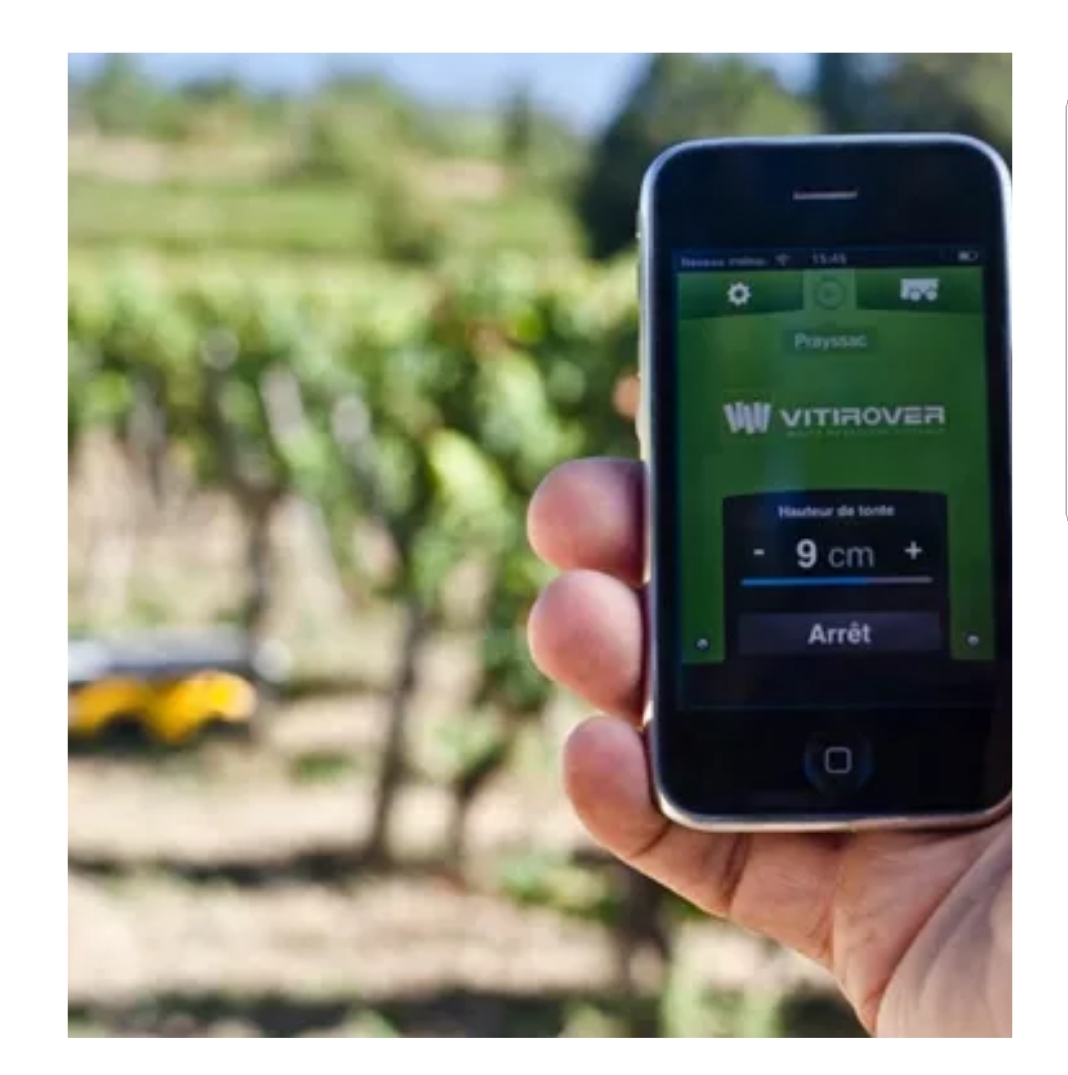
Anyway, why wait for Audi Quattro rovers  to crisscross Earth's spinoff? VitiRover smart lawnmowers already roam French wineyards. This Saint-Emilion-based startup provides autonomous, solar-powered, A.I.-loaded marvels that clean the place without breaking a sweat. Bonus: they can survive - and even reduce - DNA-altering levels of pesticides.


Note that VitiRover's team also includes a human Robot Shepherd. A refreshing retro touch our scary A.I. era.

mot-bile 2018


20171122

South Cow-rea already cow-nected to 5G

Lazy MNOs usually settle for milking the cow, but SK Telecom is neither lazy, not your usual MNO. And in its latest presentation, the Korean leader suggested to IoT-ize the cow in order to generate new applications and revenues:

LiveCare: "oral implant of bio capsule in cow, extract real-time information through LoRa, provide analysis through Web/app, alert and message to farmer" - that was Korea's version of the classic 'you have two cows' parable.
Of course, LiveCare was only a niche app illustrating the way the MNO intends to leverage its core techno and infra (network, A.I., cloud, data) to boost new business (e.g. IoT, commerce, media).  

A couple of days ago, BT CEO Gavin Patterson called all players to 'build a strong business case for 5G', and measuring bovine farts doesn't exactly sound like the next killer app... unless you replace cows with humans, and alerts with A.I.-picked medical or culinary recommandations customized for your microbiome (expect more A.I. news from SKT, already present with NUGU or Aibril - the latter with IBM Watson -, and recently joined by Hyundai Motor Company, Hanwha Asset Management, and the Canadian Element AI in a USD 45M fund to invest in A.I. and smart mobility).


SK Telecom is already 'building a strong case for 5G', particularly with its rival KT about to showcase its own flavor during the Pyeongchang 2018 olympics. And SKT are not just into testing earlier than others (e.g. recently 4G LTE-5G internetworking, or VR 360 over 5G with Samsung tablet-size device), or even into going commercial earlier than others, but also into building a stronger 5G standard (e.g. recently pushed for 200 Gbps packet swiching), and a stronger technological environment around 5G (e.g. recently 4.8 Gbps WiFi with 802.11ax in Bundang, or 5G-PON / Passive Optical Network distribution).


'Building a strong business case for 5G' will be more fun for marketers. Even if it starts, as usual, like with 3G or 4G, with existing services that will saturate the previous generation anyway, like HD video these days, a booming category if we ever saw one. 

'Building a strong business case for 5G' will also demand a touch of emotion, so I'll finish this focus on SK with their latest ad for 5G. It features an endangered species, Jeju-do's haenyeo (female diver):


mot-bile 2017


20160813

The Special G Diet Plan

Mercury News reported that Google paused the roll out of its Google Fiber network across the Silicon Valley, and considered wireless (mmWave) instead of fixed (FTTP) for building connections. Big G purchased last June* Webpass, an ISP operating in 5 markets including the Bay area, and proposing both fiber and point-to-point wireless broadband solutions.

 
Google can use unlicensed spectrum and get a significant base to test broadband services, particularly for companies. These small, captive cells could become interesting entry points for 5G, without waiting for WAN technos to emerge. 

Will Google Fiber have to rebrand itself? Well you always need some for the backbone. And since Alphabet is also into medical fields, they already know that one fibers can't be digested, and two fibers can facilitate digestion.

Webpass won't be the last one to be wolfed down.

mot-bile 2016


* " Google Fiber agrees to acquire Webpass" (Webpass - June 22nd, 2016)


20160418

Networks: the TIP of Facebook's iceberg

Earlier this year, Facebook gave us a TIP (Telecom Infra Project*) about what could come next for them at the infrastructure level. Most members of the project, starting with Intel, Nokia, SK Telecom, Deutsche Telekom, are also on board of Facebook's much wider Open Compute Project, which also claims top coopetitor Google.

Naturally, Menlo Park wants a front seat for next gen network premieres - typically, early bird SKT is expected to be the first on 5G. But recent announcements*** at the F8 days confirm that the company intends to reach deeper into the value chain to secure and strenghten its leadership, particularly where innovation in network performance can prevent bottlenecks in these pervasive big data / heavy content times.

Terragraph (WiGig WiFi on 60 GHz) proposes ultra efficient W-LAN coverage for dense urban areas. You only need a station every 200 to 250 m. Of course it doesn't provide seamless handover, but a 200 m radius allows you more mobility than your typical hotspot.


Project ARIES (Antenna Radio Integration for Efficiency in Spectrum - MIMO) is more into W-WAN for rural areas. It combines 96 antennas to manage 24 simultaneous data streams, and aims at over 100 bps / Hz compared to 71 in early trials.


Here too, for a fraction of the price of a standard infra...
 
Could Facebook become a non-2-to-5G MNO, or a player in the game of standards? Not so fast. But an even more competitive value aggregator, certainly.

mot-bile 2016

* telecominfraproject.com
** opencompute.org 
*** "Introducing Facebook's new terrestrial connectivity systems — Terragraph and Project ARIES" (Facebook 20160414) 


20151130

Do Seamless 5G Communications Start With Flawless 5G PR?

Last March, NTT DoCoMo, KT, and China Mobile announced technical collaboration on 5G, each one with an Olympic event in mind: Pyeongchang 2018 for Korea, Tokyo 2020 for Japan, Beijing 2022 for China.

China Mobile, who started 5G development 5 years after DoCoMo, is clearly the laggard here. But by its sole presence, the World's biggest operator already brings considerable leverage for the standardization as well as for the ramp up phases, securing the full involvement of an ever progressing Huawei*.

NTT DoCoMo just presented at the Yokosuka Research Park the results of its recent trials**:
- on October 13 with Nokia Networks (2 Gbps transmission on 70 GHz, in Roppongi Hills, with the help of "two new technologies: beamforming, which focuses radio waves in a specific direction, and beam tracking to control beam direction according to the mobile device's location" - beamform me up, Scottie!),
- on October 26 with Fujitsu (multi-BS, multi-device 11 Gbps on 4.6GHz),
- on November 12 with Samsung (2.5 Gbps reception on 28 GHz, in a moving vehicle in Suwon),
- on November 18 with Huawei (MU-MIMO transmission of 43.9bps/Hz/cell, outdoor in Beijing), and
- on November 19 with Ericsson (MIMO 10 Gbps reception on 15 GHz).

A concise and impressive display, and a nice PR operation for a leader willing to show it covers all the bases. I'm curious to see how KT follows. In a nation already 70% converted to 4G LTE, Korea's #2 mobile operator has been the most vocal about 5G, and even about 4.5G following the launch of GiGA LTE last June. The names of Samsung, Ericsson-LG, Alcatel-Lucent and Huawei have been announced for collaborations at the new 5G Research and Development Center (in Umyeon-dong, Seocho-gu, Seoul), and such technos as MIMO, Millimeter Wave, 3D beamforming have already been tested, like multipoint transmission in a moving car (with Ericsson last May, Distributed MIMO, 2 Gbps).

KT also demonstrated 'core technologies' for 5G (5G drone, 5G hyper-virtual reality, 3D hologram), which got a few Korean media confused between 5G-friendly services and 5G 'networks'***.

GiGA LTE or 5G? "Drone Ski Jumping with 5G Network" feeds the confusion
That's one of the differences between DoCoMo's 'engineer/product/provider' PR and KT's 'marketer/service/user' PR. 

We already saw how the pedagogy of 2.5G, 3G, or 4G worked, and we already know that quantum leaps at the operator's level can seem mere upgrades at the user's level. Let's not fret over hair-splitting debates between 'post-4G', 4.5G and 'pre-5G'.

mot-bile2015

* ZTE focuses on 4.5G ("pre-5G" deal with SoftBank)
** "DOCOMO Successfully Conducts 5G Trials in Actual-use Environments - Trials carried out with Nokia Networks, Samsung, Ericsson, Fujitsu and Huawei" (NTT DoCoMo 20151126) - see also "DOCOMO 5G White Paper" (NTT DoCoMo 201407)
*** e.g. "KT demonstrates 5G network at National Assembly" (Korea Times 20150902)


20150604

Korea's fourth license reload

According to The Korea Herald (May 29), the Korean government is considering reviving the project of a fourth MNO license as part of a plan to stimulate the market.

Is there a need for another 4G network? Korea is well covered with LTE to LTE-A, beefed-up locally through pervasive femtocells and WiFi. And the three incumbents don't want to sit on their laurels: Korea Telecom promised 5G trials for the 2018 Pyeongchang Olympics, and SK Telecom announced a partnership with Google on augmented reality ("T-AR for Project Tango").

Is there a need for more competition? It depends on the profile of the new player, and the impacts on a M-VNO ecosystem that, at long last, is biting into a pie still dominated by SK Telecom, Korea Telecom, and LG U+.

According to the Ministry of Science, ICT and Future Planning (MSIP), M-VNOs were claiming a 8.8% market share as of April 21 (up from 2.9% in June 2012), thanks to prices on average 57% cheaper than the MNOs.


But it's not as if you had one fourth player with a 8.8% market share, big enough to contest the leaders on more profitable segments. Today, Korea has 27 M-VNOs, most struggling to make their first profit, and likely to never see it. Significantly, their number of subscribers started to explode when they targeted more discount-seeking audiences (the youth, Chinese migrant workers...).

A perennial candidate for the 4th spot is actually a consortium of M-VNOs: KMI (Korea Mobile Internet) revived their candidacy in October 2013, and defending the existing M-VNO ecosystem could be a stronger argument today. In December 2011, the Korea Communications Commission not only rejected KMI's bid, but also that of IST (Internet Space Time lost the backing of Hyundai Group at a critical moment). Note that the KCC also canceled the auction for the WiBro spectrum. I explained a few months earlier ("A Kbiz MNO ? SMEs vs Korea Inc") how the attempt by the Korea Federation of Small and Medium Businesses (Kbiz) to enter the market looked more like a lobbying stunt to push WiBro.

A much bigger fish could also seek the fourth license, with more brand power. Typically, CJ Group is already a major player in telecom, IPTV, or multimedia contents. It has the money to invest on new networks (Daum Kakao or Naver would need serious backing), the customer bases to leverage, and the contents to fill the pipes..., but don't bet on price wars with fellow chaebol on the juiciest segments. 
 
A true new entrant from overseas? Global MNOs know how difficult it would be in a country where foreign majors are seldom allowed to take or maintain leading positions (see retail for example: Carrefour and Wal-Mart already gone, Tesco on the back seat). But joining a consortium, or creating one remains a rare opportunity for international platforms to push their solutions in an otherwise locked Korean market. And nowadays, the dominant platforms do not necessarily belong to telecom operators...

Anyway, expect more lobbying ahead of the government's guidelines, expected by the end of June.


mot-bile 2015

* "Consortium to bid for 4th mobile carrier in S. Korea" (Yonhap News - 2013/10/08)


20140328

Facebook has a blind date with Oculus VR

Facebook added Oculus VR to its portfolio.

The star product is the Oculus Rift headset..


... compared to which Google Glass looks much less autistic...


... but then we're not talking about the same kind of eyewear, human "inter-face", or applications - with Google Glass 1.0 at least. 

Besides, Oculus also proposes a Development Kit that captures motion IRL:


Apprehending environments and interactions is key in internet everywhere / internet everywear / internet of things times. Regardless of which devices will prevail when 5G is ready, you want to be at the key entry points, have your say at key standardization levels. 

Virtual Reality already enjoys moneymaking applications (e.g. games), and the ecosystem is much more advanced than say holograms, to name another 5Gology darling.

And the nerd factor is sooo Zuckerberg.

mot-bile 2014


20140213

Tomorrow won't be about Samsung v. Apple any more than the present is about Microsoft v. Nokia

Over the past weeks, Samsung buried the hatchet with Ericsson, before signing cross-license agreements with Google, and then Cisco, days after a similar deal between the last two (note that Google sold Motorola to Lenovo in almost the same breath, but this is not about hardware - Big G keeps the bulk of the patent portfolio).

Samsung and Google concluded in their press release ("Samsung and Google Sign Global Patent License Agreement" - 20140127) that "there is more to gain from cooperating than engaging in unnecessary patent disputes". A clear memo to Apple, and food for thought - and juries - ahead of the next bouts in court between Suwon and Cupertino.


"Samsung and Google are showing the rest of the industry that there is more to gain from cooperating than engaging in unnecessary patent disputes". Follow my eyes...

Again*, I'm not taking sides here. It's just that I'm interested in innovation dynamics, and that I don't like to see lawyers or finance people set the agenda in that field. Such partnerships don't put them out of the equation, but allow innovators to keep their eyes on the ball.

And key players to prepare for what comes next. 5G standardization, for instance, or the still open internet of things, domains where Google and Samsung don't want to become the Microsoft and Nokia of yesterday, leaders who were supposedly the best positioned for convergence and pervasive internet...

Samsung outqualcommed the Americans for 4G but now, the Korean needs to build a common platform with them and what's left of Europe before China Inc or other players try to claim their own time slot.

Tomorrow won't be about Samsung v. Apple any more than the present is about Microsoft v. Nokia

mot-bile 2014

* see "Apple - the end of the affair" or "Omnipatent v. Impatent"


20110215

2001 2011 2021 revolutions

The Nokia-Microsoft knot tying didn't quite come as a surprise - more the confirmation of a double failure, and the sign that times they have a-changed over the past decade.

Remember the time when both giants were competing for mobile data supremacy ? Well combined they still lead the smartphone OS barnum, but not as cultural leaders.

Ten years from now, we'll probably be laughing at the Apple-Google war - or rather at the Google-Facebook face off. Ten years ago, former webehemoth Yahoo! was licking his post-bubble wounds, toddler Google waiting for better times to consider its IPO, and Facebook was not even on its founders' brainwave maps (whoever said founders may be). Ten years ago, MNOs were trying to figure out how to recover from insane auctions for 3G spectrum.

2021 top duettists may not be born yet. Maybe Apple could be one of them. Not Apple the device manufacturer (still struggling with a sub-5% market share), but Apple the champion of cloud management services, and your favorite remote librarian.

But the next tide is coming. Take Southcentral Google, for instance : rumor has it they're considering a merger with fellow Baby Googles Southeastern Google and Northwestern Google. Announcements to be made in Seoul at the 5GLTE World Congress.

mot-bile 2011


Copyright Stephane MOT 2003-2025 HOME - Today's wireless headlines - Korea wireless news - all posts (full list) - useful links - stephanemot.com (personal portal)
my books : "dragedies" - "La Ligue des Oublies"
my other sites : blogules - blogules (VF) - Seoul Village - footlog - Citizen Came - Copyright Stephane MOT 2003-2022