Showing posts with label LG. Show all posts

20230109

Matter Yoga at CES 2023

Over the past few years, we've seen screens that could be foldable, rollable, stretchable, pivotable, slidable, wearable, or even laughable. By CES 2024, I bet screens will be chewable and inflatable until that bubble pops*.

It's not just us who exercise with the help of our new gizmos, like our smart watches or this laptop-powering exercise bike (Acer's eKinekt BD3)...

... Our gizmos themselves are doing some serious stretching now, from the basic figures of Lenovo's aptly named Yoga Book 9i to the epic contorsions of the foldable and slidable Samsung Flex Hybrid (in one or two directions - Flex Slidable Solo or Flex Slidable Duet):


No wonder our screens look slender and fitter - not even a bikini string attached for the elegant,
97-inch LG Signature OLED M3 (still needs to be plugged to the electricity grid, but Zero Connect otherwise... goodbye meshrooms!):

Of course, as our mobile and home hubs get smarter, new devices keep popping up to feed them and our screens with even more vital data. CES 2023 even proposed to health monitoring nerds a weird game of thrones between Aetrex Albert 3DFit (get your health scanned by stepping into some kind of toilet bowl) and Whithings U-Scan (get your urine scanned as it flows)**:


How to keep this ever expanding and ever more complex ecosystem as simple and sustainable as possible? Even the most pervasive manufacturers gave up their dreams of growing their own proprietary Internet of Things a long time ago, and to cover all bases, they all need a minimum of stability and interoperability. 


For that (not necessarily fecal) matter, the industry's new standard changed its name from a very 1990s 'Connected Home over IP' to a more Millenials-friendly 'Matter' behind which all the big guys join forces, starting with Apple (HomeKit), Google (Weave), and Samsung (SmartThings). Since no significant anti-Matter emerged at CES,if an explosion shall occur, it should be a positive one (except of course regarding our most intimate data).


mot-bile 2023

* I guess 'screenable' now means 'that can be turned into a screen' 

to get their health checked (TTcare by AI FOR PET)


20210120

LG Rollable @ CES 2021

ICYMI at CES, LG announced a commercial launch of its rollable screen phone in 2021. Fascinating to see a smartphone seamlessly morph into a phablet as its screen stretches from 6.8 to 7.4 inches: 


Note that according to Nikkei Asia*, LG teamed up with its Chinese coopetitor BOE, who showcased this 12.3 inch prototype 2 years ago (a thick papyrus scroll with a gimbap roll sidekick to hang on your wall):


Smart way of making handset news without making new handsets.

Frankly, I was impressed but not really convinced by LG's rollable TV. A rollable phone seems to have a greater potential.
I always wanted to be able to carry a tablet in my breast pocket, and this solution looks more elegant than developing a king size barrel chest. Provided it comes with a stylus and the screen doesn't feel as uneven as a foldable, I might even consider switching from my dear Galaxy Note.

While we humans keep evolving at a very slow pace in uncertain directions, our personal devices are becoming shapeshifters. Some day they will wrap around our necks like scarves. And strangle us when we don't behave well enough for Big Brother.


mot-bile 2021


* "LG to release world's first rollable smartphone, developed with BOE" (Nikkei Asia 20210112)


20190708

Japan v. Japan - Artificial Belligerence v. Artificial Intelligence

In a Trumpian move, Shinzo ABE started a trade war with Korea, so far not reciprocated, except by South Korean netizens threatening to boycott Japanese products. Japan is not raising tariffs for Korean imports, but making Japanese exports to Korea more difficult for key tech components, particularly essential to chipmakers and display manufacturers*. 

Pressed by national media to explain such a masochistic move, the PM ended up saying that there was a risk these valuable technologies could end up in North Korea. Of course that's a ludicrous statement, since such trade between both Koreas would not only contravene international sanctions, but also defy logic considering the North's situation and priorities. 

The actual motive was officially to punish Seoul for insisting on reparations for Imperial Japan abuses, particularly regarding sexual slavery and forced labor**, abuses denied by ABE, his government, and the revisionist lobby Nippon Kaigi he was instrumental in founding during the nineties. This lobby that has all but taken control of Japan politics, while keeping the population in the dark regarding its highly controversial agenda (restoring State Shinto, the Imperial rule, denouncing peace treaties and human right laws, denying war crimes, rejecting postwar's peaceful constitution, returning to militarism, rewriting history textbooks...).

Today, MOON hosts LG's KOO Kwang-mo, Hyundai's CHUNG Eui-sun, and SK's CHEY Tae-won, to prepare a response that likely will pass by the WTO. Samsung's LEE Jae-yong and Lotte's SHIN Dong-bin couldn't attend since they are in Japan. A few days earlier, LEE invited his friend Masayoshi SON (Softbank) to meet President MOON Jae-in and major chaebol leaders. Even before ABE's bomb hit the ground, Samsung was expecting to lose half its profits in the second half of the year.

Korea Inc. and Japan Inc. united swiftly for good reasons. Playing a Huawei-style blame card against South Korea could backfire for Japan, and China could actually become the biggest winner. Giant tech companies on both sides of the... East Sea agree on one thing: this is the worst moment to fuel divisions between them. Regardless on how the trade war between China and the US ends, the fact is Korea and Japan are lagging behind in key technologies, particularly A.I., where scale matters.

So why would ABE take such risks? Is he still blinded by his obsession with revisionism, worried he could lose support from his base ahead of elections? Nationalism could be a welcome diversion when Japan pensioners panic about their financial future, but is it the right time to expose Nippon Kaigi's agenda, and what they are desperately trying to hide from the public?


mot-bile 2019

* fluorinated polyimides and resists (Japan produces 90% of the World's total), and hydrogen fluoride etching gas (70%). 
** South Korea's Supreme Court recently ruled that Japanese companies should compensate survivors.


20190109

CES 2019 Who'll Pay For The Wall? And Y-brush?

At last, The Wall is up, but a bit too far from the border with Mexico: Samsung is exhibiting in Vegas the most titanic version of its monster, a whopping 219-inch, 4K microLED TV. At that level, you should measure your screens in feet (18), or yards (6), or simply dump these obsolete standards altogether (5.5 m). This wall will cost you much less than $5.6bn, and will much more easily fit your living room once it's curved. Like LG's rollable screen, which returned to CES but this time for sale, under the group's premium brand for home appliances, as LG Signature OLED TV R.

In the weird vehicles section, BMW proposes a driverless motorbike, Hyundai a walking car (Elevate), and Bell a flying car (Nexus Air Taxi) so huge, that it takes as much space as 4 cars, and probably burns more fuel than 10 - prepare to be Uber-charged for a ride on that one.

Otherwise, IBM is back to mainframe computers: it takes a 2.7 m x 2.7 m frame to host its IBM Q System One quantum computer. It only takes two of these to climb The Wall, if not to reduce it to quantum bits.

Meanwhile, the French decided not to punch below the belt, like last year (see "CES 2019 - Driverlessly nuts"), but straight at the jaw: Lyon-based FasTeesh claims its Y-brush can clean your teeth in 10 seconds.


You just have to keep a low profile for two times 5 seconds, as you chew on the thing:.


That said, this concept is also smartly proposed in a BtoB version targeting medical or retirement institutions. That's a real game changer for caretakers.

What else? Ah, yes, after all, there seem to be still some latency with 5G.

mot-bile 2019


20180620

IoT as in the 'Internet of Turds'?

If LG U+ got, as expected, the smaller chunk of 5G spectrum in this week's auctions, they sure made a splash with their connected bidet-toilets. 
 
* 
 
Let's start with these 5G auctions, where Korea raised 3.6183 trillion won from the 3 bidders, not even 10% more than the starting point of KRW 3.3 tn; just enough to show an illusion of fight. All 3 MNOs claimed 800MHz in the 2.8GHz spectrum, and in the 3.5GHz spectrum, #3 LG U+ got 80MHz compared to 100 for #1 SK Telecom and #2 Korea Telecom
 
Note that SKT just announced successful tests with Nokia on 3GPP-approved 5G SA (StandAlone), a national first following last December's world first on 5G NSA (Non-StandAlone). You can expect SKT and KT to launch on December 1st (the date the regulator set to allow service) to continue their battle over 5G leadership. They'll probably start on 3.5GHz, at least in the capital Seoul, and key entry points such as Incheon. 
 
* 
 
Now about that bidet-toilet thing. 
 
You first have to understand that many people in East Asia already enjoy electronic systems, complete with water noozles and seat warmers. Here, LG U+ teams up with Inus Bath to add connectivity to the Novita model:

 
This most essential innovation brings IoT to new territories (the 'Internet of Turds'?). From your smartphone, you can pre-warm your seats, or post-flush in case you forgot to do it. Each member of the family can instantly enjoy their preferred water temperature, pressure, or nozzle position, and you will receive alerts if you stay too long, because no one should be above the loo eternally. 
 
Mercifully, no cameras are connected so far, but in this over-connected country where last week, 20,000 victims of peeping toms demonstrated on the street, there were already cases of perverts installing spycams in public rest rooms...
 
In any case, paranoids should worry: LG U+ announced that A.I. will john later. Not Amazon's Echo (who wants more echo in this room, or Alexa sending your personal records by email?), but Naver's Clova: when it's (paper) rolled out, you can voice control this new sentient environment.
 
* 
 
The good thing with not being the highest bidder in an auction is that you're flush with enough money to become the highest bidet. 
 
Will LG U+ rivals enter this fascinating Game of Thrones? 

mot-bile 2018


20180303

Moonshots and Wineyardshots - MWC meets Salon de l'Agriculture

Mobile World Congress 2018 was more about improvements than game-changing innovations.

As announced, LG abandoned the arms race to focus on software upgrades instead of new hardware. Now you can record their ultra-slomo evolution with your Samsung Galaxy S9 (+).

While Sony joins the headjack-free craze (Sony Xperia XZ2), Nokia slides back to Matrix, reviving its iconic banana (8110 via HMD Global).

And by the time Nok-Nok rolls-out a ultra-light 4G network across the Moon with Google and Vodafone, 5G will be all the rage at home.

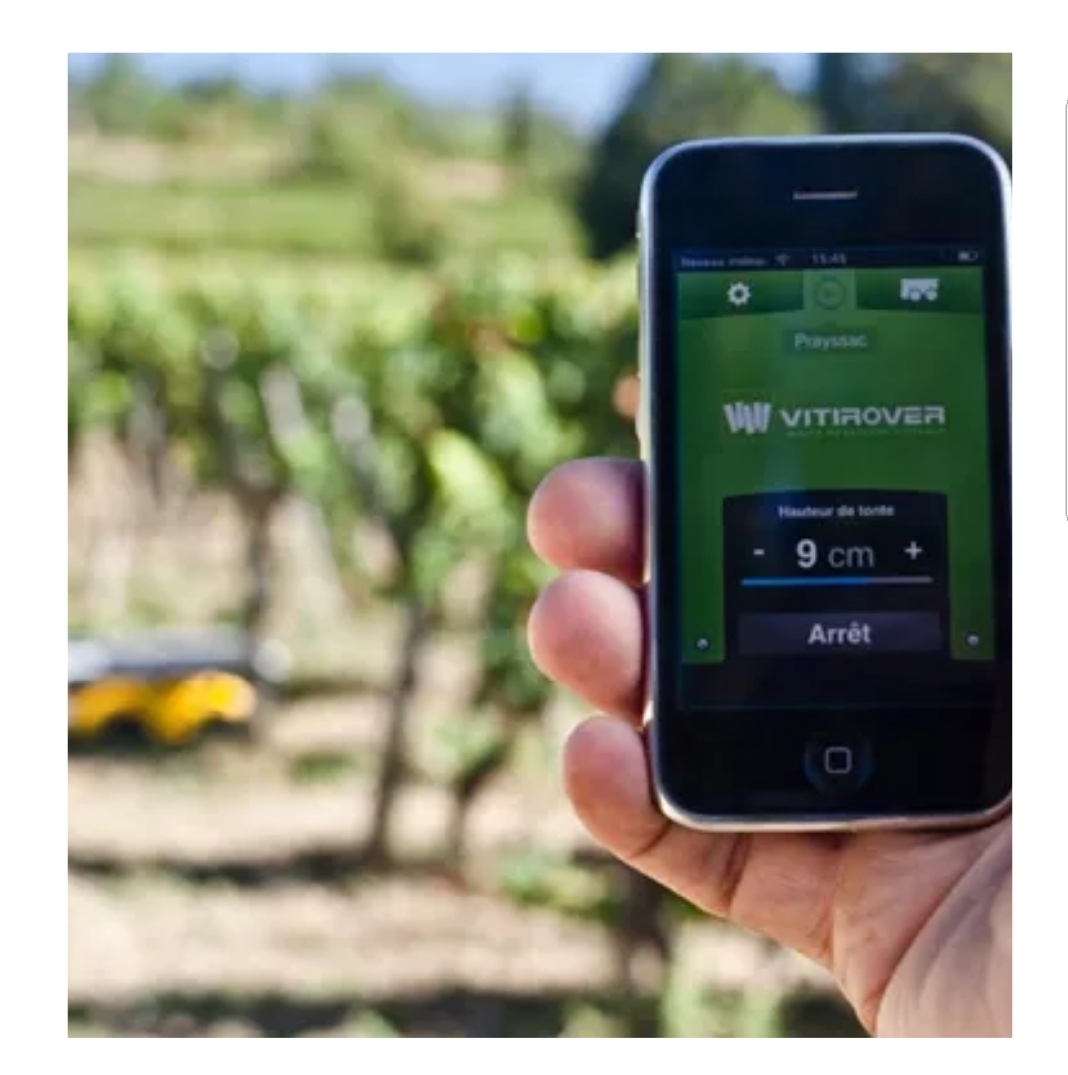
Anyway, why wait for Audi Quattro rovers  to crisscross Earth's spinoff? VitiRover smart lawnmowers already roam French wineyards. This Saint-Emilion-based startup provides autonomous, solar-powered, A.I.-loaded marvels that clean the place without breaking a sweat. Bonus: they can survive - and even reduce - DNA-altering levels of pesticides.


Note that VitiRover's team also includes a human Robot Shepherd. A refreshing retro touch our scary A.I. era.

mot-bile 2018


20180111

CES 2019 - Driverlessly nuts

A power outage at the CES? In the heart of Neon City? 35 miles away from Hoover Dam? And, of all reasons, because of excessive rain? In the Mojave Desert? This is nuts.

Like LG's 65-inch roll-up OLED TV... totally nuts:


And how about ForwardX's CX-1, a driverless luggage that follows you wherever you go? Now if that one doesn't drive airport security people nuts... imagine the mayhem when hundreds of these suitcases roam their halls, and no one can tell who's 'carrying' what...

Can't get nutsier, you think? Consider this: Spartan underwear, radiation-blocking boxers from France, to 'protect your nuts' from harmful waves...


You've been briefed.

So what to expect for next year? The Crotch It, an ankle monitor that punishes convicted sex offenders as soon as they get within range of former victims? A Wonder e-Bra, to fend off potential Harvey Weinsteins, and keep them away from the Internet of Tits? The Locker Room Banner, a semi-A.I.-based app to automatically delete your account each time you post something offensive on social media*?

We'll see. So far, if CES 2018 didn't bring any of the 3 gizmos I expected last year (see"CES 2018: tighten your 2.5 ppm helmets"), we've already been graced with a lighter version of one of them: smart masks from R-PUR ('pure air' in French - yes, we frogs are not just into smarty pants)


mot-bile 2018

* by the way, Samsung built The Wall. A 146-inch modular TV. With Micro LED. Now who will pay for it?


20170117

CES 2018: tighten your 2.5 ppm helmets

So you came back from Vegas with your LG bendable OLED screen (needed to wrap those smart gimbap rolls), your Hushme mask (needed to give Hannibal Lecter a call), and your Plume Labs Flow (needed a cheese grater that doubled as a air quality monitor).


Hushme mask (gethushme.com) allows you to mask your voice using various sounds (Minions, R2D2, rain, wind...).


Plume Labs Flow (plumelabs.com)

And you wonder what CES 2018 will bring you next year. Here's an exclusive preview of the 3 gadgets that will define the event:


  • Xiaomi 2.5PPM Helmet: after purchasing Plume Labs and Hushme, the Chinese manufacturer created an air filtering mask with an airbag that inflates around your head as soon as nanoparticle levels hit the roof. In this safe bubble, the air is pure, your eyes don't hurt, and no one can hear you scream. 
  • Alphago D-Bunk: this cloud-based A.I. service boosts your messaging and SNS apps, and sorts fake news from verified stories. Or at least it used to until Russia hacked it.
  • Samsung Gear Fit Cuffs: clip the smartwatch on your left wrist, the other end of the handcuff on your right wrist. It beeps and flashes LED rainbows as soon as LEE Jae-yong moves 200 ft away from his cell.

mot-bile 2017


20140828

Daum Kakao, Google Campus... Korean platforms on steroids

Yesterday, Daum and Kakao Corp announced that they would merge on October 1st, and Google that its first Google Campus in Asia would be located in Seoul.

The Daum Kakao merger looks rather defensive: before everything, it creates a stronger competitor to NHN, the leader operating among others the main rivals to Daum and Kakao Talk: Naver and LINE.


NHN and Daum are rare exceptions as successful newcomers in a country where start-ups struggle to survive in an ecosystem dominated by chaebols: as soon as a new gem shows some potential, the big fishes try to eat it, or to destroy it with me-toos leveraging on in-house countless entry points, or to control it by becoming its sole 'partner'. 

NHN and Daum could storm the web at the turn of the millennium, when mobile operators where busy building proprietary environments, and other chaebol focusing as usual on hardware. They built competitive platforms that even resisted Google, who only managed to gain strongholds in Korea thanks to Android. Typically, even if Naver maintains its leadership in web searches, Google could 'crowd-boost' Google Maps or Google Translate, with the help of smartphone manufacturers who were too happy to have a platform rivaling Apple to care about the hidden costs.

As we've said before, Samsung and LG helped Google BtoB (OEM) succeed where Google BtoC (portal) failed, and all they can do now is send a Tizen to nibble at the heavyweight champion's ears. 

There's a finite space for major value aggregators in Korea, and as Samsung's latest attempt to build a sustainable platform beyond hardware, Tizen probably accelerated the need for rivals to stretch their reach.

Big G needed to beef up its Asian ecosystem and Korea seems the perfect choice: Android rules, start-ups need competitive platforms to survive chaebol bullies, and Mountain View has the opportunity to weaken some of its most serious competitors on their own turf. Bonus: by supporting Korea's SME and creative ecosystem, you gain the favors of local authorities and regulators.


Anyway, good news for Korea's attractiveness... but yet higher entry barriers for potential major newcomers.


ADDENDUM 20140828: let's guess which 'independent' whistleblower suggested Korean watchdog to investigate Kakao Corp in the wake of the merger ("Kakao under probe for allegedly abusing market power: sources")


mot-bile 2014


20140812

Freebies in? Mojo out!

If you're a frequent flyer on these miserable errlines (believe me, I feel your pain), you've been prepared years ahead for Apple's and Samsung's troubles.

The Apple case is very simple: Cupertino lost the leadership in smartphones the day they decided not to open their platforms to other manufacturers. You can't beat manufacturers and users demographics, and the Android community was bound to catch up very quickly.

For Samsung, the "Nokia Syndrom" hits a leader that can't cover all bases when commoditization strikes. It's not how far you stretch in today's range of products, but how deep you stretch into tomorrow's value chains. Nokia kept churning out great stuff from its research centers, yet didn't convert them into innovations because the leadership forgot to focus on innovation itself. Samsung is very much aware of the need to extend its leadership into fields more sustainable than hardware design, but that's easier said than done (Bada? Tizen?). And as smartphones become commodities, it's getting harder to differentiate from Chinese or Indian players that can themselves sell massively and invest massively in research (Xiaomi, Micromax... Motorolax?).

If plummeting market shares are only sanctions from the market, giving away freebies remains the ultimate sign that a leader is losing its mojo. Significantly, the freebies that signaled the end of the race for innovation leadership came in the form of cash for shareholders (see "Apple - the end of the affair"). Samsung chose to bribe endusers instead, by giving away gifts across Southeast Asia markets (see "" - WSJ 20140811). 

A quick fix before the next big hit. Maybe the Galaxy Note 4 next month, supposedly a LG G3 killer that could come in flat and curve versions, and preferably unbuzz the upcoming Apple iPhone 6.

But again*, we're talking Fall/Winter collections here, not game changers.

mot-bile 2014

* remember "Apple's Ready to Ware v. Fast-Fashion"?


20140107

CES 2014: Beep Beep Goes Bling Bling

Very disappointing first day at CES 2014: the long awaited (see "Rise of the Nork Zombies") "Frankenstein Android" and "Headtop iBrain" didn't show up so far.

Following last year's trends*, wearable gizmos keep popping-up, and the screen war between LG and Samsung didn't abate. Now TV giants are not only flexing their muscles, but their screens as well. And if we've already seen "bend it like Koreans" on handsets, with a 85 inch TV, that's quite something:


OK, not as flexible as to wrap you up like a piece of bulgogi in a sesame leaf, but that's a good start. 

Nothing distruptive in DreamWorks' DreamTab (not flexible, but for kids who like to move it move it), just another example of how classic smart devices have become commodities:


Same trend for previously new communicating devices and internet everywhere gizmos**.

Smartwear-wise, more show off stuff from Vegas:


Vuzic V720 video headphones


Razer Nabu: not a wedding ring, but a smartwatch that does ring
LG Lifeband Touch: earn it, burn calories

.. and the Killer Melanomapp of the Year Award goes to the Netatmo JUNE, the ultimate bling-bling UV tracker:


I can't wait for the Geiger or Yellow Dust versions, to track exhausts from my North Korean and Chinese neighbors...

Again***, expect more line-blurring between fashion and smartwear from those who look for ways of escaping the commodity market curse.


mot-bile 2014


* see "I see through you: City of Sin, Screens, and Smartpagers" (January 2013)
** except maybe the Kolibree Bluetooth Toothbrush (bluetoothbrush?)
*** see "Apple's Ready to Ware v. Fast-Fashion" (July 2013)


20130516

Smart TV and smart screens, dumb watchers and cloud potato

Okay, Smart TV sells. And the all-inclusive, app-enabled Samsung or LG devices are serious competition to the more or less usual plug-ins (set top boxes, Apple TV & co). One thing keeps bugging me: you don't replace your TV as often as you do with other devices, how to make sure your TV remains smart? Isn't it more important to have screens that can interface smartly with more intelligent devices? Aren't smart screens more important than smart tvs?

Let's see how Smart TV and smartphone leader Samsung tackles the challenge. You can bet these guys will do anything to remain leader at the crux of both devices.

First, your hardware's getting smarter, and innovations keep coming, like motion control and language recognition, which Samsung packages as "Smart Interaction" (here on an Australian commercial):


To tackle the fear of obsolescence, Samsung proposes the Evolution Kit. It works a bit like Nissan Leaf batteries at the software level: you find Smart TV cool, but it's still a young market, and you want to be sure that you're not buying a young dinosaur, that you won't have to change the whole car because your battery is from the wrong generation. You need a double promise of simplicity (kit) and future-proofness (evolutivity): we'll make sure that you're always up to date, that you've always got the best set of Smart features, so don't worry, and just enjoy. This "Evolutionary Husband" ad is not very creative either, but you get the idea:


From couch potato to cloud potato, just plug and play dumb.

mot-bile 2013


20130110

I see through you: City of Sin, Screens, and Smartpagers

Remember that old 3D classic "Avatar"? Now Navis can say "I see through you" instead of "I see you" on Hisense's latest see-through 3D TV.

CES 2013 is all about screens, and it starts on your wrist. I wonder if Amazon will try to sell haikus on this mini ebook reader:


Pebble's e-paper watch for iPhone and Android does look like a gizmo from the 90s, some sort of Bluetooth-enabled smartpager, but the biggest story about it is the way it was crowdfunded on Kickstarter, smashing the $100k goal and raising $10M within days. 85,000 units have been ordered before the CES, more to come.


Does your handset require a remote control that works on Bluetooth? That's another story:


Moving on to some bigger screens: how do you like your OLED TV? 4K (Panasonic)? 4K and Ultra HD (Sony)? Curved (Samsung - nothing as sexy as its "Samsung Flexible AMOLED" of course -, LG)? Multi-view (Samsung again)?

Sharing your screen, that's also possible on the Lenovo IdeaCentre Table PC, a touch table that may host interesting game applications in a near future.

Nevermind the fingerprints, the dust, or even water. One year after HzO Waterblock, Huawei demonstrated a waterproof Ascend series (Ascend Mate, Ascend D2). I'm still in shock to see a smartphone, with all its connectivity slots open, take a dive and come out just fine.

And how about this schizophrenic Asus Transformer AiO? An Android tablet taking off from your Windows 8 desktop? Will an iPad spin off from it? An Apple, wrapped in a Google, inside an Microsoft?

I still don't know what to make of the Firefox OS (showcased in Vegas). A Plan B for Android makes sense (I'm not even mentioning iOS), and it's nice to start in Brazil, but can the Mozilla ecosystem grow that big?

SmartTVs, smartphones, smartwatches... it all sounds like logistics these days, more about fine tuning delivering processes than about delivering new goods.

Still better than last year's shark lawyer frenzies.

mot-bile 2013


20110512

Showing off : Google I/O, World IT Show, Android@Home, Flixster@omized...

More news from Google I/O* :
- Google loves contents and furthermore, how it's conveyed to you : beyond Music Beta by Google (see "
Skype keeps moving, Google googling"), "Movie for rent" sounds like the killer app for (or rather against) Flixster & co.
- Android rocks and keeps gaining Gmentum in the hardware and middleware wars : 100 million activated Android devices (+ 400,000 every day), 200,000 apps in Android Market (4.5 bn apps installed from the same joint)
- on the go : handsets and tablets to converge in the Ice Cream Sandwich version of the OS
- in the more "fixed" range : with the Android@Home concept, Android starts sniffing around your place for friendly devices (including the Project Tungsten designed for Music Beta by Google)

... deja vu all over again for Apple, even if Google won't dominate the OS world the way Microsoft did.

More modestly, the World IT Show (WIS) started at the COEX in Seoul, with LG back on tracks (LG Optimus 3-D handsets, 3D TV war on Samsung, who also pushes its Smart TV and its dual core, 4G Galaxy S2), and SK Telecom showing off its own novelties (N-Screen, LTE network, Wibro CCTVs...).

mot-bile 2011

* "
Android: momentum, mobile and more at Google I/O"


20110101

Followers and leaders, hardwares and clouds

CES 2011 will probably celebrate Korea Inc's 3D, smart TVs, or cloud computing successes (see how Korea Telecom markets it's ucloud beyond business and professional targets, towards consumers).

And in retrospect, 2010 clearly marked a turning point for Korea : this is probably the year leadership spirit became mainstream.

I'm not talking about the "can do", "CEO me" spirit, but about a cultural shift from an eternal best follower to a trend setter.

Ever since I first came to Korea 20 years ago, business management has been based on international benchmarking, and executives obsessed with what others were doing overseas. Still now, you can feel this Japanese Complex (how to kill the economic father), or that CEO Complex (how would Steve or Bill think or do ?) almost everywhere, but a top down revolution is trickling down the hierarchy : start thinking by yourselves, go set the pace, all that come on, be a Tiger kind of stuff.

New generation of US-grown Ivy Leaguers instilled strategy into Korean boardrooms, converting top chaebol owners to quality, sustainability, and proactivity. Most notably, Hyundai's Chung Mong Koo or Samsung's Lee Kun-hee had to literally shake their own companies to force much needed cultural revolutions. A couple of years later, both companies shine among the top stars of 2010, but both have yet to confirm and to reach new levels in order to secure their recently claimed leaderships.

There's little choice for them : even if Samsung increases by 18% its research and development investments, competition remains fierce, and Chinese players keep catching up in all major innovation fields.

But this Korean revolution also faces two major homegrown bottlenecks : a SME ecosystem and an education system unfit for the challenges to come. Because paradoxically, the most connected country on Earth generated monsters hampering the emergence of a truly efficient network society.

Of course, this is a country where netizens have more power than anywhere else, but precisely because there's a wide gap between the people and the politic, economic, or media elites. Indeed, Korean society it as the same time too connected and too disconnected.

But let's get back to business, where evergrowing and ever more agile chaebols leave no room for manoeuvre to SMEs : small fishes can only grow dependent from bigger fishes as clients or providers... or end up as trophies in their acquisition sprees. Even at the peak of the economic crisis, SMEs had a tough time hiring or keeping talents because everybody wants to work for a big brand.

Big fishes are only starting to realize they need stronger players around. Take mobile applications, for instance : for years, the most advanced country in mobile multimedia was lacking a balanced ecosystem because operators wanted to control the whole chain and push their own solutions. The irruption of Apple in the local pond did not only wake up the smartphone market at the hardware level, but also the complete middleware and application ecosystem, forcing everybody to open up new stores and to look for new partners. If Korean mobile industry took over Europe ten years ago, it is only catching up now by moving towards a more open ecosystem, fitter for innovation*.

As usual, major cultural changes can't happen without a top-down intervention, and it sometimes takes a whale to set the pond in order : last year, the Korean government had to coerce industry leaders into collaborating with each other as well as with smaller companies on key R&D fields, because that was the only way to compete at the global level.

As a matter of fact, Korea's ultra-competitive culture doesn't prepare for coopetition nor for next generation partnerships : it's all about winning against competitors, being number one, nixing the Other.

The same can be said about Korea's ailing educational system. Ailing ? Korean students fare so well worldwide that this system is often praised as one of the most efficients... but record denatality and suicide rates tell a completely different tale : this system is now completely corrupt and must evolve. If Korea reached the top thanks to a merit-based, social-ladder-friendly educational system, it will collapse if it persists into this unfair, money-based nightmare where creativity is totally castrated, and where young humanoid robots compete in the ultimate dystopian race for conformity.

So instead of celebrating 2010 as the year of the confirmation of Korea as a global power in such various fields as economics, Olympics, or diplomacy, I'd like to expose 2010 as the year the Korean model reached its limits.

As we've seen, change is coming. And I'm confident it will quickly radiate across a society which enjoys an amazing ability to embrace change. The 1998 crisis could have brought an abrupt end to the Miracle on the Han River, but the country somehow managed to rebound, leveraging on regional opportunities (struggling Japan, booming China), but mostly on its own dynamics.

Seoul, the capital city, is showing the way by embracing cultural diversity and collaborative sourcing of new ideas to stimulate the SME ecosystem, to improve everyday life and international competitiveness. And at long last, the national government is reconsidering SMEs as a priority. Unfortunately, the much needed reform of education is not on the agenda of this otherwise very conservative power.

Now is the moment. Flush with money, surfing on an unprecedented wave of international recognition, Korea must have the courage to change key parts of its DNA if it wants to remain a top player.

mot-bile 2011

* Apple itself is not really a model of open business, but that's yet another story


20100908

Android Smart TV, Dual-Core Phone, Dual-Mode Policies

A few news from Korea :

LG will release Q4 2010 an Android smartphone running with Tegra 2, a 1GHz dual-core processor made by NVIDIA bound to enhance the mobile multimedia experience (3D, games, video...), and the manufacturer's position in the smartphone race.

Rival Samsung confirmed its ambitions in smart TV, probably also on Android.

At the app level, mobile commerce also benefits from the (late) smart wave, leveraging on a long history in mobile banking. But Hana SK Card (SK Telecom's TouchSeven Card with Hana Bank) "only" claimed 20,000 holders end of May. Yet, KT's Show Touch (with Shinan Bank) joined the party, so the market should grow much faster.

The mobile arena is the perfect space to boost reforms in Korea's SME ecosystem : operators are starting to understand the need to open up and to stimulate diversity, and the government is pushing for a "fair society" : in the country, chaebols (big conglomerates) tend to absorb value as soon as it pops up, leaving crumbs to smaller players, who themselves are not used to surviving off these giant hooks.

On the other hand, the same government is about to grant broadcasting rights to major press groups, accelerating concentration in the medias...

The people doesn't seem to care, provided panem et circenses keep getting better. And that's also what smart TV and dual core handsets are about.

mot-bile 2010


20100719

3D notebooks from LG

LG is not only betting on TVs for 3D (1 million units expected this year) : 3 new laptops have just been unveiled, priced about 20% more than standard models (KRW 1.6 M to 1.9 M - USD 1,330 to 1,580 these days). Desktops and monitors were also introduced, all requiring 3D glasses to enjoy the effect.

The Korean manufacturer expects 3D to represent 30% of its laptop sales in 2011, and the segment to boom (1.1 M units in 2011, 13.5 in 2013). For the number 2 player in TV displays, 3D could prove a game changer in a market where it's struggling among second-tier manufacturers. The move is also defensive as TV and PC converge, often sharing the same screens.

Beyond movies, web enabled / 3D devices are ideal online gaming and MMORPG, key drivers in Korea : LG could leverage on the PC Bang - game editors ecosystem to accelerate adoption and stimulate content production.

mot-bile 2010


20100708

Cisco Cius ? Put it on my Samsung Galaxy Tab

With its Android based Galaxy series, Samsung seems to have packaged a nice alternative to the iPhone / iPad duet. Or is it the whole industry that's growing tired of the Cupertino arrogance ?

Anyway, the Galaxy S is already selling very well in Korea (over 200,000 units within days) and overseas (the top 5 MNOs went for it, 100 worldwide), and NTT DoCoMo already announced the launch of Galaxy Tab in October 2010 (LG's tablet is still expected in Q4).

Meanwhile, Cisco gave a new shot at the business tablet concept : the Cisco Cius is expected H1 2011. Also based on Android, the Cius looks much smaller than the 7 Inch Galaxy Tab, and seems to focus on video calls : "HD video (720p) with Cisco TelePresence solution interoperability for lifelike video communication with the simplicity of a phone call"*... That, of course, is provided you're connected to a big pipe, say Wi-Fi for instance.

Funny how Wi-Fi coverage is getting popular again : MNOs are abandoning flat rates for data... and all hopes that LTE can support the boom in heavy mobile / nomadic usages.

Cisco also throws in EVO 4G, Bluetooth, USB, the last one a sure bet.

But I would rather bet on RIM than Cisco for a hit in business circles, even if the BlackBerry Tablet is supposed to rely on the Blackberry handset for connectivity. Actually, that major drawback for the enduser could prove an excellent argument for CIOs and CFOs.

Nevermind that geeky CEO.


mot-bile 2010

* other applications apabilities (see
Cisco Cius website) :
• 802.11a/b/g/n Wi-Fi, 3G/4G data and Bluetooth 3.0 help employees stay connected on and off-campus
• Virtual desktop client enables highly secure access to cloud-based business applications
• Android operating system, with access Android marketplace applications
• Collaboration applications including Cisco Quad, Cisco Show and Share, WebEx, Presence, and IM
Tablet Highlights:
• 7” diagonal, high-resolution color screen with contact-based touch targets delivers an elegant, intuitive experience
• HD Soundstation supports Bluetooth and USB peripherals, 10/100/1000 wired connectivity and a handset option
• Detachable and serviceable 8-hour battery for a full day of work
• Highly secure remote connections with Cisco AnyConnect Security VPN Client
• HD audio with wideband support (tablet, HD Soundstation)


20100531

Korea : Nexus One in June, more robust networks in sight

Korea Telecom announced Google's Nexus One (HTC on Android FroYo) for June 2010.

Since Samsung preempted the green android territory and even protected the brand for handsets*, KT will have to find a different angle.

June, World Cup, Frozen Yoghurt... expect something fresher for this smartphone / app phone. Patbingsu style.

KT claimed its 700,000th iPhone sold in May, and boosted wireless data traffic by 17.5 in Q1 2010 vs Q1 2009. Q2 should be much more impressive as smartphones rise on track with 5M units sold by EOY 2010.

And 3D TV is becoming a reality (also on time for the FIFA World Cup), 3D is bound to pop up on Korean mobile phones as soon as possible. It's a matter of pride for Samsung and LG, it's also a priority for local authorities who are planning the country for very very high speed broadband.

That's for 2013. But mobile network capacity will become critical much earlier, even with LTE, and Korea's dominant operators (SKT and KT) are intensifying their aggressive race for WiFi hotspots.

mot-bile 2010

* see "
KT claims 500,000 iPhones"


20100505

Samsung S-Pad in a Flash

LG and Samsung are rumored to launch their answers to the iPad during the second half of the year. Fellow Korean TriGem will shoot first (end of H1).

Samsung's S-Pad is expected to run on 3G (SK Telecom) and Wi-Fi, and on an Android OS, providing a bigger playground for Flash, which remains banned on Apple's iPad (to cheer them up, Google offered Adobe execs a couple of Android phones).

Repositioned as an editor, Apple has a right to decide what it considers entertainment or education, what fits its editorial line. But it should be careful not to position itself as AOL did against the world wide web. Apple wouldn't want to suffer from an AOL syndrome.

mot-bile 2010


Copyright Stephane MOT 2003-2025 HOME - Today's wireless headlines - Korea wireless news - all posts (full list) - useful links - stephanemot.com (personal portal)
my books : "dragedies" - "La Ligue des Oublies"
my other sites : blogules - blogules (VF) - Seoul Village - footlog - Citizen Came - Copyright Stephane MOT 2003-2022