Showing posts with label A.I.. Show all posts

20240112

Seoul Smart Life Week - What happens in Vegas stays in Seoul?

So taking more space at CES was not enough: Seoul wants to be a match with the World's leading consumer electronics show and launch 'Seoul Smart Life Week' later this year (Oct 7-9 in COEX).

Mayor OH Se-hoon announced the event at the 640 sqm Seoul Pavilion in Tech West Eureka Park, where 81 companies exhibited their solutions and gizmos (very strong biotech and A.I. verticals behind  Seoul Biohub and Seoul AI Hub). 18 of them claimed a CES Award, but the prize OH and Seoul Business Agency are after means even bigger bucks.

Well the first edition 'only' aims at 100 cities and 200,000 visitors, but it takes time to install a big show in a crowded calendar, and COEX can't host a Barnum the size of CES.

KINTEX would gladly oblige, but Korea's biggest exhibition venue is in Ilsan, Goyang, Gyeonggi-do, with limited hospitality capacity nearby. Seoul wants to become a global or at least an Asian leader, to put for good Tokyo, Hong Kong (and its half-yearly Electronics Fair), or Singapore (COMEX- ITSHOW-The Tech Show-Consumer Electronics Exhibition) behind. 

Seoul plans to change venues after the Jamsil Sports Complex is fully transformed into the Jamsil Sports MICE Complex, with a business hub connecting the COEX, SETEC, Hyundai Motors Global Business Center, Dominique Perrault's new Yeongdong-daero, and of course the Han River in this very vegassy vision mentioned in my recent focus (see 'Seoul waterways and urbanism - the full story'):

Seoul already hosts many tech-related events, but no top-of-mind brand emerges. At least, if it may not seem very original, 'smart life' sounds definitely more human-oriented than the old-tech-y 'electronics' or 'IT'. Unlike CES with the CTA, this new SSLW will not be led by an industry but by a local authority, with city pavilions rather than national spaces. To compete with Vegas, Seoul will not only need new hardware and software, but also the power hitters Korea Inc. sends to the national pavilion. And ultimately, Samsung LG, and Co. will have to be convinced to release buzzworthy novelties 3 months earlier than usual.

mot-bile 2024


20190708

Japan v. Japan - Artificial Belligerence v. Artificial Intelligence

In a Trumpian move, Shinzo ABE started a trade war with Korea, so far not reciprocated, except by South Korean netizens threatening to boycott Japanese products. Japan is not raising tariffs for Korean imports, but making Japanese exports to Korea more difficult for key tech components, particularly essential to chipmakers and display manufacturers*. 

Pressed by national media to explain such a masochistic move, the PM ended up saying that there was a risk these valuable technologies could end up in North Korea. Of course that's a ludicrous statement, since such trade between both Koreas would not only contravene international sanctions, but also defy logic considering the North's situation and priorities. 

The actual motive was officially to punish Seoul for insisting on reparations for Imperial Japan abuses, particularly regarding sexual slavery and forced labor**, abuses denied by ABE, his government, and the revisionist lobby Nippon Kaigi he was instrumental in founding during the nineties. This lobby that has all but taken control of Japan politics, while keeping the population in the dark regarding its highly controversial agenda (restoring State Shinto, the Imperial rule, denouncing peace treaties and human right laws, denying war crimes, rejecting postwar's peaceful constitution, returning to militarism, rewriting history textbooks...).

Today, MOON hosts LG's KOO Kwang-mo, Hyundai's CHUNG Eui-sun, and SK's CHEY Tae-won, to prepare a response that likely will pass by the WTO. Samsung's LEE Jae-yong and Lotte's SHIN Dong-bin couldn't attend since they are in Japan. A few days earlier, LEE invited his friend Masayoshi SON (Softbank) to meet President MOON Jae-in and major chaebol leaders. Even before ABE's bomb hit the ground, Samsung was expecting to lose half its profits in the second half of the year.

Korea Inc. and Japan Inc. united swiftly for good reasons. Playing a Huawei-style blame card against South Korea could backfire for Japan, and China could actually become the biggest winner. Giant tech companies on both sides of the... East Sea agree on one thing: this is the worst moment to fuel divisions between them. Regardless on how the trade war between China and the US ends, the fact is Korea and Japan are lagging behind in key technologies, particularly A.I., where scale matters.

So why would ABE take such risks? Is he still blinded by his obsession with revisionism, worried he could lose support from his base ahead of elections? Nationalism could be a welcome diversion when Japan pensioners panic about their financial future, but is it the right time to expose Nippon Kaigi's agenda, and what they are desperately trying to hide from the public?


mot-bile 2019

* fluorinated polyimides and resists (Japan produces 90% of the World's total), and hydrogen fluoride etching gas (70%). 
** South Korea's Supreme Court recently ruled that Japanese companies should compensate survivors.


20181125

Interview with the data vampire

mot-bile: 'Thank you, Mark Zuckerberg, for accepting this exclusive fake interview at our Agence Fausse Presse'

Mark Zuckerberg: 'Actually, I thought that was yet another subpoena, but now that I'm here, I might as well answer'.

mb: 'Well so far, you didn't provide many answers to European or American judges and committees. Apologies, yes, solutions, not really. Seriously, after all the scandals and bad press surrounding you and Facebook, do you still believe you can become President some day?'

MZ: 'Facebook helped a very despicable man get the job once, why not twice? I'm only 34, and by Clinton standards, probably 'likable enough'. Plus, if I'm using Definers Public Affairs to get at George Soros' throat, I don't need Cambridge Analytica to get into your head. By the way, you're a very troubled person.'

mb: 'Takes one to know one, thank you. You're not as publicly weird as say Elon Musk, but there's at least some cold aspergersian nerdness in you. And obviously, you don't seem to mind playing, like Bill Gates in the 80s, the role of the supreme techno-villain with pervasive reach.'


MZ: 'I learned everything from him, including the pseudo philanthropic narrative involving our best halves. While the Bill and Melinda Gates Foundation helps Monsanto infiltrate Africa, our Chan Zuckerberg Initiative basically serves as a vehicle to remote control Facebook, and the human population that comes with it, while Sheryl Sandberg takes most bullets.'

mb: 'So you control Facebook, even when you say it's impossible to control it.'

MZ: 'We're working on it, and A.I. helps a lot. All humans have to do is to give up all control, so that we can ultimately get the most holistic systems to monitor them.'

mb: 'The thing is you're also giving up all moral standards. I mean, how far lower can it go now, after your latest underage bride auction?'

MZ: 'Never underestimate human lowness. You don't want to know what happens every day on Facebook.'

mb: 'But you do. And even when you don't, you monetize it. I wonder which ads ran for the bidders during that sick auction.'

MZ: 'There are bad guys out there, but we're not totally evil. If China blocks us, that's because we herald Western freedom.'

mb: 'If China blocks you, that's because they envy your alienating system, and want to develop their own blend of behavioral control.'

MZ: 'China's Social Credit system will never be as popular as Facebook. They can become even more pervasive and amoral than us if they want, it's fundamentally bad for business to let your users know how much it costs them actually.'


mot-bile 2018


20180620

IoT as in the 'Internet of Turds'?

If LG U+ got, as expected, the smaller chunk of 5G spectrum in this week's auctions, they sure made a splash with their connected bidet-toilets. 
 
* 
 
Let's start with these 5G auctions, where Korea raised 3.6183 trillion won from the 3 bidders, not even 10% more than the starting point of KRW 3.3 tn; just enough to show an illusion of fight. All 3 MNOs claimed 800MHz in the 2.8GHz spectrum, and in the 3.5GHz spectrum, #3 LG U+ got 80MHz compared to 100 for #1 SK Telecom and #2 Korea Telecom. 
 
Note that SKT just announced successful tests with Nokia on 3GPP-approved 5G SA (StandAlone), a national first following last December's world first on 5G NSA (Non-StandAlone). You can expect SKT and KT to launch on December 1st (the date the regulator set to allow service) to continue their battle over 5G leadership. They'll probably start on 3.5GHz, at least in the capital Seoul, and key entry points such as Incheon. 
 
* 
 
Now about that bidet-toilet thing. 
 
You first have to understand that many people in East Asia already enjoy electronic systems, complete with water noozles and seat warmers. Here, LG U+ teams up with Inus Bath to add connectivity to the Novita model:

 
This most essential innovation brings IoT to new territories (the 'Internet of Turds'?). From your smartphone, you can pre-warm your seats, or post-flush in case you forgot to do it. Each member of the family can instantly enjoy their preferred water temperature, pressure, or nozzle position, and you will receive alerts if you stay too long, because no one should be above the loo eternally. 
 
Mercifully, no cameras are connected so far, but in this over-connected country where last week, 20,000 victims of peeping toms demonstrated on the street, there were already cases of perverts installing spycams in public rest rooms...
 
In any case, paranoids should worry: LG U+ announced that A.I. will john later. Not Amazon's Echo (who wants more echo in this room, or Alexa sending your personal records by email?), but Naver's Clova: when it's (paper) rolled out, you can voice control this new sentient environment.
 
* 
 
The good thing with not being the highest bidder in an auction is that you're flush with enough money to become the highest bidet. 
 
Will LG U+ rivals enter this fascinating Game of Thrones? 

mot-bile 2018


20180511

Once GPON a time in the East

SK Telecom announced their 2.5 Gbps service over GPON (Gigabit-capable Passive Optical Network), 5 Gbps and 10 Gbps packages by EOY 2018.

SK Broadband already covers 40% of Korea, and targets 80% by 2020. Showcased in Pyeongchang* and at the recent Inter Korean Summit by KT, 5G shall be launched partly in March 2019 (3.5GHz and 28GHz auctioned), and nationwide in 2022. 

Don't worry about filling the pipes in a country that demands everyday faster services. The traditional mecca of extreme online gaming (MMORPG and esports) is getting addicted to blockchain and bandwidth-hungry services (MelOn HD, Amazon Prime...). If IPTV remains less popular than in France, subscriber bases keep catching up. SKT's broadband and mobile units now claim respectively 4.46M and 8.88M 'Monthly Active Users' (a 25.5% gain YOY for the latter, branded Oksusu).

SKT maintains its leadership over KT for another demanding service, A.I. assistants**: NUGU reached 3M users Q1 2018 (+9.6% YOY - 5M expected EOY), GiGa Genie 'only' 710k. And they are bound to leverage this key entry point in Korean households after the acquisitions of quantum sensing leader ID Quantique ('quantum-safe cryptography' from Switzerland), and the nation's second security service provider ADT Caps.

3M subs for NUGU, SK Telecom's A.I. assistant (presented here by plastic surgery - enhanced artificial assistants)

Anyway, SKT and KT are compelled to boost new streams of revenues: both posted small decreases in revenues following the switch to new accounting norms, and the sword of Damocles that has been threatening to strike them for 7 years might just do that: the Supreme Court confirmed that MNOs can't postpone anymore the slashing of their outrageously expensive plans.

mot-bile 2018

* see "South Cow-rea already cow-nected to 5G". Note that 77.9% of KT subscribers are already on LTE.
** according to them, people using simultaneously smartphones, fixed internet, and A.I. assistants at home will still enjoy more than 800 Mbps over GPON.


20180303

Moonshots and Wineyardshots - MWC meets Salon de l'Agriculture

Mobile World Congress 2018 was more about improvements than game-changing innovations.

As announced, LG abandoned the arms race to focus on software upgrades instead of new hardware. Now you can record their ultra-slomo evolution with your Samsung Galaxy S9 (+).

While Sony joins the headjack-free craze (Sony Xperia XZ2), Nokia slides back to Matrix, reviving its iconic banana (8110 via HMD Global).

And by the time Nok-Nok rolls-out a ultra-light 4G network across the Moon with Google and Vodafone, 5G will be all the rage at home.

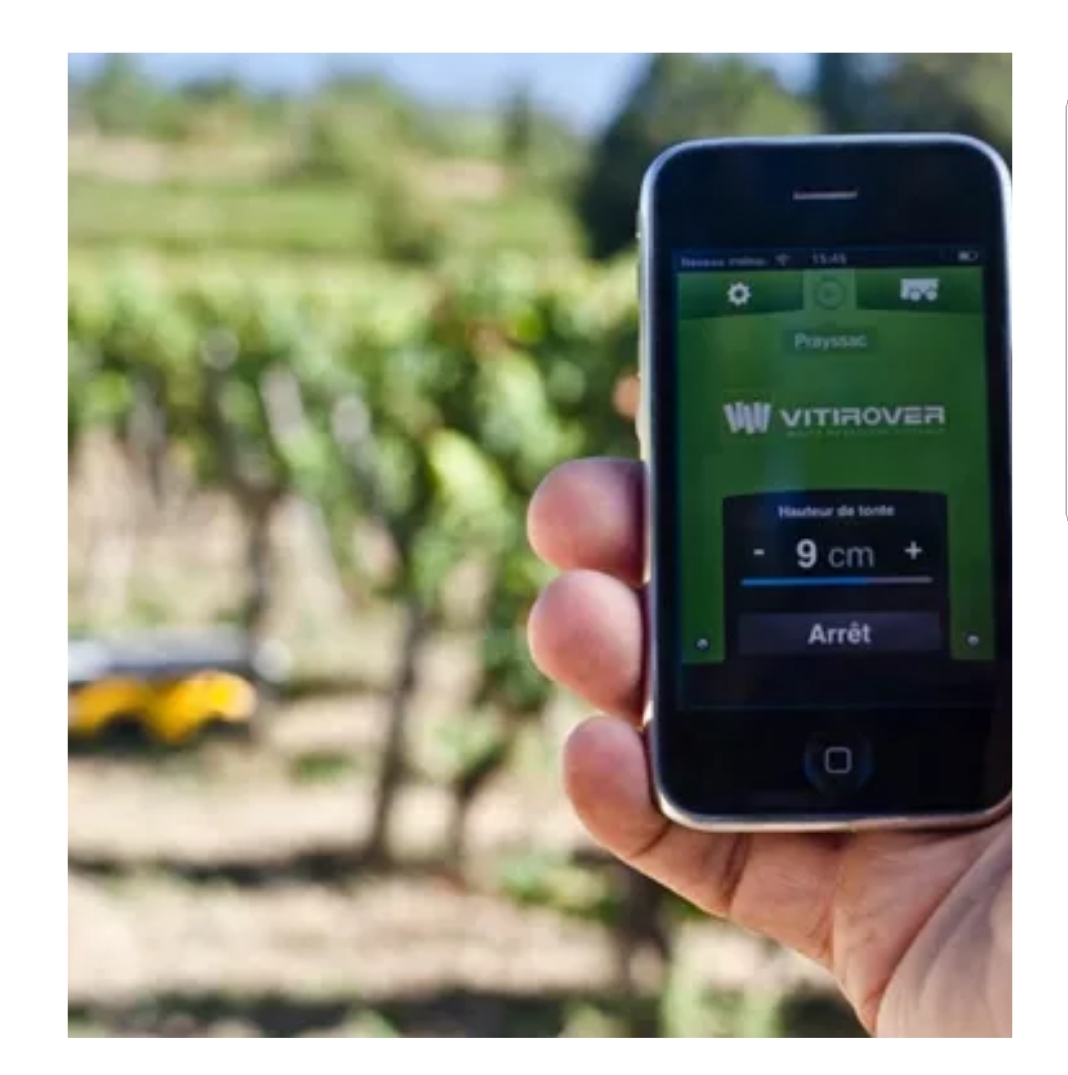
Anyway, why wait for Audi Quattro rovers  to crisscross Earth's spinoff? VitiRover smart lawnmowers already roam French wineyards. This Saint-Emilion-based startup provides autonomous, solar-powered, A.I.-loaded marvels that clean the place without breaking a sweat. Bonus: they can survive - and even reduce - DNA-altering levels of pesticides.


Note that VitiRover's team also includes a human Robot Shepherd. A refreshing retro touch our scary A.I. era.

mot-bile 2018


20180111

CES 2019 - Driverlessly nuts

A power outage at the CES? In the heart of Neon City? 35 miles away from Hoover Dam? And, of all reasons, because of excessive rain? In the Mojave Desert? This is nuts.

Like LG's 65-inch roll-up OLED TV... totally nuts:


And how about ForwardX's CX-1, a driverless luggage that follows you wherever you go? Now if that one doesn't drive airport security people nuts... imagine the mayhem when hundreds of these suitcases roam their halls, and no one can tell who's 'carrying' what...

Can't get nutsier, you think? Consider this: Spartan underwear, radiation-blocking boxers from France, to 'protect your nuts' from harmful waves...


You've been briefed.

So what to expect for next year? The Crotch It, an ankle monitor that punishes convicted sex offenders as soon as they get within range of former victims? A Wonder e-Bra, to fend off potential Harvey Weinsteins, and keep them away from the Internet of Tits? The Locker Room Banner, a semi-A.I.-based app to automatically delete your account each time you post something offensive on social media*?

We'll see. So far, if CES 2018 didn't bring any of the 3 gizmos I expected last year (see"CES 2018: tighten your 2.5 ppm helmets"), we've already been graced with a lighter version of one of them: smart masks from R-PUR ('pure air' in French - yes, we frogs are not just into smarty pants)


mot-bile 2018

* by the way, Samsung built The Wall. A 146-inch modular TV. With Micro LED. Now who will pay for it?


20171122

South Cow-rea already cow-nected to 5G

Lazy MNOs usually settle for milking the cow, but SK Telecom is neither lazy, not your usual MNO. And in its latest presentation, the Korean leader suggested to IoT-ize the cow in order to generate new applications and revenues:

LiveCare: "oral implant of bio capsule in cow, extract real-time information through LoRa, provide analysis through Web/app, alert and message to farmer" - that was Korea's version of the classic 'you have two cows' parable.
Of course, LiveCare was only a niche app illustrating the way the MNO intends to leverage its core techno and infra (network, A.I., cloud, data) to boost new business (e.g. IoT, commerce, media).  

A couple of days ago, BT CEO Gavin Patterson called all players to 'build a strong business case for 5G', and measuring bovine farts doesn't exactly sound like the next killer app... unless you replace cows with humans, and alerts with A.I.-picked medical or culinary recommandations customized for your microbiome (expect more A.I. news from SKT, already present with NUGU or Aibril - the latter with IBM Watson -, and recently joined by Hyundai Motor Company, Hanwha Asset Management, and the Canadian Element AI in a USD 45M fund to invest in A.I. and smart mobility).


SK Telecom is already 'building a strong case for 5G', particularly with its rival KT about to showcase its own flavor during the Pyeongchang 2018 olympics. And SKT are not just into testing earlier than others (e.g. recently 4G LTE-5G internetworking, or VR 360 over 5G with Samsung tablet-size device), or even into going commercial earlier than others, but also into building a stronger 5G standard (e.g. recently pushed for 200 Gbps packet swiching), and a stronger technological environment around 5G (e.g. recently 4.8 Gbps WiFi with 802.11ax in Bundang, or 5G-PON / Passive Optical Network distribution).


'Building a strong business case for 5G' will be more fun for marketers. Even if it starts, as usual, like with 3G or 4G, with existing services that will saturate the previous generation anyway, like HD video these days, a booming category if we ever saw one. 

'Building a strong business case for 5G' will also demand a touch of emotion, so I'll finish this focus on SK with their latest ad for 5G. It features an endangered species, Jeju-do's haenyeo (female diver):


mot-bile 2017


20170303

Comfort zones

Whiffs of déjà vu from Barcelona's Mobile World Congress: a Nokia 3310, a BlackBerry keyboard (KeyOne), and soon a Motorola DynaTAC Vintage Edition?

After sending millions on Pokemon Go quests, Nintendo Switch-es back to hardware.

Google plays its classic from-service-to-device branding gimmick, positioning Google Home + Google Assistant against Amazon Echo + Amazon Alexa.

Google Home had to extend its footprint before Samsung Assistant hits the shelves, and will reach beyond Android to tickle Apple Siri. Rumor (and Android Police) has it Google will be the first multi-user device on the market.

At this stage, it doesn't matter much if the platform remains Google-centric, with at least 9 in-house brands among the fist 30 partners:

out of 30 partners to date, at least 9 belong to google
Nevermind this gizmo: the A.I. behemoth is less venturing into new territories than trying to defend its comfort zone.

mot-bile 2017

* "Pitching Google Pixel in 3 strikes"


20170117

CES 2018: tighten your 2.5 ppm helmets

So you came back from Vegas with your LG bendable OLED screen (needed to wrap those smart gimbap rolls), your Hushme mask (needed to give Hannibal Lecter a call), and your Plume Labs Flow (needed a cheese grater that doubled as a air quality monitor).


Hushme mask (gethushme.com) allows you to mask your voice using various sounds (Minions, R2D2, rain, wind...).


Plume Labs Flow (plumelabs.com)

And you wonder what CES 2018 will bring you next year. Here's an exclusive preview of the 3 gadgets that will define the event:


  • Xiaomi 2.5PPM Helmet: after purchasing Plume Labs and Hushme, the Chinese manufacturer created an air filtering mask with an airbag that inflates around your head as soon as nanoparticle levels hit the roof. In this safe bubble, the air is pure, your eyes don't hurt, and no one can hear you scream. 
  • Alphago D-Bunk: this cloud-based A.I. service boosts your messaging and SNS apps, and sorts fake news from verified stories. Or at least it used to until Russia hacked it.
  • Samsung Gear Fit Cuffs: clip the smartwatch on your left wrist, the other end of the handcuff on your right wrist. It beeps and flashes LED rainbows as soon as LEE Jae-yong moves 200 ft away from his cell.

mot-bile 2017


20161123

Quick, Draw! Help Google crowd-accelerate Singularity!

ICYMI, Google gamified its A.I. experiments with Quick, Draw!, a game where you have 20 seconds to sketch a subject recognizeable by their system.

quickdraw.withgoogle.com

aiexperiments.withgoogle.com


Of course, the more people play, the smarter the A.I., and the stronger Big G. A bit like they use Captcha to decypher ancient texts scanned by Google Books, only with countless more applications.

Help Google crowd-accelerate singularity and build A.I. dystopia by playing with its QuickDraw (twitter.com/stephanemot/status/799484363305992192)

Similar games can be imagined in 3D, VR environments (not just for Big G's Tilt Brush), your every stroke or move tracked by eyefluence, and so many completely different kind of games...

Now, playing kid stuff in a sandbox can help grow singularity monsters. 

Yesterday, a philosopher friend wondered if A.I. could create philosophical concepts, but Jorge-Luis Borges already answered the question decades ago. 

Simply by mapping and applying patterns from different panes, you can easily come up with strikingly beautiful concepts and conjectures that could keep experts awake for eternities. 

If you run out of A.I. systems or monkeys, even elephants will do:


Just don't forget to invite once in a while a Magritte to your Quick, Draw! games, or a Woody Allen to your Quick, Think! sessions.


mot-bile 2016


20161009

Pitching Google Pixel in 3 strikes

Google unveiled its Google Pixel and Google Pixel XL handsets.


What strikes first is the convergence of communication codes between Google, Apple, and Samsung, confirming the difficulties of differenciating in commoditization times. That said, Samsung has beefed up its human side, Google its pedagogy dimensions, and Apple... well Apple remained Apple.

What strikes next is the focus on image, from the name (Pixel), to the pitch ("highest rated smartphone camera", "Unlimited storage for all your photos and videos"). This is not only a Google Phone, but also a Google Camera, and a boost for Google Photos. The Pixel is marketed almost like a featurephone, with a message more... focused than its competitors, even if Apple did stress iPhone 7's "advanced new camera systems", and even if Samsung's ill-fated but polyvalent Galaxy Note 7 offered new arguments ranging from sensors and lenses to Samsung Cloud.

The third strike comes from Google Assistant. We knew it existed, we knew it had in its DNA the capacity to help you defeat LEE Sedol*, but its namelessness makes it an even scarier A.I. monster, plugged to both your personal environment (controled by Big G), and to Big G's phenomenal reach in queries about anything, anytime, on any platform. Yes, Siri has a name, but its brains have just been purchased by Samsung, who snatched Viv Labs, the startup created by Siri founders.

But if one player has been struck out here, it seems to be - for the moment at least - Andromeda: the OS of Google Pixel is Android 7.1 Nougat, not Google's hybrid Android-Chrome OS. And Pixel was the perfect alibi, since the brand was introduced on Chromebook...

For Google, launching a competitive smartphone was probably more urgent than rolling out its new convergent OS.


mot-bile 2016


* see "Man v. Machine, Garry v. Gary"


20160518

DeepMind Your Language

In Wired's special on "The End of Code", Jason Tanz heralds the end of human programmers ("Soon We Won’t Program Computers. We’ll Train Them Like Dogs").

It's not just that artificial intelligence will be better at coding than humans (what could you expect from the control of the most basic - pun half intended - of all languages?): machines have already started to create their own languages, and Tanz mentions the very 'black box' I feared we should never allow to blossom in my focus on singularity "I'm with stupid".

We're not talking generational gaps, like these teenage codes and languages parents can't decrypt.

We have already surrendered as a species, given up the most elementary level of monitoring. And even if we started training sniffing dogs to spot rogue dogs, we would end up chasing a tail only us would believe to be our own.


mot-bile 2016


20160131

"Fourth Industrial Revolution" passed Go, but singularity not yet a stone's throw away

Fun to hear the "Fourth Industrial Revolution" buzz at the WEF in Davos: years after Germany coined the corny "Industry 4.0", we're still applying XIXth century terms to XXIst century issues.

In a revolution, the old order is toppled by a new one. But in the previous 3, humans were in charge. So we're not just talking industries when we're talking 'bout a revolution, as Chapman sung (Tracy, not David).
What matters is that, in case you missed Elon Musk's howls of outrage weeks ago, worries about singularity are really getting mainstream. They're making headlines every day and Google's AlphaGo defeating a Go master* just confirmed the impression that our irrelevance is only a stone's throw away.


Impressive, but AlphaGo succeeded by studiously analyzing every move made by said master in his previous games. Here's a quick learner, but not yet a fully disruptive mind. Even go is finite, after all. We have yet to see A.I. set really new rules, invent really new games.

And get really silly.

Until then, as always, "I'm with stupid".

mot-bile 2016


* see "AlphaGo: using machine learning to master the ancient game of Go" (Google Blog 20160127)


20150209

I'm with stupid


A couple of days ago, it took several humans to rescue a Korean lady who had been savagely assaulted by her robot vacuum cleaner. 


Some may consider this incident to be the first post-singularity crime, because the machine was obviously gifted with an intelligence superior to that of its owner (yes, robot cleaners are great and long hair is great, but even if ondol is great, you simply don’t sleep with the latter on the path of the former).


Still, singularity is not for today. And if we’re not there yet, that’s also because stupidity is precisely what makes humans superior to machines. But we’ll have to get smarter. Not in order to win the evolution race against a more competitive opponent, but in order not to lose ourselves.


In this transitional period, humans keep ruling because they’re stupid


Making mistakes is essential in any learning process, and humans will remain superior to machines as long as machines can’t cope alone with major disruptions, spot and fix issues without rules and decisions based on human expertise or judgment. I don’t mean bugs, basic problems, or even simple loopholes, but issues that truly require cognitive leaps to identify and brand new approaches to solve.

One of the beauties of computing is that you can easily track back decisions, implement and improve rules. But for the moment, most learning systems keep exposing our own flaws, because they are not truly self-learning, and ultimately rely on human expertise. I once fell for their devilish attractiveness: our information systems needed a scoring solution, and here was this new, agile, future-proof, and ego-flatteringly smart concept waiting to be toyed with. But we quickly understood that humans were the weaker link, that at that early technological stage, making sure the gizmo remained relevant would demand rules that no organization would ever be able to implement on a sustainable basis. Because our dream of simplified decision making processes promised to be the mother of all Rube Goldberg machines, we opted for an off-the-shelf solution that did the trick for a fraction of the cost. Yes neural networks will unlock new realms for innovation, but back then we simply couldn’t rely only on them to run our whole business. From a risk management perspective, that’s a no brainer.

Of course, we remain stupid animals, and financial organizations keep using algorithmic trading to bang their heads against the Wall with greater force and speed every day…

Still, we cannot afford to continue developing at the same time Artificial Intelligence in machines and Real Stupidity in ourselves.

‘Machines smarter than humans’ must not mean ‘machines out of human reach’


In singularity times, machines will be able to take more complex decisions, to better learn from indirect experiences, to invent radically disruptive rules and programs, to be more proactive. What will be the role of humans in these processes? More often pupils than teachers? More often followers than leaders? More often puppets than puppeteers? On which side of the food chain? Will humans become mere servers, accepting requests from machine-clients that only need them to perfect their own capacity to deal with imperfection? Will we become the only true ‘terminals’ in a pervasively connected world or, at the other extreme, become things among other things in the almighty yet hackable internet of things? In any case, you don’t want Web 3.0 to be controlled by a happy few. It is essential to guarantee transparency, democracy, trust.

More than ever, humans will have to learn how to think by themselves, without machines. We must learn to understand and to challenge our technological environments, we must learn to communicate with each other, not only through machines.

Yet of course, we must also learn to communicate with machines, to get inside their brains as much as they’ll get inside ours. Programming must not be a foreign language mastered by a minority, machines must not become black boxes. Because computers will be first modeled after our brains, then improved from there, we will need increasingly simple interfaces to cope with increasingly complex systems.

We will spend more time with machines, including maybe more time serving them. Information Services are already used to rationalize human resources by projects, to calculate man-hour units that are often measuring time devoted to a human-machine dialog. And today, we’re already measuring the time individuals spend on average in front of a screen (TV, smartphone, laptop…), without distinguishing active and passive periods. Tomorrow, we might need to track the time spent on active contributions, or to count inputs that may also become sources of income. And that’s without counting the invisible contributions we’ll all make as we move in always-on environments that evolve by learning from our very behaviors.

Our role won’t be just to help machines get smarter, but to constantly challenge decisions taken / rules fixed by supposedly superior intelligences, evaluating how far is too far, proposing simple ways of activating / deactivating key functionalities. The value will be less in designing or debugging algorithms, than in questioning their very purpose. We will enjoy a lot of fancy autopilot systems, but should remain the captain on board.

In fuzzy and disruptive environments: keep updated, but stay true


We know singularity is coming, we suspect it’s going to be big and pervasive, but we can’t be sure we’ll be ready on time as individuals and as corporations.

Don’t panic: humans have always been laggards scared by the unknown, trying to figure out how their environments worked, including the ones they built themselves (particularly the ones they built themselves). The only thing is that, at a certain stage called singularity, this man-made environment may understand us better than ourselves.

Now you can panic.

But don’t start running like headless chickens, and cool down a bit. You only need to develop the minimal level of paranoia and schizophrenia required for good strategic intelligence: ‘paranoia’ because playing with worst case scenarios years ahead is more fun than cleaning the mess after the disruptions actually hit the fan, and ‘schizophrenia’ because you understand much more clearly your environment when you alternate different points of views.

Of course, it helps to follow up what’s going on in innovation, to see how leaders try to remain at the top of the game. Look how Google beefs up its core assets – the deepest and fastest reach in requests -, in which fields Larry Page & Co. venture to cover key entry points (Google X, Calico, Singularity University…). Beyond the usual suspects and highly innovative sectors, combine key enablers with key players in key fields, and beyond in political or social domains, and let your imagination roll. Then consider from different viewpoints your own environment, your own companies, your own jobs… and see how it could play out.

The way stakeholders interact in a community will necessarily evolve. For instance, to remain in business fields, doesn’t the old employer-employee or provider-consumer pairs already sound obsolete? Who’s hiring whom? Who’s providing a service to whom? Look how individuals, groups, brands, services, or corporations evolve in the LinkedIn marketplace. Look how journalism evolved; the time spent crowdsourcing upstream and broadcasting downstream, with sometimes the same provider/consumer at the other end…

Companies themselves are becoming more agile networks, and depending on the field, some already function around a very limited core, or to the contrary through a pervasive, collaborative ‘human fog’.

The internet revolution not only permeated societies, but paved the way for singularity and the pedagogy of key concepts related to it. It also trained us for the changes to come.

Remember when the internet became a mainstream technology, during the mid-nineties: most businesses considered it as an external phenomenon, more ‘a new business’ than ‘a new way of doing business’. They didn’t pay attention to the potential impacts on their own activity before perceiving them, in which case it was often too late. Even in the major telecom group I worked for, most people, at the beginning, treated the internet like a new line of products rather than like a revolution in services. A lot of pedagogy was needed to change mindsets, and one easy way was to project decision makers into an environment where all other players would have evolved. Not just our competitors, but key players in fields that a priori didn’t seem connected to our own, some of which were bound to become coopetitors.

Guessing how players would evolve required understanding and challenging their environments, and fundamentally answering the question ‘what is their ‘mĂ©tier’?’ I used this old fashioned word because it reaches deeper than ‘occupation’, ‘trade’, ‘craft’, ‘calling’, ‘work’, ‘profession’, or ‘job’. It defines you more by what you are than by what you do. For instance, companies providing apparently exactly the same service and present at the same levels of the value chain could have different core mĂ©tiers: this one would be fundamentally more a designer, that one more an editor. As proprietary value chains became open value galaxies, players chose different paths to focus on core dimensions, outsource or abandon others, venture into new territories, build innovative partnerships. In these utterly uncertain times, you could tell who was true to themselves, who truly understood their mĂ©tier enough to see if not precisely how, at least in which ways they would have to evolve.

In shifting environments, identity demands clear values. It’s not what you do, but what you are, and what you won’t do. And in singularity times more than ever, transparency will be key to trust in a relationship.

*

Is the question ‘will technology create or destroy jobs?’* or ‘how far will technology redefine employment, organizations, ourselves, our relations with others, with our environment…?’ And ultimately, ‘how must we anticipate as individuals and societies to cope in sustainable ways?”

Anticipating singularity is a chance for us to reaffirm our humanity.

And to push stupidity to new levels.


* see my answers to the Singularity 99 questionnaire


mot-bile 2015


Copyright Stephane MOT 2003-2025 HOME - Today's wireless headlines - Korea wireless news - all posts (full list) - useful links - stephanemot.com (personal portal)
my books : "dragedies" - "La Ligue des Oublies"
my other sites : blogules - blogules (VF) - Seoul Village - footlog - Citizen Came - Copyright Stephane MOT 2003-2022