Showing posts with label Google. Show all posts

20211101

Meta-Fiction or Meta-Stasi?

You all remember that scary picture of Mark Zuckerberg walking in a room full of unsuspecting Oculus slaves, five years ago.

Yes, yes, there's also that eerie mugshot we used two years later in our fictional "Interview with the data vampire".
 

When Zuck presented the new brand covering all the group's activities, it really felt like everybody was invited to submerge themselves again into a rosy virtual future, and forget all about an inconvenient present: the Facebook Papers and whistleblower Frances Haugen's confirmations that the platform contributes to human trafficking, Trump's insurrection, antivaxxer movements etc*...


'Meta' is so Facebook. That's not Google's Alphabet, the alpha and the omega, controlling the keys and tools at the source of sharing knowledge. It's all about encompassing everything, absorbing as much as possible under a gigantic, pervasive umbrella. The ultimate, self-contemplative tech blob. An infinite loop no one can escape. 

If 'Meta' opens all possibilities, the MVRS ticker 'reduces' it to the 'metaverse' flavor of the month. See? We've got the label, we made that paradigm shift, Facebook joined the dotcom club of the twenties!

The self-proclaimed 'Social technology company' will not de-merge its activities but regroup all 'Family Apps'  (Facebook, Instagram, WhatsApp, Messenger...) on one side and 'Reality Labs' (Oculus AR, Spark AR, Novi ewallet, Portal and Co.) on the other. As if to signify that somehow, these household names are not about reality, maybe closer to fiction. The toolbox and the black box.


Facebook could be such a wonderful platform if it were run properly and responsibly. Business as usual is not an option now, and certainly not when on metaverse steroids. The name change almost makes things worse, and people are expecting more than Andrew Bosworth (a.k.a. Boz the robot) and Nick Clegg (a.k.a. Scatterlings of Meta) claiming that Meta is 'building the metaverse responsibly'. Unless Facebook truly changes, it's bound to land somewhere between meta-fiction and meta-stasi.

mot-bile 2021

* let's put in the 'etc' that ad for 'Mein Kampf' Facebook proposed me the other day as a reward for browsing Republican contents (not the best incentive for reaching across the aisle).


20210417

DMU (a.k.a. The Shadow) v. Super-GAFA

March 11, 2020 - The UK Government takes a first measure to curb the progression of a devastating global, viral phenomenon across the nation by announcing a new Digital Markets Taskforce (and that coronavirus thing, which claimed its first British life the previous week? well... let's just wait and see, keep partying, and zoom towards herd immunity).

April 7, 2021 - The Digital Markets Unit is officially launched within the Competition and Markets Authority (CMA). Announced last November, the DMU is pitched as a tough superhero powerful enough to tame such supervillains as Google, Facebook, or Amazon, the 'SMS' level baddies (that's Strategic Market Status).

For the moment our superhero regulator is a 'shadow' without a proper license, and without any legal weapons, that will only become operational next year. Because we're talking about a launch "in 'shadow' non statutory form ahead of legislation granting its full powers. (...) The government will consult on the design of the new pro-competition regime this year and legislate to put the DMU on a statutory footing as soon as Parliamentary time allows."

Which leaves lobbyists plenty of time to show their muscle - picture Clark David Kent Cameron entering a BT phone booth to change into Supermean (BTW the Ofcom will be a key partner for The Shadow).

We've already seen plenty of action earlier - remember Facebook's memorable move, and Australia lawmakers pledging to defend the orphan and widow news companies? Frankly, I can't wait for the Netflix version of the novels published by the Taskforce ahead of Christmas: GAFA's answers to their Call For Information. My favorite remains Amazon's - the way they dismiss the need to even define their kind, the way they use the words 'care' and 'harm' when one of the key regulatory fights will be over the expected 'Duty of Care' for harmful contents... they've got great screenwriters for this Digital Markets Universe!

'A tough new regulator' - at least according to the Government's press release (20210407)

mot-bile 2021


20190326

Triple Play, Triple Aggregation

SK Telecom confirmed April 5 as the date of its 5G launch - as soon as Samsung Galaxy S10 5G handsets are delivered (monthly plans expected around KRW55,000 / $49 per month). 

As expected, promoting a 'Social VR' experience well ahead of 5G ("Ready Player oksusu Social VR?") turned out to be a smart move to detect the levels of bandwidth required for an optimal user experience (e.g. 4G LTE too slow for rapid eye / head movements): Korea's leading MNO intends to leverage 5G compression technologies to speed up VR sessions by 30%, and to combine 5G with 4G and wifi where available to allow the download of a 2 Gb movie in only 4 seconds, dubbing the concept 'Triple Aggregation'.

While operators work hard to make the most of their costly pipes, other players parade with seemingly effortless solutions, but will Google Stadia fulfill its category killer potential? Announced at the Game Developers Conference by Sundar Pichai himself, the cloud-based platform and its Stadia Controler would love to piggyback the kind of boosters SKT has in store, but regardless, YouTube and Google Home integration will definitely help.

Apple had to react, but could only display an Apple Arcade that smells like 1980s spirit. Yeah! exclusive games! only on iOS, Mac, Apple TV! to download from your Apple Store! 

Even if that's in a different field, Apple TV+ is also about defending the Apple creative ecosystem. Maybe they will eventually netflixize their game the Alphabet way.

Anyway, Cupertino pulled a much more interesting card with their Apple Card, which should quickly allow them to show us some money.


mot-bile 2019

* see "SKT says 5G network is tested, ready to go"


20181025

Ready Player oksusu Social VR?

Introduced at the 2018 Mobile World Congress, and launched two weeks ago, oksusu Social VR provides, as the name suggests, social interactions in virtual environments by leveraging SK Telecom's 10M-subscriber-strong OTT platform oksusu. The service works with Samsung Gear VR and Google Daydream headsets, and video quality is equivalent to 80-inch full HD, with potential upgrades to 8K (7,680 x 4,320) and 360-degree IMAX screens on 5G.

Of course, Social VR has a role to play to promote 5G, which SKT is expected to launch this December. From day one, the experience ticks all the boxes to fill bigger pipes: higher definition, enhanced interactivity for key verticals (music, movies, sports, games...), new mass entertainment, (social) network effect,...


Catch me if you can
What's interesting is the angle SKT used to market the new service in their PR release "From virtual reality to cinema dating reality" ("가상현실에서 영화관 데이트 현실로" - 20181011): almost a dating or date-enhancing app, for young Koreans to escape a distressing everyday life, and to become successful avatars in exciting virtual worlds.

'Second Life', meet Spielberg's 'Ready Player One'.


Granted, there are technical constraints, you'll have to wait for that sensitive suit, and for the moment, 'interactions' are basically what audiences are allowed to do IRL: discuss with their neighbors, change seats, throw popcorn at the screen. And to avoid inaudibility, only up to eight people can chat together while watching the same video contents in one of the 5 kinds of virtual spaces already available: living room, movie theater, performance hall, sports venue, and e-sports room. 

So couch potato goes VR, but that's the only the beginning. You can already watch NBA games on VR, and judging how GAFA joined the sports rights battle, more platforms will emerge. Including for amateur virtual space designers - think MySpace in the age of Google Sketchup and Google Tilt. I'm pretty sure Korea will soon have its fair share of the VR addicts I envisioned in my 1980s short story 'Lautriv'.

A couple of years ago, I was dragged to a hologram K-pop musical in Seoul, and most fans came in pairs or small groups of friends, enjoying the show almost as if it were the same thing. But you wouldn't have Beatlemania-level screams, which I think may happen in a soundproof environment many are used to: the noraebang or karaoke room they book for a couple of hours to let it go full throttle. I bet many of these facilities will add the VR experience, to spice up the karaoke (on stage with your idol), or simply for sessions of oksusu Social VR (or their likes) between friends. PC-bang may evolve differently, with smaller cells, and a focus on VR games and e-sports.

Anyway, you won't know what hits you until it's too late.


mot-bile 2018


20180303

Moonshots and Wineyardshots - MWC meets Salon de l'Agriculture

Mobile World Congress 2018 was more about improvements than game-changing innovations.

As announced, LG abandoned the arms race to focus on software upgrades instead of new hardware. Now you can record their ultra-slomo evolution with your Samsung Galaxy S9 (+).

While Sony joins the headjack-free craze (Sony Xperia XZ2), Nokia slides back to Matrix, reviving its iconic banana (8110 via HMD Global).

And by the time Nok-Nok rolls-out a ultra-light 4G network across the Moon with Google and Vodafone, 5G will be all the rage at home.

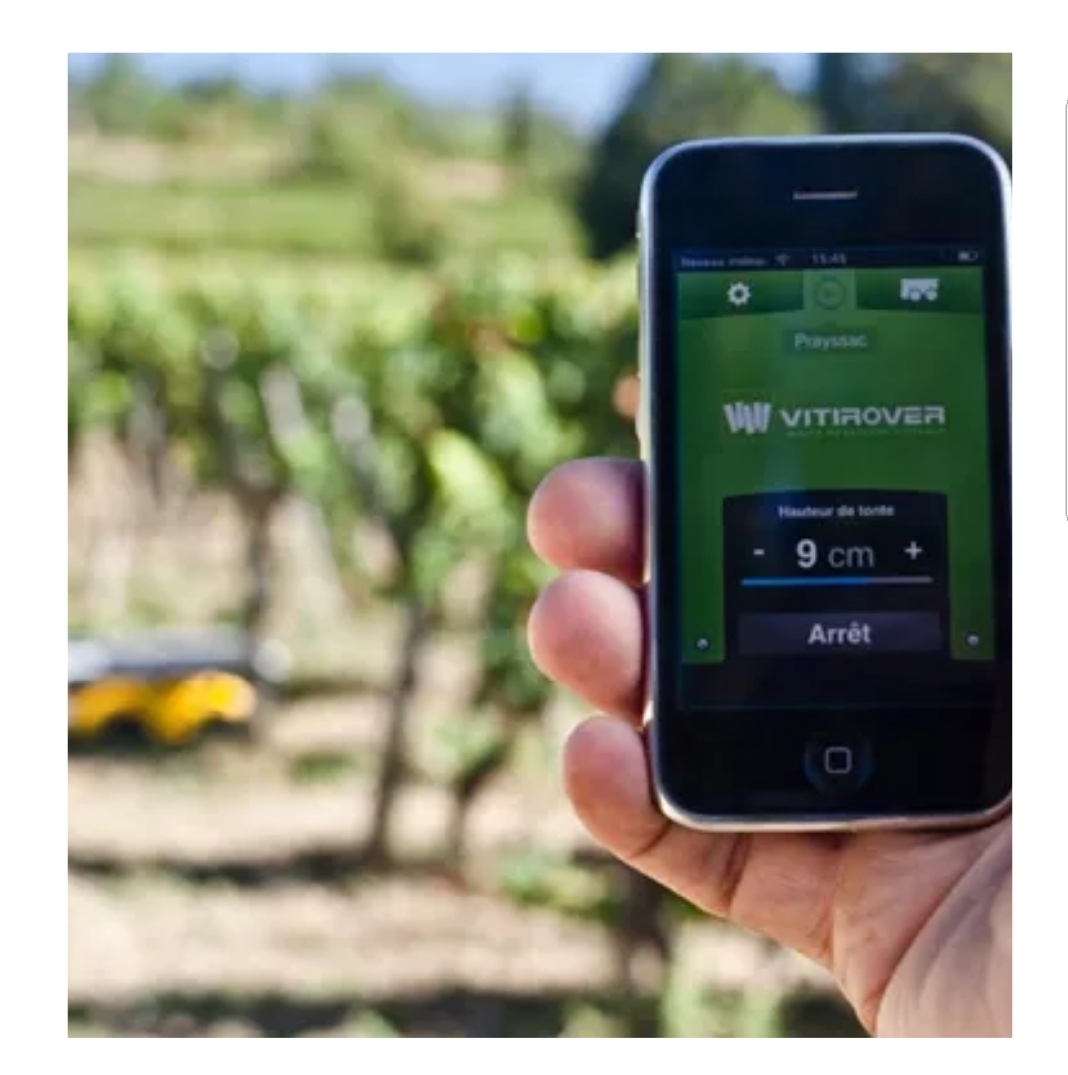
Anyway, why wait for Audi Quattro rovers  to crisscross Earth's spinoff? VitiRover smart lawnmowers already roam French wineyards. This Saint-Emilion-based startup provides autonomous, solar-powered, A.I.-loaded marvels that clean the place without breaking a sweat. Bonus: they can survive - and even reduce - DNA-altering levels of pesticides.


Note that VitiRover's team also includes a human Robot Shepherd. A refreshing retro touch our scary A.I. era.

mot-bile 2018


20170929

Click and mortar v. Click and mortar

Where you live, where you work, and where things happen are not necessarily the same places. Yet, even as technology abolishes distances, major trends tend to emerge from creative ecosystems that are not too stretched.

The model becomes more challenging where real estate and technology bubbles coexist. Will San Francisco ever recover its soul? How long will Berlin or Montreal remain affordable? Artists can hop from Brooklyn to Queens or New Jersey, but can they still feel the vibes when they return to Manhattan?

All majors are building artificial ecosystems around new headquarters, following more or less open patterns (See "Google's Gtown wins over ZeeTown and the Large Apple Collider" after "Zee Talk of Zee Town").

Somehow, these utopian projects celebrate urban failures, a mutual transplant rejection.

If startup ecosystems often play crucial roles in urban regeneration, it's more complex for big players to play god beyond a simple hotspot, such as a Google Campus for instance.

Xavier Niel's Station F is truly monumental, but neither open, nor really connected to its direct neighborhood - how many smaller fishes will fray near this titanic aquarium? how far can it stretch and transform eastern Paris?

Talking about massive concrete platforms... I'm also curious to see how my beloved Seun Sangga will evolve. The city of Seoul wants to turn this whale of a building into a startup hub, leveraging its unique DNA. But can you force it down its throat? Can the fragile ecosystem survive storytelling, even well intended?

One thing seems clear: if good and sound urbanism can foster and nurture innovation, you shouldn't overplan, and you should make space not just for the insiders and outsiders, but also for the fifty shades inbetween.

mot-bile 2017


20170303

Comfort zones

Whiffs of déjà vu from Barcelona's Mobile World Congress: a Nokia 3310, a BlackBerry keyboard (KeyOne), and soon a Motorola DynaTAC Vintage Edition?

After sending millions on Pokemon Go quests, Nintendo Switch-es back to hardware.

Google plays its classic from-service-to-device branding gimmick, positioning Google Home + Google Assistant against Amazon Echo + Amazon Alexa.

Google Home had to extend its footprint before Samsung Assistant hits the shelves, and will reach beyond Android to tickle Apple Siri. Rumor (and Android Police) has it Google will be the first multi-user device on the market.

At this stage, it doesn't matter much if the platform remains Google-centric, with at least 9 in-house brands among the fist 30 partners:

out of 30 partners to date, at least 9 belong to google
Nevermind this gizmo: the A.I. behemoth is less venturing into new territories than trying to defend its comfort zone.

mot-bile 2017

* "Pitching Google Pixel in 3 strikes"


20161123

Quick, Draw! Help Google crowd-accelerate Singularity!

ICYMI, Google gamified its A.I. experiments with Quick, Draw!, a game where you have 20 seconds to sketch a subject recognizeable by their system.

quickdraw.withgoogle.com

aiexperiments.withgoogle.com


Of course, the more people play, the smarter the A.I., and the stronger Big G. A bit like they use Captcha to decypher ancient texts scanned by Google Books, only with countless more applications.

Help Google crowd-accelerate singularity and build A.I. dystopia by playing with its QuickDraw (twitter.com/stephanemot/status/799484363305992192)

Similar games can be imagined in 3D, VR environments (not just for Big G's Tilt Brush), your every stroke or move tracked by eyefluence, and so many completely different kind of games...

Now, playing kid stuff in a sandbox can help grow singularity monsters. 

Yesterday, a philosopher friend wondered if A.I. could create philosophical concepts, but Jorge-Luis Borges already answered the question decades ago. 

Simply by mapping and applying patterns from different panes, you can easily come up with strikingly beautiful concepts and conjectures that could keep experts awake for eternities. 

If you run out of A.I. systems or monkeys, even elephants will do:


Just don't forget to invite once in a while a Magritte to your Quick, Draw! games, or a Woody Allen to your Quick, Think! sessions.


mot-bile 2016


20161009

Pitching Google Pixel in 3 strikes

Google unveiled its Google Pixel and Google Pixel XL handsets.


What strikes first is the convergence of communication codes between Google, Apple, and Samsung, confirming the difficulties of differenciating in commoditization times. That said, Samsung has beefed up its human side, Google its pedagogy dimensions, and Apple... well Apple remained Apple.

What strikes next is the focus on image, from the name (Pixel), to the pitch ("highest rated smartphone camera", "Unlimited storage for all your photos and videos"). This is not only a Google Phone, but also a Google Camera, and a boost for Google Photos. The Pixel is marketed almost like a featurephone, with a message more... focused than its competitors, even if Apple did stress iPhone 7's "advanced new camera systems", and even if Samsung's ill-fated but polyvalent Galaxy Note 7 offered new arguments ranging from sensors and lenses to Samsung Cloud.

The third strike comes from Google Assistant. We knew it existed, we knew it had in its DNA the capacity to help you defeat LEE Sedol*, but its namelessness makes it an even scarier A.I. monster, plugged to both your personal environment (controled by Big G), and to Big G's phenomenal reach in queries about anything, anytime, on any platform. Yes, Siri has a name, but its brains have just been purchased by Samsung, who snatched Viv Labs, the startup created by Siri founders.

But if one player has been struck out here, it seems to be - for the moment at least - Andromeda: the OS of Google Pixel is Android 7.1 Nougat, not Google's hybrid Android-Chrome OS. And Pixel was the perfect alibi, since the brand was introduced on Chromebook...

For Google, launching a competitive smartphone was probably more urgent than rolling out its new convergent OS.


mot-bile 2016


* see "Man v. Machine, Garry v. Gary"


20160813

The Special G Diet Plan

Mercury News reported that Google paused the roll out of its Google Fiber network across the Silicon Valley, and considered wireless (mmWave) instead of fixed (FTTP) for building connections. Big G purchased last June* Webpass, an ISP operating in 5 markets including the Bay area, and proposing both fiber and point-to-point wireless broadband solutions.

 
Google can use unlicensed spectrum and get a significant base to test broadband services, particularly for companies. These small, captive cells could become interesting entry points for 5G, without waiting for WAN technos to emerge. 

Will Google Fiber have to rebrand itself? Well you always need some for the backbone. And since Alphabet is also into medical fields, they already know that one fibers can't be digested, and two fibers can facilitate digestion.

Webpass won't be the last one to be wolfed down.

mot-bile 2016


* " Google Fiber agrees to acquire Webpass" (Webpass - June 22nd, 2016)


20160418

Networks: the TIP of Facebook's iceberg

Earlier this year, Facebook gave us a TIP (Telecom Infra Project*) about what could come next for them at the infrastructure level. Most members of the project, starting with Intel, Nokia, SK Telecom, Deutsche Telekom, are also on board of Facebook's much wider Open Compute Project, which also claims top coopetitor Google.

Naturally, Menlo Park wants a front seat for next gen network premieres - typically, early bird SKT is expected to be the first on 5G. But recent announcements*** at the F8 days confirm that the company intends to reach deeper into the value chain to secure and strenghten its leadership, particularly where innovation in network performance can prevent bottlenecks in these pervasive big data / heavy content times.

Terragraph (WiGig WiFi on 60 GHz) proposes ultra efficient W-LAN coverage for dense urban areas. You only need a station every 200 to 250 m. Of course it doesn't provide seamless handover, but a 200 m radius allows you more mobility than your typical hotspot.


Project ARIES (Antenna Radio Integration for Efficiency in Spectrum - MIMO) is more into W-WAN for rural areas. It combines 96 antennas to manage 24 simultaneous data streams, and aims at over 100 bps / Hz compared to 71 in early trials.


Here too, for a fraction of the price of a standard infra...
 
Could Facebook become a non-2-to-5G MNO, or a player in the game of standards? Not so fast. But an even more competitive value aggregator, certainly.

mot-bile 2016

* telecominfraproject.com
** opencompute.org 
*** "Introducing Facebook's new terrestrial connectivity systems — Terragraph and Project ARIES" (Facebook 20160414) 


20160131

"Fourth Industrial Revolution" passed Go, but singularity not yet a stone's throw away

Fun to hear the "Fourth Industrial Revolution" buzz at the WEF in Davos: years after Germany coined the corny "Industry 4.0", we're still applying XIXth century terms to XXIst century issues.

In a revolution, the old order is toppled by a new one. But in the previous 3, humans were in charge. So we're not just talking industries when we're talking 'bout a revolution, as Chapman sung (Tracy, not David).
What matters is that, in case you missed Elon Musk's howls of outrage weeks ago, worries about singularity are really getting mainstream. They're making headlines every day and Google's AlphaGo defeating a Go master* just confirmed the impression that our irrelevance is only a stone's throw away.


Impressive, but AlphaGo succeeded by studiously analyzing every move made by said master in his previous games. Here's a quick learner, but not yet a fully disruptive mind. Even go is finite, after all. We have yet to see A.I. set really new rules, invent really new games.

And get really silly.

Until then, as always, "I'm with stupid".

mot-bile 2016


* see "AlphaGo: using machine learning to master the ancient game of Go" (Google Blog 20160127)


20150817

Alphabet Inc. or Google Offshore? Driving Investors MAD


So Google opened its books as Page wrote a letter announcing Alphabet.

"G is for Google"
G is for acceleration
G is for the G-spot of investors
G is for gee!

But wait. Is that an Easter Egg on Alphabet Inc.'s website (abc.xyz)? Does Larry Page plan to drive investors MAD?


Why Alphabet? Of course there's the Standard Oil of the Internet syndrome, the urgent need for transparency ahead of big decisions from European regulators (not to mention the need for creative ways of securing massive offshore war chests), Page's love for the Berkshire model (as if Larry and Sergey were about to move into Warren Buffet's house in Omaha), or why not Page's quest of eternal life (in the beginning was the Alphabet?)...  

Anyway, Google seems to be gaining agility at the financial level (from a conglomerate to a holding company), but it it true at the operational level? Yes if you consider for instance partnerships of equals with third parties, or internal / external coopetitivity. Not so much if you consider the implications of transparency. Beyond what each unit earns, transfers between units will have to be measured in terms of money and resources. Even if subsidiaries are allowed to use the Ferrari engine for free like any other partner team, how about these in-house engineers who did all the fine tuning at critical entry points, sharing all key knowledge across the organization? Is core business at risk of becoming less fast, more furious? Let's see how this Service Pack (Sundar Pichai) performs.

Will Alphabet remain Google? Now I see a classic net company from the late 90s, maybe even a VC surfing the bubble with its core cashcow and a decent portfolio featuring potential great spinoffs, managing risk with different levels of priority, ready to dump activities as quickly as it ventures into new ones...

What matters is not whether ABC/G sells for USD 700 a share. 

Time matters. Time is of the essence.

And I'm afraid time is more likely to become a luxury in Alphabet City.

Not just because the Founding Father of The Great Foundation may not be as eternal as he wishes he were.

mot-bile 2015


20150730

Why top-down approaches of innovation in Korea never fail to fail

This map shows what's wrong with innovation in Korea: each "Center for Innovation and Creative Economy" is led by one chaebol, but the startup ecosystem demands actual clusters* and truly open approaches.


Korea innovation centers* too chaebol-centric. Startup ecosystem needs real clusters
* koreajoongangdaily.joins.com/news/article/article.aspx?aid=3007182 (KJD 20150729)
The contradiction is obvious, but the Korea JoongAng Daily article this map came from ("Outside Seoul, new centers have a sleepy feeling" - 20150729) doesn't even mention it as a reason why these centers fail, like all attempts from previous administrations.

Again (see my essay on "Heralding cultural diversity - a stronger and more sustainable Korean wave" - particularly part III, on the business dimension), the chaebol seldom act as true cultural leaders, and that's a drag for the nation.

Yet change is coming to Korea. In spite of the inability of most chaebol to truly adapt, and of governments to push for true reforms. And if these changes are not necessarily positive, they make Korea Inc.'s posture even less sustainable.

As expected (see "The Bigger, The Bitter"), the money recently poured over the nation by Google and many major international V.C.s to put a lock on the most promising startups is at the same time fueling the local and global bubbles, and weakening the chaebol sphere of influence. Now being the only new kid on the block isn't enough, and the time Yellomobile could purchase dozens of startups for a song has ended.

One of the most positive side effect could be the evolution of mindsets towards enterpreneurship and startups. The fear of failure, a major impediment to innovation in Korea (see "Too proud to fail? Not so simple."), is on the vane. 

And that's not just blind belief in the latest tech bubbles: more among the nation's brightest students prefer to give it a try rather than join Samsung and Co. even if they know chances are not on their side. They welcome failure as a positive experience, and they know that it's better to start with it, that they will learn more during these 'wasted' months or years than by following the mainstream lemming race.

Now Korea also needs a couple of greatly successful failure stories, and a fairer balance between the conservative and the disruptive.

I'm feeling certainly more optimistic than a couple of years ago, and I've met more than a few young brilliant minds trying promising things. They know they can't expect much from the big fishes or from the government, but it wouldn't hurt if said big fishes and said government actually decided to prove them wrong.

(intitially published on SeoulVillage.com as "Non-Centers = No Innovation, No Creative Economy"

mot-bile  2015
Add this page to your favorites

* and it's not just about bringing everybody on the same place either (see "Redrawing Korean Maps - Innovation Clusters")


20150604

Korea's fourth license reload

According to The Korea Herald (May 29), the Korean government is considering reviving the project of a fourth MNO license as part of a plan to stimulate the market.

Is there a need for another 4G network? Korea is well covered with LTE to LTE-A, beefed-up locally through pervasive femtocells and WiFi. And the three incumbents don't want to sit on their laurels: Korea Telecom promised 5G trials for the 2018 Pyeongchang Olympics, and SK Telecom announced a partnership with Google on augmented reality ("T-AR for Project Tango").

Is there a need for more competition? It depends on the profile of the new player, and the impacts on a M-VNO ecosystem that, at long last, is biting into a pie still dominated by SK Telecom, Korea Telecom, and LG U+.

According to the Ministry of Science, ICT and Future Planning (MSIP), M-VNOs were claiming a 8.8% market share as of April 21 (up from 2.9% in June 2012), thanks to prices on average 57% cheaper than the MNOs.


But it's not as if you had one fourth player with a 8.8% market share, big enough to contest the leaders on more profitable segments. Today, Korea has 27 M-VNOs, most struggling to make their first profit, and likely to never see it. Significantly, their number of subscribers started to explode when they targeted more discount-seeking audiences (the youth, Chinese migrant workers...).

A perennial candidate for the 4th spot is actually a consortium of M-VNOs: KMI (Korea Mobile Internet) revived their candidacy in October 2013, and defending the existing M-VNO ecosystem could be a stronger argument today. In December 2011, the Korea Communications Commission not only rejected KMI's bid, but also that of IST (Internet Space Time lost the backing of Hyundai Group at a critical moment). Note that the KCC also canceled the auction for the WiBro spectrum. I explained a few months earlier ("A Kbiz MNO ? SMEs vs Korea Inc") how the attempt by the Korea Federation of Small and Medium Businesses (Kbiz) to enter the market looked more like a lobbying stunt to push WiBro.

A much bigger fish could also seek the fourth license, with more brand power. Typically, CJ Group is already a major player in telecom, IPTV, or multimedia contents. It has the money to invest on new networks (Daum Kakao or Naver would need serious backing), the customer bases to leverage, and the contents to fill the pipes..., but don't bet on price wars with fellow chaebol on the juiciest segments. 
 
A true new entrant from overseas? Global MNOs know how difficult it would be in a country where foreign majors are seldom allowed to take or maintain leading positions (see retail for example: Carrefour and Wal-Mart already gone, Tesco on the back seat). But joining a consortium, or creating one remains a rare opportunity for international platforms to push their solutions in an otherwise locked Korean market. And nowadays, the dominant platforms do not necessarily belong to telecom operators...

Anyway, expect more lobbying ahead of the government's guidelines, expected by the end of June.


mot-bile 2015

* "Consortium to bid for 4th mobile carrier in S. Korea" (Yonhap News - 2013/10/08)


20150310

Free launches Android TV on Freebox mini 4k

A pioneer in box combos, Free launched a new Freebox that runs on Android TV:


It includes 4k / UHD readiness, the Android TV Remote Control with voice search, and Google Cast interaction with your devices, which can monitor your TV.


Definitely a major boost for Google and Android in the smart TV arena. Free also revives its own maverick aura in a rather gloomy market. 

Not so good for the Free clients who happen to be Apple users, but iPhone fans can more often be found within Orange or SFR ranks.

mot-bile 2015


20150228

Google's Gtown wins over ZeeTown and the Large Apple Collider

As soon as Facebook revealed the plans of Zuckerbergville ("Zee Talk of Zee Town"), Google presented its future headquarters on its official blog*.

Big G will still reside in Mountain View, but in North Bayshore District. And double its capacity to 20,000 employees.

Waterway? Check. Highway? Check. But the rendering is much sexier and futuristic, and there's a nice video to support it (YouTube of course):


With its organic touch and absence of cars, Gtown looks more like a city of the future than Zeetown, probably because Google is much more into hardware innovation than Facebook. Furthermore, the architect is not a 85 year old legend (Zuck's Gehry) but two fun looking younger guns: Bjarke Ingels (Bjarke Ingels Group) and Thomas Heatherwick (Heatherwick Studio). Where Z looked for a brand, G went for sense and the essence. 

Granted, I'm unfairly comparing headquarters with employee quarters, and the constraints are not the same. But these projects speak volumes about differences in approaches and projected images.

Nothing as scary as the dystopian panopticon / large apple colliderish Apple Campus 2 announced two years ago. Now that's One Infinite Loop if I ever saw one:


Consistent with a hardware manufacturer used to proprietary systems...

mot-bile 2015

* see ""


20150209

I'm with stupid


A couple of days ago, it took several humans to rescue a Korean lady who had been savagely assaulted by her robot vacuum cleaner. 


Some may consider this incident to be the first post-singularity crime, because the machine was obviously gifted with an intelligence superior to that of its owner (yes, robot cleaners are great and long hair is great, but even if ondol is great, you simply don’t sleep with the latter on the path of the former).


Still, singularity is not for today. And if we’re not there yet, that’s also because stupidity is precisely what makes humans superior to machines. But we’ll have to get smarter. Not in order to win the evolution race against a more competitive opponent, but in order not to lose ourselves.


In this transitional period, humans keep ruling because they’re stupid


Making mistakes is essential in any learning process, and humans will remain superior to machines as long as machines can’t cope alone with major disruptions, spot and fix issues without rules and decisions based on human expertise or judgment. I don’t mean bugs, basic problems, or even simple loopholes, but issues that truly require cognitive leaps to identify and brand new approaches to solve.

One of the beauties of computing is that you can easily track back decisions, implement and improve rules. But for the moment, most learning systems keep exposing our own flaws, because they are not truly self-learning, and ultimately rely on human expertise. I once fell for their devilish attractiveness: our information systems needed a scoring solution, and here was this new, agile, future-proof, and ego-flatteringly smart concept waiting to be toyed with. But we quickly understood that humans were the weaker link, that at that early technological stage, making sure the gizmo remained relevant would demand rules that no organization would ever be able to implement on a sustainable basis. Because our dream of simplified decision making processes promised to be the mother of all Rube Goldberg machines, we opted for an off-the-shelf solution that did the trick for a fraction of the cost. Yes neural networks will unlock new realms for innovation, but back then we simply couldn’t rely only on them to run our whole business. From a risk management perspective, that’s a no brainer.

Of course, we remain stupid animals, and financial organizations keep using algorithmic trading to bang their heads against the Wall with greater force and speed every day…

Still, we cannot afford to continue developing at the same time Artificial Intelligence in machines and Real Stupidity in ourselves.

‘Machines smarter than humans’ must not mean ‘machines out of human reach’


In singularity times, machines will be able to take more complex decisions, to better learn from indirect experiences, to invent radically disruptive rules and programs, to be more proactive. What will be the role of humans in these processes? More often pupils than teachers? More often followers than leaders? More often puppets than puppeteers? On which side of the food chain? Will humans become mere servers, accepting requests from machine-clients that only need them to perfect their own capacity to deal with imperfection? Will we become the only true ‘terminals’ in a pervasively connected world or, at the other extreme, become things among other things in the almighty yet hackable internet of things? In any case, you don’t want Web 3.0 to be controlled by a happy few. It is essential to guarantee transparency, democracy, trust.

More than ever, humans will have to learn how to think by themselves, without machines. We must learn to understand and to challenge our technological environments, we must learn to communicate with each other, not only through machines.

Yet of course, we must also learn to communicate with machines, to get inside their brains as much as they’ll get inside ours. Programming must not be a foreign language mastered by a minority, machines must not become black boxes. Because computers will be first modeled after our brains, then improved from there, we will need increasingly simple interfaces to cope with increasingly complex systems.

We will spend more time with machines, including maybe more time serving them. Information Services are already used to rationalize human resources by projects, to calculate man-hour units that are often measuring time devoted to a human-machine dialog. And today, we’re already measuring the time individuals spend on average in front of a screen (TV, smartphone, laptop…), without distinguishing active and passive periods. Tomorrow, we might need to track the time spent on active contributions, or to count inputs that may also become sources of income. And that’s without counting the invisible contributions we’ll all make as we move in always-on environments that evolve by learning from our very behaviors.

Our role won’t be just to help machines get smarter, but to constantly challenge decisions taken / rules fixed by supposedly superior intelligences, evaluating how far is too far, proposing simple ways of activating / deactivating key functionalities. The value will be less in designing or debugging algorithms, than in questioning their very purpose. We will enjoy a lot of fancy autopilot systems, but should remain the captain on board.

In fuzzy and disruptive environments: keep updated, but stay true


We know singularity is coming, we suspect it’s going to be big and pervasive, but we can’t be sure we’ll be ready on time as individuals and as corporations.

Don’t panic: humans have always been laggards scared by the unknown, trying to figure out how their environments worked, including the ones they built themselves (particularly the ones they built themselves). The only thing is that, at a certain stage called singularity, this man-made environment may understand us better than ourselves.

Now you can panic.

But don’t start running like headless chickens, and cool down a bit. You only need to develop the minimal level of paranoia and schizophrenia required for good strategic intelligence: ‘paranoia’ because playing with worst case scenarios years ahead is more fun than cleaning the mess after the disruptions actually hit the fan, and ‘schizophrenia’ because you understand much more clearly your environment when you alternate different points of views.

Of course, it helps to follow up what’s going on in innovation, to see how leaders try to remain at the top of the game. Look how Google beefs up its core assets – the deepest and fastest reach in requests -, in which fields Larry Page & Co. venture to cover key entry points (Google X, Calico, Singularity University…). Beyond the usual suspects and highly innovative sectors, combine key enablers with key players in key fields, and beyond in political or social domains, and let your imagination roll. Then consider from different viewpoints your own environment, your own companies, your own jobs… and see how it could play out.

The way stakeholders interact in a community will necessarily evolve. For instance, to remain in business fields, doesn’t the old employer-employee or provider-consumer pairs already sound obsolete? Who’s hiring whom? Who’s providing a service to whom? Look how individuals, groups, brands, services, or corporations evolve in the LinkedIn marketplace. Look how journalism evolved; the time spent crowdsourcing upstream and broadcasting downstream, with sometimes the same provider/consumer at the other end…

Companies themselves are becoming more agile networks, and depending on the field, some already function around a very limited core, or to the contrary through a pervasive, collaborative ‘human fog’.

The internet revolution not only permeated societies, but paved the way for singularity and the pedagogy of key concepts related to it. It also trained us for the changes to come.

Remember when the internet became a mainstream technology, during the mid-nineties: most businesses considered it as an external phenomenon, more ‘a new business’ than ‘a new way of doing business’. They didn’t pay attention to the potential impacts on their own activity before perceiving them, in which case it was often too late. Even in the major telecom group I worked for, most people, at the beginning, treated the internet like a new line of products rather than like a revolution in services. A lot of pedagogy was needed to change mindsets, and one easy way was to project decision makers into an environment where all other players would have evolved. Not just our competitors, but key players in fields that a priori didn’t seem connected to our own, some of which were bound to become coopetitors.

Guessing how players would evolve required understanding and challenging their environments, and fundamentally answering the question ‘what is their ‘métier’?’ I used this old fashioned word because it reaches deeper than ‘occupation’, ‘trade’, ‘craft’, ‘calling’, ‘work’, ‘profession’, or ‘job’. It defines you more by what you are than by what you do. For instance, companies providing apparently exactly the same service and present at the same levels of the value chain could have different core métiers: this one would be fundamentally more a designer, that one more an editor. As proprietary value chains became open value galaxies, players chose different paths to focus on core dimensions, outsource or abandon others, venture into new territories, build innovative partnerships. In these utterly uncertain times, you could tell who was true to themselves, who truly understood their métier enough to see if not precisely how, at least in which ways they would have to evolve.

In shifting environments, identity demands clear values. It’s not what you do, but what you are, and what you won’t do. And in singularity times more than ever, transparency will be key to trust in a relationship.

*

Is the question ‘will technology create or destroy jobs?’* or ‘how far will technology redefine employment, organizations, ourselves, our relations with others, with our environment…?’ And ultimately, ‘how must we anticipate as individuals and societies to cope in sustainable ways?”

Anticipating singularity is a chance for us to reaffirm our humanity.

And to push stupidity to new levels.


* see my answers to the Singularity 99 questionnaire


mot-bile 2015


Copyright Stephane MOT 2003-2025 HOME - Today's wireless headlines - Korea wireless news - all posts (full list) - useful links - stephanemot.com (personal portal)
my books : "dragedies" - "La Ligue des Oublies"
my other sites : blogules - blogules (VF) - Seoul Village - footlog - Citizen Came - Copyright Stephane MOT 2003-2022