Showing posts with label handsets. Show all posts

20210120

LG Rollable @ CES 2021

ICYMI at CES, LG announced a commercial launch of its rollable screen phone in 2021. Fascinating to see a smartphone seamlessly morph into a phablet as its screen stretches from 6.8 to 7.4 inches: 


Note that according to Nikkei Asia*, LG teamed up with its Chinese coopetitor BOE, who showcased this 12.3 inch prototype 2 years ago (a thick papyrus scroll with a gimbap roll sidekick to hang on your wall):


Smart way of making handset news without making new handsets.

Frankly, I was impressed but not really convinced by LG's rollable TV. A rollable phone seems to have a greater potential.
I always wanted to be able to carry a tablet in my breast pocket, and this solution looks more elegant than developing a king size barrel chest. Provided it comes with a stylus and the screen doesn't feel as uneven as a foldable, I might even consider switching from my dear Galaxy Note.

While we humans keep evolving at a very slow pace in uncertain directions, our personal devices are becoming shapeshifters. Some day they will wrap around our necks like scarves. And strangle us when we don't behave well enough for Big Brother.


mot-bile 2021


* "LG to release world's first rollable smartphone, developed with BOE" (Nikkei Asia 20210112)


20190422

5G Korea, Huawei inside

According to Pulse and other media*, Huawei will open next month its first 5G Open Lab in the world in Seoul.

Of course, earlier this month, Korea became the first country in the world to launch 5G commercially (even if for enterprise customers only at the beginning). Korea Inc precipitated the launch just to achieve that premiere, SK Telecom, KT, and LG U+ literally beating Verizon on the eleventh hour.

If local MNOs don't communicate much on their 5G network suppliers, Huawei already holds significant positions in Korea, as a recent Asan Institute focus** noticed:
- LG U+'s 4G network in Seoul, Northern Gyeonggi-do, Incheon, and Gangwon-do, in other words its most strategic areas (capital region, and all borders with North Korea)
- parts of Naver's new Internet Data Center
- KT's network upgrade for NonHyeop Bank, a big 4 player

Korea Inc does communicate on a key 5G supplier, Samsung, who clearly won the first round at the smartphone level with its Galaxy S10 5G.

Another of their groundbreaking handsets, the Galaxy Fold, received mixed reviews from the few journalists who were granted one ahead of the official launch, but the manufacturer did warn them that they shouldn't have pulled out the plastic protection away from the delicate screen.


Interesting to see what happens when the veil is lifted about Huawei's presence in the country.


mot-bile 2019

* "Huawei to open its world’s first 5G open lab in Seoul in May" (Pulse 20190422)
** "Opportunities and Challenges for South Korea in the New Era of 5G" (J. James KIM, HONG Sanghwa - Asan Institute 20190321)


20190326

Triple Play, Triple Aggregation

SK Telecom confirmed April 5 as the date of its 5G launch - as soon as Samsung Galaxy S10 5G handsets are delivered (monthly plans expected around KRW55,000 / $49 per month). 

As expected, promoting a 'Social VR' experience well ahead of 5G ("Ready Player oksusu Social VR?") turned out to be a smart move to detect the levels of bandwidth required for an optimal user experience (e.g. 4G LTE too slow for rapid eye / head movements): Korea's leading MNO intends to leverage 5G compression technologies to speed up VR sessions by 30%, and to combine 5G with 4G and wifi where available to allow the download of a 2 Gb movie in only 4 seconds, dubbing the concept 'Triple Aggregation'.

While operators work hard to make the most of their costly pipes, other players parade with seemingly effortless solutions, but will Google Stadia fulfill its category killer potential? Announced at the Game Developers Conference by Sundar Pichai himself, the cloud-based platform and its Stadia Controler would love to piggyback the kind of boosters SKT has in store, but regardless, YouTube and Google Home integration will definitely help.

Apple had to react, but could only display an Apple Arcade that smells like 1980s spirit. Yeah! exclusive games! only on iOS, Mac, Apple TV! to download from your Apple Store! 

Even if that's in a different field, Apple TV+ is also about defending the Apple creative ecosystem. Maybe they will eventually netflixize their game the Alphabet way.

Anyway, Cupertino pulled a much more interesting card with their Apple Card, which should quickly allow them to show us some money.


mot-bile 2019

* see "SKT says 5G network is tested, ready to go"


20180303

Moonshots and Wineyardshots - MWC meets Salon de l'Agriculture

Mobile World Congress 2018 was more about improvements than game-changing innovations.

As announced, LG abandoned the arms race to focus on software upgrades instead of new hardware. Now you can record their ultra-slomo evolution with your Samsung Galaxy S9 (+).

While Sony joins the headjack-free craze (Sony Xperia XZ2), Nokia slides back to Matrix, reviving its iconic banana (8110 via HMD Global).

And by the time Nok-Nok rolls-out a ultra-light 4G network across the Moon with Google and Vodafone, 5G will be all the rage at home.

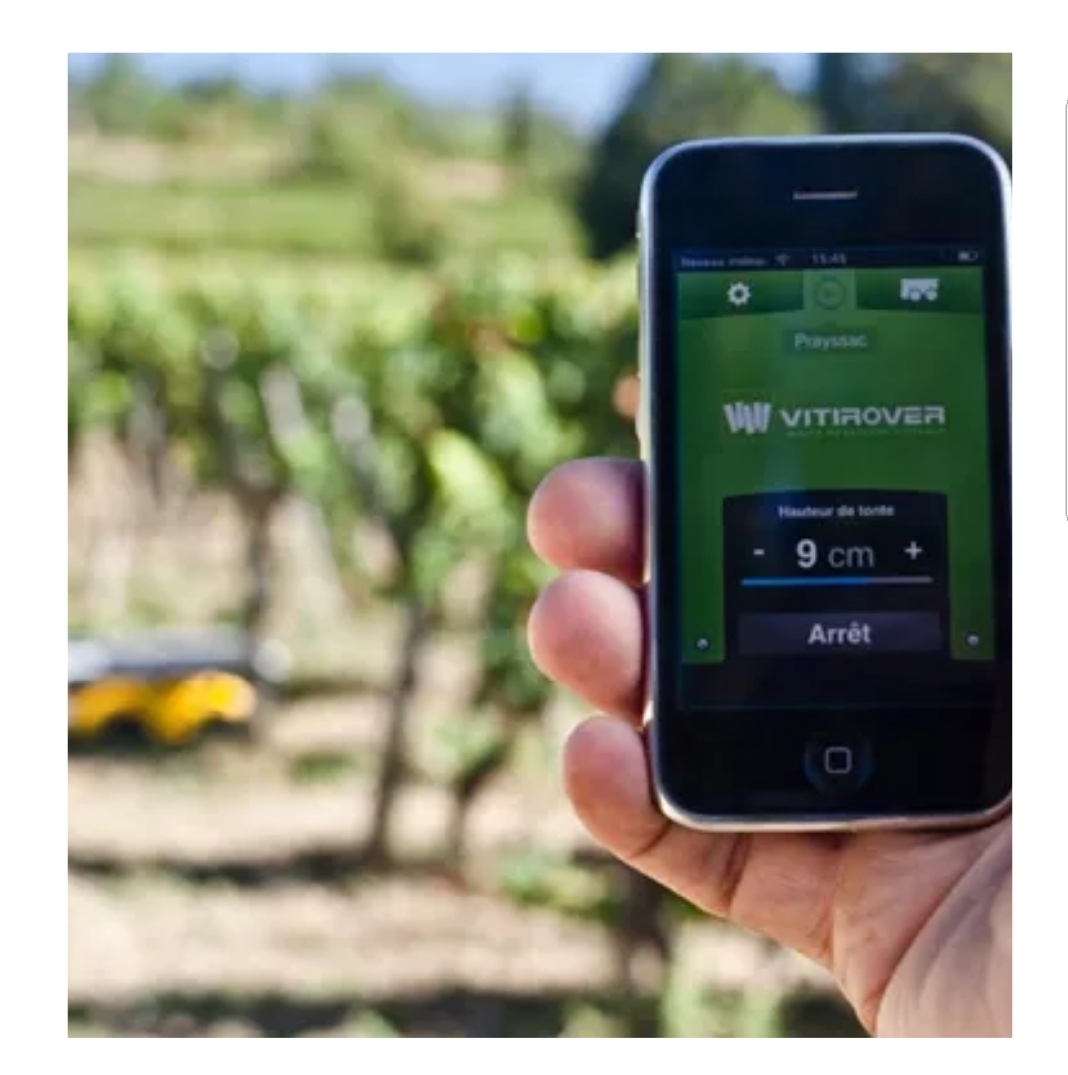
Anyway, why wait for Audi Quattro rovers  to crisscross Earth's spinoff? VitiRover smart lawnmowers already roam French wineyards. This Saint-Emilion-based startup provides autonomous, solar-powered, A.I.-loaded marvels that clean the place without breaking a sweat. Bonus: they can survive - and even reduce - DNA-altering levels of pesticides.


Note that VitiRover's team also includes a human Robot Shepherd. A refreshing retro touch our scary A.I. era.

mot-bile 2018


20161009

Pitching Google Pixel in 3 strikes

Google unveiled its Google Pixel and Google Pixel XL handsets.


What strikes first is the convergence of communication codes between Google, Apple, and Samsung, confirming the difficulties of differenciating in commoditization times. That said, Samsung has beefed up its human side, Google its pedagogy dimensions, and Apple... well Apple remained Apple.

What strikes next is the focus on image, from the name (Pixel), to the pitch ("highest rated smartphone camera", "Unlimited storage for all your photos and videos"). This is not only a Google Phone, but also a Google Camera, and a boost for Google Photos. The Pixel is marketed almost like a featurephone, with a message more... focused than its competitors, even if Apple did stress iPhone 7's "advanced new camera systems", and even if Samsung's ill-fated but polyvalent Galaxy Note 7 offered new arguments ranging from sensors and lenses to Samsung Cloud.

The third strike comes from Google Assistant. We knew it existed, we knew it had in its DNA the capacity to help you defeat LEE Sedol*, but its namelessness makes it an even scarier A.I. monster, plugged to both your personal environment (controled by Big G), and to Big G's phenomenal reach in queries about anything, anytime, on any platform. Yes, Siri has a name, but its brains have just been purchased by Samsung, who snatched Viv Labs, the startup created by Siri founders.

But if one player has been struck out here, it seems to be - for the moment at least - Andromeda: the OS of Google Pixel is Android 7.1 Nougat, not Google's hybrid Android-Chrome OS. And Pixel was the perfect alibi, since the brand was introduced on Chromebook...

For Google, launching a competitive smartphone was probably more urgent than rolling out its new convergent OS.


mot-bile 2016


* see "Man v. Machine, Garry v. Gary"


20111124

Amazon, Facebook Smartphones? Who cares for Nokia Siemens Networks?

The coming holiday season is strategic for tablet market shares, and that's one of the main reasons why Apple blocked the Samsung Galaxy Tabs in key countries. Cupertino lawyers didn't even try to stop Amazon's Kindle Fire in spite of its vague iPhone 1G design: this low cost gizmo is not a direct competitor, it contributes to democratize the tablet format, and by contrast enhances the coolness of iPad in places where Galaxy's not available.

If the commoditization of tablets will take more time than it did for smartphones, it won't take ages either. Apple obviously intends to milk the cow as long as it can, and to make sure it doesn't miss the next wave. Meanwhile, Samsung doesn't seem to make the most of its leadership in bigger screens because what Smart TV needs is a leader in value aggregation. Unless your TV remains a dumb screen and your smartbox grows wings.

Smartphones will keep getting smarter, but frankly I don't care if Facebook, Amazon, and the countless players rumored to work on them launch one or not.

I care for the 17,000 people kindly fired by Nokia Siemens Networks by the end of next year, a measure shamelessly presented as a "new strategy" ("
Nokia Siemens Networks puts mobile broadband and services at the heart of its strategy; initiates restructuring to maintain long-term competitiveness and improve profitability").

Fair enough, networks have never been sexy in this sector. Except maybe when there were more base stations than mobile subscribers, and when handsets were bigger than Macintoshes. But NSN can sound as attractive as SNS, and if it really wants to put "services at the heart of its strategy", all it has to do is to rephrase its press release.

I'd suggest: "Introducing "Newstrategization", our latest killer app".

mot-bile 2011


20111025

NFC goes shopping : live in Seoul

As announced (see "Grand NFC Korea Alliance"), the heart of Myeongdong, a major shopping neighborhood popular among younger generations and Japanese tourists, will be a key test bed for NFC transactions in Korea next month.

This "NFC special district" operation is organized by the KCC (since security is key, the national authority delegated the mission to its KISA unit / Korea Internet Security Agency) and involves all 3 operators (SKT, KT, LGT/LGU+), 9 credit card companies, and key players and enablers
listed last June (more are expected soon, particularly in ticketing / couponing applications).

Now for the hard(ware) part ? Terminals are ready on both ends : 100 shops will be equipped with dongles, and enough enduser should be enabled from day one. The NFC payment solution has already been embedded in the Samsung Galaxy S II and other recent models, and rival iPhones can join in thanks to a plug-in developped for Korea Telecom.

Microsoft might join later, but I'm not sure the Samsung Series 7 Slate has already the solution.

mot-bile 2011


20110816

Supercharging Whom ? Google to Acquire Motorola Mobility

"Our acquisition of Motorola will increase competition by strengthening Google's patent portfolio, which will enable us to better protect Android from anti-competitive threats from Microsoft, Apple and other companies." That's how Larry Page explains the twelve billion purchase in the official Google blog.

The blog is titled "
Supercharging Android: Google to Acquire Motorola Mobility"*, but one could wonder who will be supercharged in the end. Third parties and endusers may start asking themselves what will come out of a landscape where former archrivals Microsoft and Nokia tie the knot, or where the mother of all netcos swallows a former giant manufacturer. SonyEricsson theoretically went even further on the value chain, but the union was celebrated in completely different times, when networks were not precisely clogged with mobile internet traffic.

More moves are expected. Apple has been rumored to be in a mega purchasing mood for quite awhile, and I wouldn't be surprised to see Samsung making something big. Lee Kun-hee just pointed out the necessity for the company to evolve, an evidence we recently repeated (see "
Huawei Vision : a view from the cloud"). This should go beyond such acquisition as Grandis, a specialist in memory wolfed down earlier this month by the South Korean chaebol.

Anyway, the Motorola episode reassesses the importance of patents in the legal war raging worldwide. Apple claimed a few significant victories : a big chunk of Nortel patents, plus a suspension of Galaxy Tab 10.1 sales in key markets.

The problem is Apple is not John Grisham, an entity that makes money with legal stuff. Being the next NTP is not exactly "cool".

And the consumer is not likely to beg "supercharge me".

mot-bile 2011

* where the king of the 80s is kindly put at the same level as bankrupt Nortel : an empty shell with a collection of patents


20110804

Huawei Vision : a view from the cloud

Huawei Vision runs on Android 2.3 but comes with a 160 Gigabyte spot in the cloud for every owner, positioning the Chinese player at the strategic gateway between that soft spot and its own hardware (scheduled for September in China, along with 4G). Apps agregation starts with the usual suspects : music, images or video that you may not want to transfer forever from laptop to laptop or to XX century storage solutions (ie CDs, DVDs).

Hardly disruptive : Alibaba just launched a similar concept, and of course Apple made a splash with its iCloud earlier this year. But Huawei was supposed to be essentially about hardware.

Sounds like that business model may not be sustainable anymore. Clouds may pass in the sky, replaced with new UFOs, but the truth is starting to sink in : smartphones are not much smarter than computers, and differenciation is getting more and more difficult every year. Worse : product cycles are even shorter and being cool never lasts long.

Food for thought for Samsung, who's been threatened by the Nokia syndrome even before claiming the leadership in handsets. But at least the Finns did venture into new business models. Never forget that OVI preceded Apple's App Store iOs by one year.

Of course, back then, Jorma Ollila was already gone, and Steve Jobs still cool.


mot-bile 2011


20110506

Did you slap your PaperPhone on ? Snaplet

Foldable screens and e-ink technologies have fueled our imaginations for years (remember the downloadable newspaper ?), and teams of North American researchers* added the logical next next step, with a PaperPhone prototype to be on display next Tuesday at the Computer Human Interaction conference in Vancouver. They went one notch further with the Snaplet, a wristband which becomes "a watch when convex, a PDA when flat and a phone when concave"**.

The Snaplet is a really interesting concept because it adds a human touch and provides a wearable solution for the rollscreen (call it a tablet or a phone depending on the circumstances). Of course, it won't be that simple (consider sweat, thefts, or shocks, for instance), but that's a nice upgrade for the snappable watch, and a perfect support for promotional gifts : I don't see people paying fortunes for a rugged version, but couple this with the disposable phone...

mot-bile 2011

* from Human Media Lab, Queen's University / Motivational Environments Research, Arizona State University
** both unveiled by the Beeb, see BBC's "
Flexible phone made from electronic paper to debut"


20110212

SK Telecom keeps Hoppin

While I was blogging about KT's cloud computing services, rival SK Telecom was presenting its own cloud computing platform to the press, N-Screen.

The idea is to make convergence as seamless as possible for the enduser and service providers : the platform automatically recognises the device and adapts the content to it, and all DRM hassles have been taken care of in advance.

There too, your handset is as more a smartphone as a smartTV enabler. It's a Samsung device, of the now well established Galaxy S family, and it's branded Galaxy S Hoppin (among other characteristics : Android 2.2, 1 GHz CPU, 4-inch Super AMOLED display...). Subventions included, it will cost you KRW 300,000.

SKT has already been advertising massively for Hoppin, with an enduser glued to the screen in every context, even asleep. Since Hoppin is also the name of their cloud computing service, they will eventually communicate about other devices (TV, PCs, tablets, fixed phones... - note that more and more models of fixed phones feature a color screen in Korea).

N-Screen is an open platform, meaning first of all that everybody is invited to join. To prove successful, that should include, beyond endusers, more than a few content providers or handset manufacturers.

Same story for Android platforms : SK Telecom boasts about its close partnership with Google in hardware and software development (GED / Google Experience Device, Samsung Galaxy, Motorola Xoom Tablet, LG Electronics G-Slate...), and it is a clear leader at the handset level (SKT sold 83% of all Android handsets in Korea and now averages 20,000 units a day), but the operator is still struggling at the BtoBtoC level, even if developers are proposed a "T Academy" to create more apps for the "T Store".

This press conference followed the announcement of a partnership with Japan's KDDI and Softbank Mobile for NFC-based mobile payment. Smart Poster will be operational in both countries and aims for the global market. Local competitors with exotic proprietary solutions, take notice :

The aim of the trial test is to establish mutual compatibility between countries using NFC as a common international standard instead of existing local Korean or Japanese mobile financial service methods. Currently in Korea, telecommunication companies provide mobile financial services such as credit cards, public transportation, stock trading and banking using a finance-enabled USIM chip called the 'Combi Card'. While Japan's finance service utilizes a self-developed method called 'Felica' by installing a second chip, apart from the USIM, within the mobile device


NTT DoCoMo, a partner of KT, must have appreciated the ironic tribute. Some may hear some bitterness in the tone : as we often mentioned earlier, SKT has somehow abandoned its cultural and innovative leadership to Korea Telecom. It reshuffled its management and pledged to develop a "young, speedy organization", to promote "openness" and "collaboration", and to regain confidence overseas.

MelOn recently made it in Indonesia, and this partnership with Japanese MNOs is really significant, but it will take more to be recognized as a major value aggregator at the international level. Let's see how the new management takes up the challenge.

mot-bile 2011


20100825

15 Gigas of fame for metroPCS : Samsung Craft 4G LTE (SCH-R900)

Samsung confirmed today to Yonhap that metroPCS Wireless Inc., a CDMA player, would launch its SCH-R900 4G model (LTE with 3G CDMA) in the US. The gizmo had been announced by metroPCS last March, and approved by the FCC last month (leaks for geeks included).

At the OS level, Android remains a favorite.

At the network level, metroPCS has rolled out LTE on places where people love to show off : Las Vegas and Dallas.

At the pricing level, observers expect a $300 price tag, but even more interesting to see will be how aggressively this MNO, specialized in discount and prepaid, will price data. The Texas-based company operates on major US markets, and claims over 7 million subs.

Verizon Wireless & co won't let it enjoy TTM leadership for too long, and they will roll out more aggressively.

Until then, great opportunity to shine. How about Warholian 15 Gigas, the data equivalent to the 15 minutes of fame ?

mot-bile 2010


20100715

VoIP over 3G, unlimited data... SK Telecom victim of the summerheat wave ?

SK Telecom is lobbying in favor of a more open regulation for mobile Voice over IP in Korea : instead of being only legal on Wi-Fi, it would be authorized on 3G as well. SKT would then provide the service through Skype-like solutions - actually, I wouldn't be surprised to see some Google inside (see "Gizmo5 found its Google Voice"), and consumers would only pay for the data (not to mention fees from the app provider).

OK OK. There's a catch : data rates are pretty expensive in Korea.

Well, not so much now : SK Telecom also announced an unlimited data plan for all subs with a data package of over KRW 55,000 (about USD 45) per month. That would be for smartphone holders, but as far as I know, you can use your smartphone as a modem for greedier devices.

Alright. Here is a small operator struggling for market share, desperate to win big customers, and not worried about network capacity.

Wait a minute. SKT is by far the leader of Korea's (saturated) market, with about 51% of the pie. SKT does not sell iPhones like AT&T, whose success with Apple forced a spectacular backpedaling on unlimited data plans, but SKT is doing pretty well with Samsung Galaxy S (over 300,000 units sold for this Android handset in Korea). Its position doesn't seem that much threatened in the short term.

But what looks like a desperate defensive move following data rate cuts by competitors is also an aggressive move on convergence / quadplay offers (or is it pentaplay, now that the battle rages on wi-fi hotspots ?). Voice ? A commodity, sooner than later - losing a big customer altogether would cost me much more. And guess what ? Ultra-Broadband Convergence Network (UBcN) is around the corner (that's to say 2013 but blocks are bigger around here).

Still, unlimited data plans are a very risky bet in "ubiquitous Korea".


mot-bile 2010


20100531

Korea : Nexus One in June, more robust networks in sight

Korea Telecom announced Google's Nexus One (HTC on Android FroYo) for June 2010.

Since Samsung preempted the green android territory and even protected the brand for handsets*, KT will have to find a different angle.

June, World Cup, Frozen Yoghurt... expect something fresher for this smartphone / app phone. Patbingsu style.

KT claimed its 700,000th iPhone sold in May, and boosted wireless data traffic by 17.5 in Q1 2010 vs Q1 2009. Q2 should be much more impressive as smartphones rise on track with 5M units sold by EOY 2010.

And 3D TV is becoming a reality (also on time for the FIFA World Cup), 3D is bound to pop up on Korean mobile phones as soon as possible. It's a matter of pride for Samsung and LG, it's also a priority for local authorities who are planning the country for very very high speed broadband.

That's for 2013. But mobile network capacity will become critical much earlier, even with LTE, and Korea's dominant operators (SKT and KT) are intensifying their aggressive race for WiFi hotspots.

mot-bile 2010

* see "
KT claims 500,000 iPhones"


20100516

Euphemism PR 101 : "Nexus One changes in availability"

As Andy Rubin, VP, Engineering, put it in Google's most elaborate backpedaling announcement ever, "innovation requires constant iteration".

I can't wait to see the next iteration of such innovative PR.

A few months ago, when Google was trumpeting online distribution for its Nexus One, I pointed out that "Google are not into distribution, IRL.*" This operation was bound to fail : not only because this is not Big G's trade, but also because Big G cannot grow bigger in every single dimension without endangering its own stability, including from a regulator's point of view. Furthermore, yes, "it's clear that many customers like a hands-on experience before buying a phone, and they also want a wide range of service plans to chose from".

So the only questions were "when" and "how". When would Google stop this joke ? The answer is today. For the "where", the official Google Blog was the natural channel. Now I really loved the "how" they did it :

- Google is not stopping online sales : "
Nexus One changes in availability"

- Google is not abandonning independence : it offers "more retail availability" and is going to be "working with partners"

- Google is not closing its online store : "we'll stop selling handsets via the web store, and will instead use it as an online store window", and we even call this innovation "from retail to viewing".

Now it takes guts to deliver such a pitch without guffawing. Google probably learned that skill from Chinese authorities.

mot-bile 2010

* "
Google Phone At Hand. No Kindling."


20100429

HP buys a Palm ? Big deal...

$1.2 billion for Palm Inc., the sale itself a non-event, 3Com and its spin-off reunited under the Hewlett-Packard umbrella... times have definitely changed over the past 10 years.

Even if the Palm + HP combo can propose a seamless handset-PDA-tablet-laptop-desktop platform, this episode is not likely to bring real disruption to the market. And to me, it doesn't mean that HP is becoming smart : it simply confirms that smartphones are becoming if not commodities at least more and more common things.

No change for Microsoft : WebOS won't kill Windows Mobile by itself. But the eventual emergence of a more consistant open / Linux-based alliance remains more than ever the base case scenario.

No change for Google : it still needs to succeed regardless of the OS, and Android / the Open Hanset Alliance are bound to merge with some rivals anyway.

No change for Apple : Cupertino still needs to change its strategy if it wants to become THE leader, which I doubt. And there's still a lot of money to make where it sits (and moves), including as an editor.

No change for Research In Motion : it still can stick to its profitable niche, or accept a nice offer.

And most of all, no change for Nokia : the leader in hardware and mobile OS has not been acting like one for too long.


mot-bile 2010


20100307

Energize your handset, nevermind the consequences

Indian manufacturer Olive Telecommunications launched a mobile phone where AAA batteries can give you up to 3 more hours of conversation when the lithium-ion battery is exhausted. "Olive FrvrOn" (Forever On, not Fever On) costs $37 and targets rural areas where plugs are not always available.

Smart and simple, but not very environmental friendly. How many AAA batteries do you think will be recycled in the dead middle of India ? How about the cost of logistics for this noria of 11.5 gram AAA batteries ?

Now there is a power issue here (and there as well). Such manufacturers as Samsung are investigating other solutions, more or less relevant*, but all based on a more sustainable concept : generate your power on the spot, be it using your own force of with the help of the sun.

So OK, this manufacturer will sell a lot of devices and change the lives of a lot of people but I hope this quick fix won't be too successful.

mot-bile 2010


* see "
Samsung's power grip", "Samsung Crest Solar"


20100213

Microsoft Pink Phone : sexing up Windows Mobile 7

A fun handset with an innovative ergonomy and an app store ? Before Apple came Danger, who remained below the radar after Microsoft purchased it.

Granted. The Hiptop has a vintage look of a Minitel II, but what matters is the platform, and the industry has been bracing for the Danger + Zune + WM7 combo for months.

What's in a (code)name ? Pink stresses the need to sex up the Windows Mobile platform against iPhone and Android.

WM performed well in Korea against the iPhone (Samsung Omnia)... but only for lack of an alternative before the arrival of Android (see "
SK Telecom pushes Android"). Motorola's Motoroi has just been introduced on a market suddenly converted to smartphones, and Samsung and LG are working double time on Google's platform.

Microsoft, Apple, Google... sooner or later telecom "incumbents" will raise their voices, and leader Nokia will have to do what it does worst : look cool, not cold.

mot-bile 2010


20100107

SK Telecom pushes Android

It's CES time again and ahead of the show, Google and Apple have warmed up the audience*, Palm afficionados braced themselves for a new Pre-view, and HDTV confirmed it's dispositions to grow smarter and 3D.

But I'd like to get back to what's happening in Korea right now. Following iPhone's successful launch ("
iPhone rocks Seoul and sacred cows"), both SK Telecom and KT are left without decent app stores of their own. We saw how SKT relied too timidly on the Samsung Omnia, but KT didn't play it smart either, stuck in the iPhone trap : on one hand you want to optimize your ROI in the Apple partnership, on the other you need to grow you own ecosystem and avoid the iPhone dependence. And which model do you think KT proposed as a plan B ? The same Omnia.**

SK Telecom started the new year with a higher profile : it's both high time to turn the WIPI page and the best moment to build Korea's leading platform against Apple. Android got the regulatory nod and ahead of the commercial launch, SKT proposed a "T-Store Application Contest" to developpers (reward : KRW 40 M or about USD 35.3 k).

The first Android device will be a Motorola (in February), but 11 other handsets are planned by EOY 2010, mostly from Korean manufacturers, who cannot afford lagging behind any longer : beyond Korea, they target China, where a big chunk of 2010-2011 smartphone market shares will be taken (even in case of a probable second dip). US (Motorola) and Taiwan (HTC) won't wait for Korea Inc.

It's not just about Samsung and LG : the whole ecosystem needs to catch up, and the future of many Taehangno service providers and start-ups depends on their ability to ride the next wave. SK Telecom can recover its mojo if it acts as a smart and swift leader. Again.

mot-bile 2010

* the former
going at iPhone's throat with his Nexus One, the latter preparing a counteroffensive into Big G's mobile advertising dreamland (Quattro Wireless will fill a gap in Cupertino's portfolio).

** note that the iPhone-Omnia battle has recently shifted in favor of Samsung : if more than 240,000 iPhones have been sold so far, Omnia is now leading in daily sales. Very much like the lack of 3G played against Apple during its 2007 launch, rivals pointed out the lack of connectivity (WiFi but moreover and as expected DMB), but also dramatized the fact that you cannot replace batteries with an iPhone. Seeding doubt in consumer minds done, more positive messages could start passing. For instance, Omnia's DivX player more often mentioned.


20100106

Skype on your TV : home improvement ?

mot-bile 2010 - Skype stole part of the Google show : if the Nexus One was already yesterday's news*, Skype is tomorrow's.

Because coming up this spring, Panasonic and LG internet-connected HDTVs will have Skype inside**.

OK. We're not talking major innovation there. Only smart bundling. And for the moment, it's either Skype or TV, so forget about chatting while watching a program, for instance a soccer game (heard the news ? there's a World Cup this year). But it should help videophony get a boost, and internet TV become as mainstream as it should be.

Next thing you know, some may reconsider using at home that other always on screen of theirs, a much more personal yet smaller and costlier one.

Former Skype owners eBay were left at the gate, but I'm sure they - among others - would love to take a shot at home shopping networks. Anyway, expect in a very near future more familiar logos sticked on every internet HDTV.

* see "
Google Phone at hand, no kindling".

ADDENDUM 20100105 : on the official Google blog, Mario Queiroz, VP of Product Management
developped "Our new approach to buying a mobile phone" (or rather "superphones")
"through a new, simple online web store from Google".


** see Skype video on "Get Skype on your TV" (Skype - 20100105)


Copyright Stephane MOT 2003-2025 HOME - Today's wireless headlines - Korea wireless news - all posts (full list) - useful links - stephanemot.com (personal portal)
my books : "dragedies" - "La Ligue des Oublies"
my other sites : blogules - blogules (VF) - Seoul Village - footlog - Citizen Came - Copyright Stephane MOT 2003-2022