Showing posts with label Nokia. Show all posts

20180303

Moonshots and Wineyardshots - MWC meets Salon de l'Agriculture

Mobile World Congress 2018 was more about improvements than game-changing innovations.

As announced, LG abandoned the arms race to focus on software upgrades instead of new hardware. Now you can record their ultra-slomo evolution with your Samsung Galaxy S9 (+).

While Sony joins the headjack-free craze (Sony Xperia XZ2), Nokia slides back to Matrix, reviving its iconic banana (8110 via HMD Global).

And by the time Nok-Nok rolls-out a ultra-light 4G network across the Moon with Google and Vodafone, 5G will be all the rage at home.

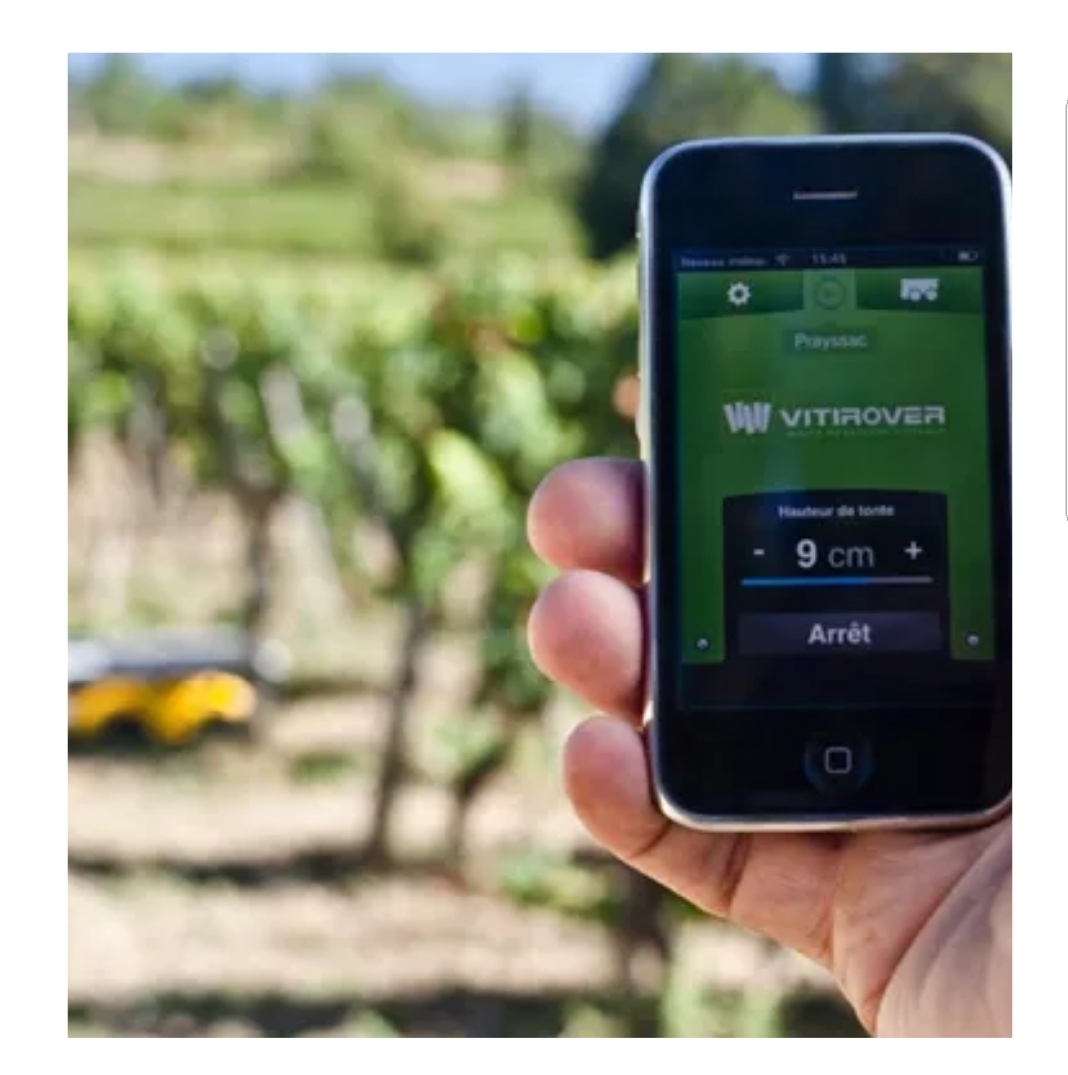
Anyway, why wait for Audi Quattro rovers  to crisscross Earth's spinoff? VitiRover smart lawnmowers already roam French wineyards. This Saint-Emilion-based startup provides autonomous, solar-powered, A.I.-loaded marvels that clean the place without breaking a sweat. Bonus: they can survive - and even reduce - DNA-altering levels of pesticides.


Note that VitiRover's team also includes a human Robot Shepherd. A refreshing retro touch our scary A.I. era.

mot-bile 2018


20170303

Comfort zones

Whiffs of déjà vu from Barcelona's Mobile World Congress: a Nokia 3310, a BlackBerry keyboard (KeyOne), and soon a Motorola DynaTAC Vintage Edition?

After sending millions on Pokemon Go quests, Nintendo Switch-es back to hardware.

Google plays its classic from-service-to-device branding gimmick, positioning Google Home + Google Assistant against Amazon Echo + Amazon Alexa.

Google Home had to extend its footprint before Samsung Assistant hits the shelves, and will reach beyond Android to tickle Apple Siri. Rumor (and Android Police) has it Google will be the first multi-user device on the market.

At this stage, it doesn't matter much if the platform remains Google-centric, with at least 9 in-house brands among the fist 30 partners:

out of 30 partners to date, at least 9 belong to google
Nevermind this gizmo: the A.I. behemoth is less venturing into new territories than trying to defend its comfort zone.

mot-bile 2017

* "Pitching Google Pixel in 3 strikes"


20160418

Networks: the TIP of Facebook's iceberg

Earlier this year, Facebook gave us a TIP (Telecom Infra Project*) about what could come next for them at the infrastructure level. Most members of the project, starting with Intel, Nokia, SK Telecom, Deutsche Telekom, are also on board of Facebook's much wider Open Compute Project, which also claims top coopetitor Google.

Naturally, Menlo Park wants a front seat for next gen network premieres - typically, early bird SKT is expected to be the first on 5G. But recent announcements*** at the F8 days confirm that the company intends to reach deeper into the value chain to secure and strenghten its leadership, particularly where innovation in network performance can prevent bottlenecks in these pervasive big data / heavy content times.

Terragraph (WiGig WiFi on 60 GHz) proposes ultra efficient W-LAN coverage for dense urban areas. You only need a station every 200 to 250 m. Of course it doesn't provide seamless handover, but a 200 m radius allows you more mobility than your typical hotspot.


Project ARIES (Antenna Radio Integration for Efficiency in Spectrum - MIMO) is more into W-WAN for rural areas. It combines 96 antennas to manage 24 simultaneous data streams, and aims at over 100 bps / Hz compared to 71 in early trials.


Here too, for a fraction of the price of a standard infra...
 
Could Facebook become a non-2-to-5G MNO, or a player in the game of standards? Not so fast. But an even more competitive value aggregator, certainly.

mot-bile 2016

* telecominfraproject.com
** opencompute.org 
*** "Introducing Facebook's new terrestrial connectivity systems — Terragraph and Project ARIES" (Facebook 20160414) 


20151130

Do Seamless 5G Communications Start With Flawless 5G PR?

Last March, NTT DoCoMo, KT, and China Mobile announced technical collaboration on 5G, each one with an Olympic event in mind: Pyeongchang 2018 for Korea, Tokyo 2020 for Japan, Beijing 2022 for China.

China Mobile, who started 5G development 5 years after DoCoMo, is clearly the laggard here. But by its sole presence, the World's biggest operator already brings considerable leverage for the standardization as well as for the ramp up phases, securing the full involvement of an ever progressing Huawei*.

NTT DoCoMo just presented at the Yokosuka Research Park the results of its recent trials**:
- on October 13 with Nokia Networks (2 Gbps transmission on 70 GHz, in Roppongi Hills, with the help of "two new technologies: beamforming, which focuses radio waves in a specific direction, and beam tracking to control beam direction according to the mobile device's location" - beamform me up, Scottie!),
- on October 26 with Fujitsu (multi-BS, multi-device 11 Gbps on 4.6GHz),
- on November 12 with Samsung (2.5 Gbps reception on 28 GHz, in a moving vehicle in Suwon),
- on November 18 with Huawei (MU-MIMO transmission of 43.9bps/Hz/cell, outdoor in Beijing), and
- on November 19 with Ericsson (MIMO 10 Gbps reception on 15 GHz).

A concise and impressive display, and a nice PR operation for a leader willing to show it covers all the bases. I'm curious to see how KT follows. In a nation already 70% converted to 4G LTE, Korea's #2 mobile operator has been the most vocal about 5G, and even about 4.5G following the launch of GiGA LTE last June. The names of Samsung, Ericsson-LG, Alcatel-Lucent and Huawei have been announced for collaborations at the new 5G Research and Development Center (in Umyeon-dong, Seocho-gu, Seoul), and such technos as MIMO, Millimeter Wave, 3D beamforming have already been tested, like multipoint transmission in a moving car (with Ericsson last May, Distributed MIMO, 2 Gbps).

KT also demonstrated 'core technologies' for 5G (5G drone, 5G hyper-virtual reality, 3D hologram), which got a few Korean media confused between 5G-friendly services and 5G 'networks'***.

GiGA LTE or 5G? "Drone Ski Jumping with 5G Network" feeds the confusion
That's one of the differences between DoCoMo's 'engineer/product/provider' PR and KT's 'marketer/service/user' PR. 

We already saw how the pedagogy of 2.5G, 3G, or 4G worked, and we already know that quantum leaps at the operator's level can seem mere upgrades at the user's level. Let's not fret over hair-splitting debates between 'post-4G', 4.5G and 'pre-5G'.

mot-bile2015

* ZTE focuses on 4.5G ("pre-5G" deal with SoftBank)
** "DOCOMO Successfully Conducts 5G Trials in Actual-use Environments - Trials carried out with Nokia Networks, Samsung, Ericsson, Fujitsu and Huawei" (NTT DoCoMo 20151126) - see also "DOCOMO 5G White Paper" (NTT DoCoMo 201407)
*** e.g. "KT demonstrates 5G network at National Assembly" (Korea Times 20150902)


20140812

Freebies in? Mojo out!

If you're a frequent flyer on these miserable errlines (believe me, I feel your pain), you've been prepared years ahead for Apple's and Samsung's troubles.

The Apple case is very simple: Cupertino lost the leadership in smartphones the day they decided not to open their platforms to other manufacturers. You can't beat manufacturers and users demographics, and the Android community was bound to catch up very quickly.

For Samsung, the "Nokia Syndrom" hits a leader that can't cover all bases when commoditization strikes. It's not how far you stretch in today's range of products, but how deep you stretch into tomorrow's value chains. Nokia kept churning out great stuff from its research centers, yet didn't convert them into innovations because the leadership forgot to focus on innovation itself. Samsung is very much aware of the need to extend its leadership into fields more sustainable than hardware design, but that's easier said than done (Bada? Tizen?). And as smartphones become commodities, it's getting harder to differentiate from Chinese or Indian players that can themselves sell massively and invest massively in research (Xiaomi, Micromax... Motorolax?).

If plummeting market shares are only sanctions from the market, giving away freebies remains the ultimate sign that a leader is losing its mojo. Significantly, the freebies that signaled the end of the race for innovation leadership came in the form of cash for shareholders (see "Apple - the end of the affair"). Samsung chose to bribe endusers instead, by giving away gifts across Southeast Asia markets (see "" - WSJ 20140811). 

A quick fix before the next big hit. Maybe the Galaxy Note 4 next month, supposedly a LG G3 killer that could come in flat and curve versions, and preferably unbuzz the upcoming Apple iPhone 6.

But again*, we're talking Fall/Winter collections here, not game changers.

mot-bile 2014

* remember "Apple's Ready to Ware v. Fast-Fashion"?


20140213

Tomorrow won't be about Samsung v. Apple any more than the present is about Microsoft v. Nokia

Over the past weeks, Samsung buried the hatchet with Ericsson, before signing cross-license agreements with Google, and then Cisco, days after a similar deal between the last two (note that Google sold Motorola to Lenovo in almost the same breath, but this is not about hardware - Big G keeps the bulk of the patent portfolio).

Samsung and Google concluded in their press release ("Samsung and Google Sign Global Patent License Agreement" - 20140127) that "there is more to gain from cooperating than engaging in unnecessary patent disputes". A clear memo to Apple, and food for thought - and juries - ahead of the next bouts in court between Suwon and Cupertino.


"Samsung and Google are showing the rest of the industry that there is more to gain from cooperating than engaging in unnecessary patent disputes". Follow my eyes...

Again*, I'm not taking sides here. It's just that I'm interested in innovation dynamics, and that I don't like to see lawyers or finance people set the agenda in that field. Such partnerships don't put them out of the equation, but allow innovators to keep their eyes on the ball.

And key players to prepare for what comes next. 5G standardization, for instance, or the still open internet of things, domains where Google and Samsung don't want to become the Microsoft and Nokia of yesterday, leaders who were supposedly the best positioned for convergence and pervasive internet...

Samsung outqualcommed the Americans for 4G but now, the Korean needs to build a common platform with them and what's left of Europe before China Inc or other players try to claim their own time slot.

Tomorrow won't be about Samsung v. Apple any more than the present is about Microsoft v. Nokia

mot-bile 2014

* see "Apple - the end of the affair" or "Omnipatent v. Impatent"


20130903

Windows Mobile Go Home

The mercato is over, and while Vodafone-Verizon clinched a long expected Tottenham-Real Madrid-Garreth-Bale kind of deal, Nokia and Microsoft ended their 1990s rivalry at Intertoto Cup levels.

EUR 3.79 bn for the business units, and EUR 1.65 bn for the patents: that's all Nokia mobiles and their 32,000 employees are worth today. To add insult to injury, the buyer is generous. Microsoft would have dreamed to do just that a decade ago but today, the move sounds like a bitter defeat for two former foes years of decline had already brought close to each other (to the point Nokia's CEO - an aptly named Mr Elop - came from Redmond).

Blackberry should follow soon, but even that won't save Windows Mobile OS. Microsoft will have to leave its incredible shrinking comfort zone, slash royalties, or why not go Home, like Facebook did (a much cheaper mode of diffusion for blue screens).

Of course, the move doesn't disrupt in any way the ecosystem. It only puts more pressure on Steve Ballmer's successor. Google can rest for a little while: these days, neither Apple nor Microsoft seem to have a clue, and software-wise, Samsung remains a gnome. So no major challenges in the short term except themselves, regulators, or a new alternative popping up out of the blue (China could do that, but trust would be an issue).


mot-bile 2013


20130704

Apple's Ready to Ware v. Fast-Fashion

So Tim Cook hired Yves Saint Laurent CEO as Apple's VP of special projects.
So nothing changes: Paul Deneve already knows the company, he used to work there. And it's not about future lines of products (we didn't need Snowden to learn about iWatch, the smartwatch market is already crowded*, and smartwear has been in the air for a decade and a half), but about the future of a brand in mature markets where smartphones, tablets, smartTVs, smartwatches, smartaccessories and smartwear have technologically become commodities.

iYSL (no, that's not for "it's your sex life!")
Long time no see! Reminds me  of the Pinault-Arnault web / telecom / luxury wars of the nineties!

Apple is used to conceiving articles that sell with a premium, but design itself won't make much difference for the basics. Anyway, Apple is now lagging in design (iPhone 5 < Galaxy 3), and brand loyalty has been decreasing ever since the company stopped delivering genuine innovation, focusing instead on legal battles, shareholder dividends, and shameless customer retention techniques leveraging purely on proprietary hardwares or softwares**.

Apple needs to revamp itself, to reinvent itself as a leader, and to stretch the brand umbrella beyond its now usual markets in terms of products and services, consumers, distribution channels... without destroying the most valuable parts of its DNA.

Apple won't shrink down to Nokia's Vertu, or even to the equivalent of 'masstige' fashion brands. But it will have to sustainably justify higher price tags.

Of course, differenciation in mature markets remains a much tougher challenge for Samsung.

BTW the company disbanded its strategic foresight unit yesterday: they didn't come up with successful suggestions for new businesses.

At least the family is already familiar with many markets, ranging from top luxury to fast-fashion...

mot-bile 2013

* e.g. "I see through you: City of Sin, Screens, and Smartpagers"
** e.g. "Anovations for Applelatres: Apple has lost its compass", "Omnipatent v. Impatent", "Apple - the end of the affair"...


20130226

Mobile World Congress 2013: Unleash The Fox! Back To The Nineties!

In Barcelona, the hunt for the next killer app after Lionel Messi has started again, but for the moment, Mobile World Congress 2013 delivers at the hardware, OS, MNO levels. Vintage stuff.

Adding more flesh to its recent CES promises*, Mozilla decided to disclose** an impressive starting lineup for Firefox OS:

  • devices? ZTE and Alcatel are there, LG's on board, Huawei will follow later this year
  • apps? Facebook stars from day one
  • cool factor? Mozilla unleashed its fox, and the long tail is now meant to set the whole sector on fire. Firefox OS joining Firefox Marketplace and Firefox fo Android, the predator is one search engine shy of splashing a Google-Android-Chrome-Killer tatoo across its chest. Even the Android dude got his tee:
  • operators? check! This neither-Apple-nor-Google-nor-Microsoft OS comes as a blessing for MNOs that are desperately trying to recover their 2G mojo (see "joyn or die? forget about KakaoTalk and Anipang?"). Telefonica sums best the industry's mood by saluting "a major step to bring balance back to the telco sector", and America Movil is "committed to launch Firefox OS phones in Mexico and all possible markets during 2013". Completing the 17 member list are China Unicom, Deutsche Telekom, Etisalat, Hutchison Three Group, KDDI, KT, MegaFon, Qtel, SingTel, Smart, Sprint, Telecom Italia Group, Telenor, TMN, and VimpelCom.

Google must be preparing its own announcements, probably further down value chains and value galaxies (e.g. a music streaming service, according to the Financial Times). And meanwhile, execs reassert that virtual reality is the future of mobile... the occasion to re-mention Ingress game platforms, or augmented-reality-enabled eyewear Google Glass(es).

Just like Firefox OS, the Nokia 105 is meant for the masses: a cheap candybar handset with a late nineties look, and a tempting price tag (EUR 15). It's resistant, it consumes little power, and it would sound smart as a fox if Chinese manufacturers were not able to deliver the same kind of object at an even cheaper price. Nokia seems to be stuck in the 1990s, at a time when global marketshare in volumes was all that mattered. They'll get less press coverage for their Lumia 520 on Windows 8, but maybe that was the aim of the game: avoiding the comparison with Samsung on image.


Will the Samsung Galaxy S4 and Samsung Galaxy Note 3 live up to the hype? Until we get the answer, the Suwon-based giant keeps leveraging its subbrand: after Samsung Galaxy Camera, here's a Samsung Galaxy Note 8 tablet (Q2 2013), a supposed iPad mini killer. I can't wait to drive my Renault Samsung Galaxy LTE-Wibro Hybrid, to e-mail e-icecubes from my Samsung Galaxy Fridge, or to airkies these fancy apartment plans to my Samsung Galaxy Augmented Reality Printer.

Augmented reality sounds like material for pre-Lehman bubbles, something from the early Noughties. If you want something really ninetiesish, dig MasterCard's marketplace approach: MasterPass, a Visa's V.me-too.

Aah, the nineties... In 1996, after surviving 3 start-ups in 3 years, I joined for 7 years a French start-up that would become Cegetel and later SFR Cegetel. The shareholders were:
- Compagnie Generale des Eaux (44%), a French conglomerate recently converted to telecoms (SFR, partly held by a pure mobile player called Vodafone)
- Mannessmann (15%), a German conglomerate recently converted to telecoms (D2, Mannesmann Arcor, Omnitel...)
- British Telecom (26%), an international telecom institution that needed to set foot on new territories as deregulation reached further across its empire, and
- SBC (15%), the most ambitious of all Baby Bells

If you followed the turn-of-the-millenium sit(ele)com featuring the trio Klaus Esser - Chris Ghent - Jean-Marie Messier, plus Li Ka-shing as guest star, you already know what happened to each party.

SBC would resurrect Ma Bell and become the new and improved ATandT. British Telecom would remain a serious player and drop its MNO activities, but still enjoy its moments of fun (BT just purchased ESPN's operations in UK and Ireland). Mannesmann would bite the forbidden fruit Orange before being wolfed down by Vodafone. CGE would become Vivendi, spin off its formerly-core-but-still-cash-cow utility business, become Vivendi Universal, then Vivendi again. Vodafone would remain Vodafone, only bigger.

Today, Vivendi is getting rid of its formerly-core-but-still-cash-cow telecom operations in France (SFR, eyed by - among others - Ypso/Cinven/Carlyle), Brazil (GVT), and Morocco (Maroc Telecom). Canal+ shall become the new "core utility", the other gems being Universal Music Group, and Activision Blizzard, both leaders in sectors subject to profound changes.

Is virtual reality truly the future of mobile?


mot-bile 2013

* "I see through you: City of Sin, Screens, and Smartpagers"
** see "Mozilla Announces Global Expansion for Firefox OS"


20120831

Omnipatent v. Impatent

The Samsung-Apple patent war saw Samsung claim a minor half victory in Korea and Apple a major win in the US. The difference in rulings between the USA and Korea rulings may be the difference between carrying a case and carrying a suitcase.

Samsung lawyers are used to rule the show at home: this army of Seoul University Law School alumnis and former judges know all the tricks of the trade. I don't think there was much jury vetting nor adequate preparation ahead of the US trial, but Apple might have won anyway.

This is not about innovation, but about Intellectual Property management, property meaning that you own the rights, not necessarily that you invented something. Particularly in a system where the date of the patent makes all the difference, regardless of market realities.

As everybody well knows, Apple was built on infrigements: from stealing the Beatles logo to stealing Xerox inventions (no need to remind this audience of Steve Job quoting Picasso about great artists). The iPhone's round square icons mentioned in the trial? We saw them more than ten years ago in early mobile internet portal prototypes. When the iPod, the iPad, and the iPhone hit the shelves, Job's genius was as always in selecting the right existing bricks at the right time more than about inventing something new.

I'm sad to see that what matters now is not anymore to have the best Research and Developpment center and the best inventors anymore, but to have the quickest vultures and to snatch the best patent portfolios. The best product? Look at nowaday's rush for Samsung Galaxy. And anyway, the commoditization of smartphones is already well advanced. Apple is only gaining time*.

I'm interested in innovation. The NTP-RIM farce was not about innovation. Interval Licensing suing Microsoft rivals** was not about innovation. Google purchasing Motorola was not about innovation. This Samsung-Apple war is certainly not about innovation.

mot-bile 2012

* see "Apple - the end of the affair"
** see "Paul Allen v. Rest Of The Web : NTP Redux ?"


20120316

Nokia Tablet Windows 8

Saying Nokia must not fail for its future tablet is an outrageous understatement. The 10.1 inch, Windows 8 device must at least close some of the brand's gaping gap with Samsung's Galaxy series, and if possible propose an alternative to the Android - Apple duet (a more sustainable alternative than BlackBerry, that is).

A disruptive design could help, preferably one that would not be too reminiscent of the Nokia Communicator, or of the Sony Tablet P (the Terminator version of a clamshell, if not the Transformers version of a scallop).

Considering how RIM and HP fared, surviving next Xmas season could already be a noticeable achievement within 1.0 techie communities.

Nok-nok would be also working on a 'revolutionary phone'... Whatever that means (a Nokia Windows smartphone that sells, maybe?).

mot-bile 2012


20111124

Amazon, Facebook Smartphones? Who cares for Nokia Siemens Networks?

The coming holiday season is strategic for tablet market shares, and that's one of the main reasons why Apple blocked the Samsung Galaxy Tabs in key countries. Cupertino lawyers didn't even try to stop Amazon's Kindle Fire in spite of its vague iPhone 1G design: this low cost gizmo is not a direct competitor, it contributes to democratize the tablet format, and by contrast enhances the coolness of iPad in places where Galaxy's not available.

If the commoditization of tablets will take more time than it did for smartphones, it won't take ages either. Apple obviously intends to milk the cow as long as it can, and to make sure it doesn't miss the next wave. Meanwhile, Samsung doesn't seem to make the most of its leadership in bigger screens because what Smart TV needs is a leader in value aggregation. Unless your TV remains a dumb screen and your smartbox grows wings.

Smartphones will keep getting smarter, but frankly I don't care if Facebook, Amazon, and the countless players rumored to work on them launch one or not.

I care for the 17,000 people kindly fired by Nokia Siemens Networks by the end of next year, a measure shamelessly presented as a "new strategy" ("
Nokia Siemens Networks puts mobile broadband and services at the heart of its strategy; initiates restructuring to maintain long-term competitiveness and improve profitability").

Fair enough, networks have never been sexy in this sector. Except maybe when there were more base stations than mobile subscribers, and when handsets were bigger than Macintoshes. But NSN can sound as attractive as SNS, and if it really wants to put "services at the heart of its strategy", all it has to do is to rephrase its press release.

I'd suggest: "Introducing "Newstrategization", our latest killer app".

mot-bile 2011


20110816

Supercharging Whom ? Google to Acquire Motorola Mobility

"Our acquisition of Motorola will increase competition by strengthening Google's patent portfolio, which will enable us to better protect Android from anti-competitive threats from Microsoft, Apple and other companies." That's how Larry Page explains the twelve billion purchase in the official Google blog.

The blog is titled "
Supercharging Android: Google to Acquire Motorola Mobility"*, but one could wonder who will be supercharged in the end. Third parties and endusers may start asking themselves what will come out of a landscape where former archrivals Microsoft and Nokia tie the knot, or where the mother of all netcos swallows a former giant manufacturer. SonyEricsson theoretically went even further on the value chain, but the union was celebrated in completely different times, when networks were not precisely clogged with mobile internet traffic.

More moves are expected. Apple has been rumored to be in a mega purchasing mood for quite awhile, and I wouldn't be surprised to see Samsung making something big. Lee Kun-hee just pointed out the necessity for the company to evolve, an evidence we recently repeated (see "
Huawei Vision : a view from the cloud"). This should go beyond such acquisition as Grandis, a specialist in memory wolfed down earlier this month by the South Korean chaebol.

Anyway, the Motorola episode reassesses the importance of patents in the legal war raging worldwide. Apple claimed a few significant victories : a big chunk of Nortel patents, plus a suspension of Galaxy Tab 10.1 sales in key markets.

The problem is Apple is not John Grisham, an entity that makes money with legal stuff. Being the next NTP is not exactly "cool".

And the consumer is not likely to beg "supercharge me".

mot-bile 2011

* where the king of the 80s is kindly put at the same level as bankrupt Nortel : an empty shell with a collection of patents


20110804

Huawei Vision : a view from the cloud

Huawei Vision runs on Android 2.3 but comes with a 160 Gigabyte spot in the cloud for every owner, positioning the Chinese player at the strategic gateway between that soft spot and its own hardware (scheduled for September in China, along with 4G). Apps agregation starts with the usual suspects : music, images or video that you may not want to transfer forever from laptop to laptop or to XX century storage solutions (ie CDs, DVDs).

Hardly disruptive : Alibaba just launched a similar concept, and of course Apple made a splash with its iCloud earlier this year. But Huawei was supposed to be essentially about hardware.

Sounds like that business model may not be sustainable anymore. Clouds may pass in the sky, replaced with new UFOs, but the truth is starting to sink in : smartphones are not much smarter than computers, and differenciation is getting more and more difficult every year. Worse : product cycles are even shorter and being cool never lasts long.

Food for thought for Samsung, who's been threatened by the Nokia syndrome even before claiming the leadership in handsets. But at least the Finns did venture into new business models. Never forget that OVI preceded Apple's App Store iOs by one year.

Of course, back then, Jorma Ollila was already gone, and Steve Jobs still cool.


mot-bile 2011


20110614

Grand NFC Korea Alliance

Ten years ago, SK Telecom would carpet bomb Korea with 400,000 terminals ("dongles") to boost its Moneta mobile payment service. Yesterday, Korea Inc. announced 300,000 NFC-enabled Point Of Sales by the end of 2011 to put the country ahead of the pack in this very very strategic sector.

The difference ? This is not a solo act anymore : SKT alone couldn't succeed in setting the new standard in mobile payments at home and pushing the concept overseas, but this time, the whole value chain and ecosystem is following. And if it works, each player will claim a nice slice of a much bigger pie.

Under the regulator's umbrella (KCC, the herald of "NFC-based Mobile Smart Life Services"), over thirty Korean CEOs met at the Seoul Press Center to sign this decisive MOU in Near Field Communications, and if you throw in the members of the recently formed Grand NFC Korea Alliance, you've got the closest thing to a mobile payment dream team :

- all 3 Mobile Network Operators : Korea Telecom, SK Telecom, U+ (LG Telecom)
- the biggest card players around : Visa, MasterCard, Shinan Card, Kookmin Card (KB), Lotte Card, Hyundai Card, T-Money, MNO partners (Hana) SK Card and BC Card (KT)...
- key authorities and associations : KCC, ETRI, TTA, KISA (Korea Internet & Security Agency), MOIBA (Mobile Internet Business Association), RAPA (Korea Radio Promotion Association)...
- top manufacturers : Samsung, LG, Pantech...
- top enablers: UbiVelox, KEBT, MtekVision, 3ALogics Inc, KICC...
- top payment enablers / billing service providers : KSNet Inc, Mobilians, Galaxia, Danal Corp., KCP...


The only players missing on the picture are the endusers.


And as we saw before, pedagogy will be key in a country where hacking happens to be a national pastime (if you include North Korea in the package), where few people protect their handsets with a PIN code, and where distrust in smartphone security keeps spreading like wildfire.

Of course, "Near Field" meaning 10 cm and below, close encounters of the third thief will require more intimacy than via Bluetooth. Besides, many Koreans are already used to contactless micropayments thanks to T-Money (ie Seoul public transportations and taxis, thousands of convenience stores and vending machines...). Furthermore, NFC trials have been under way for quite a while : for instance KT's "Mobile Stamp" couponing system, SKT's Mobile Commerce Zone or Q Store pilots, or cross border trials between SKT's T-Cash and Japan's KDDI and SoftBank...

This MOU aims at multiplying testbeds and giving momentum to the technology, the bulk of the infrastructure being planned for Q4 2011. So where will NFC-based payments be available ? GS group plans to implement them in its convenience stores (GS25) and gas stations (GS Kaltex). Major retailers (Lotte Mart, Emart...) are joining the party. Seoul and Gyeonggi-do buses and subways, as well as many taxis will be converted. A major shopping area for tourists (particularly from Japan), Myeongdong has been identified as a strategic hotspot to feed the buzz.

Needless to say, the number of NFC-enabled handsets is another essential element in the equation. The alliance targets an ambitious 5 M units by the end of the year, leveraging on existing devices (Samsung Galaxy S II and Sky Vega Racer opened the way), and the Google-Apple war : since Android Gingerbread OS supports NFC, Cupertino had to consider it for iPhone 5.

And oh. This non-event : Samsung is expected to surpass soon Nokia as the world's top handset manufacturer.

mot-bile 2011

* sorry, not yet in English : "
국내 통신사·금융(카드)사 CEO 최초로 한자리에 모여 NFC 서비스 활성화를 위한 MOU 체결"


20110215

2001 2011 2021 revolutions

The Nokia-Microsoft knot tying didn't quite come as a surprise - more the confirmation of a double failure, and the sign that times they have a-changed over the past decade.

Remember the time when both giants were competing for mobile data supremacy ? Well combined they still lead the smartphone OS barnum, but not as cultural leaders.

Ten years from now, we'll probably be laughing at the Apple-Google war - or rather at the Google-Facebook face off. Ten years ago, former webehemoth Yahoo! was licking his post-bubble wounds, toddler Google waiting for better times to consider its IPO, and Facebook was not even on its founders' brainwave maps (whoever said founders may be). Ten years ago, MNOs were trying to figure out how to recover from insane auctions for 3G spectrum.

2021 top duettists may not be born yet. Maybe Apple could be one of them. Not Apple the device manufacturer (still struggling with a sub-5% market share), but Apple the champion of cloud management services, and your favorite remote librarian.

But the next tide is coming. Take Southcentral Google, for instance : rumor has it they're considering a merger with fellow Baby Googles Southeastern Google and Northwestern Google. Announcements to be made in Seoul at the 5GLTE World Congress.

mot-bile 2011


20100429

HP buys a Palm ? Big deal...

$1.2 billion for Palm Inc., the sale itself a non-event, 3Com and its spin-off reunited under the Hewlett-Packard umbrella... times have definitely changed over the past 10 years.

Even if the Palm + HP combo can propose a seamless handset-PDA-tablet-laptop-desktop platform, this episode is not likely to bring real disruption to the market. And to me, it doesn't mean that HP is becoming smart : it simply confirms that smartphones are becoming if not commodities at least more and more common things.

No change for Microsoft : WebOS won't kill Windows Mobile by itself. But the eventual emergence of a more consistant open / Linux-based alliance remains more than ever the base case scenario.

No change for Google : it still needs to succeed regardless of the OS, and Android / the Open Hanset Alliance are bound to merge with some rivals anyway.

No change for Apple : Cupertino still needs to change its strategy if it wants to become THE leader, which I doubt. And there's still a lot of money to make where it sits (and moves), including as an editor.

No change for Research In Motion : it still can stick to its profitable niche, or accept a nice offer.

And most of all, no change for Nokia : the leader in hardware and mobile OS has not been acting like one for too long.


mot-bile 2010


20100216

WACking Apple's App Store : United Colors of MNOs or WAP redux ?

The Wholesale Applications Community (WAC) chose the Mobile World Congress in Barcelona to announce its foundation. The aim it to make application standards transparent, and services available on as many platforms as possible, or as the association puts it from the customer's point of view : to offer "a broader choice of innovative applications and services available on a wider choice of devices than ever before". From the application developers' point of views it goes like this : "a single gateway (...) to access a vast potential customer base".

How big ? Among the 27 founding members of the WAC, 24 operators claiming 3 bn subs : America Movil, AT&T, Bharti Airtel, China Mobile, China Unicom, Deutsche Telekom, KT, Mobilkom Austria Group, MTN Group, NTT DoCoMo, Orange, Orascom Telecom, Softbank Mobile, Telecom Italia, Telefónica, Telenor Group, Telia Sonera, SingTel, SK Telecom, Sprint, Verizon Wireless, VimpelCom, Vodafone, Wind.

The casting is less impressive for manufacturers : Samsung, LG, Sony Ericsson. Significant players, but all losers in the smartphone standards. Yeah, Samsung is showing off its Samsung Bada OS in Barcelona but come on, that one is not going to become number one. Even Nokia and Intel combined can't make it with their brand new Meego.

Anyway, here's the deal for developers : on one hand, become one of the billion plus apps available in the App Store reserved to iPhone users... and on the other, tap into the 3 billion plus market opened by this elite of haves and havemores.

Tired of the multiplication of proprietary platforms ? The WAC intends to make that layer transparent for you. And when the WAC writes "developers will only have to create one version of their application and this can be used on multiple types of devices and operating systems (such as Symbian, Android, Windows etc)", it's up to every potential "etc" to decide : keep playing it solo or join the party.

Some developers may remember how WAP struggled in its early stages. Will this WAC work ? Fool me once, shame on... shame on you. Fool me... you can't get fooled again'.

Can you ?

I think Vodafone, Orange & co remember perfectly the WAP episode. Since then MNOs proved they could work on common platforms to boost the ecosystem (ie Gallery in France). And if they fight against each other, they would love to commoditize markets they cannot rule anyway.

I'm not worried about technology roadmaps and paths.

But the editorial line... believe me, that one is gonna be a long and winding one.

mot-bile 2010

* see "
Leading Operators Unite to Unleash Global Apps potential" (20100215 - on wholesaleappcommunity.com, the association's website)


20100213

Microsoft Pink Phone : sexing up Windows Mobile 7

A fun handset with an innovative ergonomy and an app store ? Before Apple came Danger, who remained below the radar after Microsoft purchased it.

Granted. The Hiptop has a vintage look of a Minitel II, but what matters is the platform, and the industry has been bracing for the Danger + Zune + WM7 combo for months.

What's in a (code)name ? Pink stresses the need to sex up the Windows Mobile platform against iPhone and Android.

WM performed well in Korea against the iPhone (Samsung Omnia)... but only for lack of an alternative before the arrival of Android (see "
SK Telecom pushes Android"). Motorola's Motoroi has just been introduced on a market suddenly converted to smartphones, and Samsung and LG are working double time on Google's platform.

Microsoft, Apple, Google... sooner or later telecom "incumbents" will raise their voices, and leader Nokia will have to do what it does worst : look cool, not cold.

mot-bile 2010


20091216

TeliaSonera 4G LTE, with a little elf from my friends

mot-bile 2009 - TeliaSonera launched commercially 4G LTE in Stockholm (Ericsson network) and Oslo (Huawei network) with a Samsung 4G USB key. Roll out will continue over 2010 : the 4 biggest cities in Norway, the top 25 cities and vacation areas in Sweden.

Of course, handsets are not ready yet, and the MNO makes good use of this technical and PR stunt to draw new partners : "Evaluation of suppliers for TeliaSonera's common 4G core network and radio networks in the Nordic and Baltic countries is in progress and vendors will be selected in the beginning of 2010*"... Too late to save the face of a well known Finnish vendor called Nokia. Sonera comes from Finland and TeliaSonera was awarded a license there last month, but the group is based in Sweden and proceeded with the Chinese champion along with Ericsson.

Of course, TeliaSonera is likely to select buyers as well as vendors. And the likes of France Telecom could also feel the 4G acceleration.

This operation has been smoothly run for months, without overhyping. TeliaSonera even launched ahead of schedule. No big deal. A non-event, almost.

Far from the complex launch of 3G by NTT DoCoMo but then again, technical, commercial, and political challenges were completely different.

And back then, NTT DoCoMo was claiming the world and calling smaller fishes to join his big pond. Here, TeliaSonera is clearly calling a bigger fish : hey Santa, please hire me in your workshop ! look, been a good elf, uh ? I showed you the goods, now show me the money.


* "
TeliaSonera first in the world with 4G services" (20091212)


Copyright Stephane MOT 2003-2025 HOME - Today's wireless headlines - Korea wireless news - all posts (full list) - useful links - stephanemot.com (personal portal)
my books : "dragedies" - "La Ligue des Oublies"
my other sites : blogules - blogules (VF) - Seoul Village - footlog - Citizen Came - Copyright Stephane MOT 2003-2022