Showing posts with label Galaxy. Show all posts

20190422

5G Korea, Huawei inside

According to Pulse and other media*, Huawei will open next month its first 5G Open Lab in the world in Seoul.

Of course, earlier this month, Korea became the first country in the world to launch 5G commercially (even if for enterprise customers only at the beginning). Korea Inc precipitated the launch just to achieve that premiere, SK Telecom, KT, and LG U+ literally beating Verizon on the eleventh hour.

If local MNOs don't communicate much on their 5G network suppliers, Huawei already holds significant positions in Korea, as a recent Asan Institute focus** noticed:
- LG U+'s 4G network in Seoul, Northern Gyeonggi-do, Incheon, and Gangwon-do, in other words its most strategic areas (capital region, and all borders with North Korea)
- parts of Naver's new Internet Data Center
- KT's network upgrade for NonHyeop Bank, a big 4 player

Korea Inc does communicate on a key 5G supplier, Samsung, who clearly won the first round at the smartphone level with its Galaxy S10 5G.

Another of their groundbreaking handsets, the Galaxy Fold, received mixed reviews from the few journalists who were granted one ahead of the official launch, but the manufacturer did warn them that they shouldn't have pulled out the plastic protection away from the delicate screen.


Interesting to see what happens when the veil is lifted about Huawei's presence in the country.


mot-bile 2019

* "Huawei to open its world’s first 5G open lab in Seoul in May" (Pulse 20190422)
** "Opportunities and Challenges for South Korea in the New Era of 5G" (J. James KIM, HONG Sanghwa - Asan Institute 20190321)


20190326

Triple Play, Triple Aggregation

SK Telecom confirmed April 5 as the date of its 5G launch - as soon as Samsung Galaxy S10 5G handsets are delivered (monthly plans expected around KRW55,000 / $49 per month). 

As expected, promoting a 'Social VR' experience well ahead of 5G ("Ready Player oksusu Social VR?") turned out to be a smart move to detect the levels of bandwidth required for an optimal user experience (e.g. 4G LTE too slow for rapid eye / head movements): Korea's leading MNO intends to leverage 5G compression technologies to speed up VR sessions by 30%, and to combine 5G with 4G and wifi where available to allow the download of a 2 Gb movie in only 4 seconds, dubbing the concept 'Triple Aggregation'.

While operators work hard to make the most of their costly pipes, other players parade with seemingly effortless solutions, but will Google Stadia fulfill its category killer potential? Announced at the Game Developers Conference by Sundar Pichai himself, the cloud-based platform and its Stadia Controler would love to piggyback the kind of boosters SKT has in store, but regardless, YouTube and Google Home integration will definitely help.

Apple had to react, but could only display an Apple Arcade that smells like 1980s spirit. Yeah! exclusive games! only on iOS, Mac, Apple TV! to download from your Apple Store! 

Even if that's in a different field, Apple TV+ is also about defending the Apple creative ecosystem. Maybe they will eventually netflixize their game the Alphabet way.

Anyway, Cupertino pulled a much more interesting card with their Apple Card, which should quickly allow them to show us some money.


mot-bile 2019

* see "SKT says 5G network is tested, ready to go"


20180303

Moonshots and Wineyardshots - MWC meets Salon de l'Agriculture

Mobile World Congress 2018 was more about improvements than game-changing innovations.

As announced, LG abandoned the arms race to focus on software upgrades instead of new hardware. Now you can record their ultra-slomo evolution with your Samsung Galaxy S9 (+).

While Sony joins the headjack-free craze (Sony Xperia XZ2), Nokia slides back to Matrix, reviving its iconic banana (8110 via HMD Global).

And by the time Nok-Nok rolls-out a ultra-light 4G network across the Moon with Google and Vodafone, 5G will be all the rage at home.

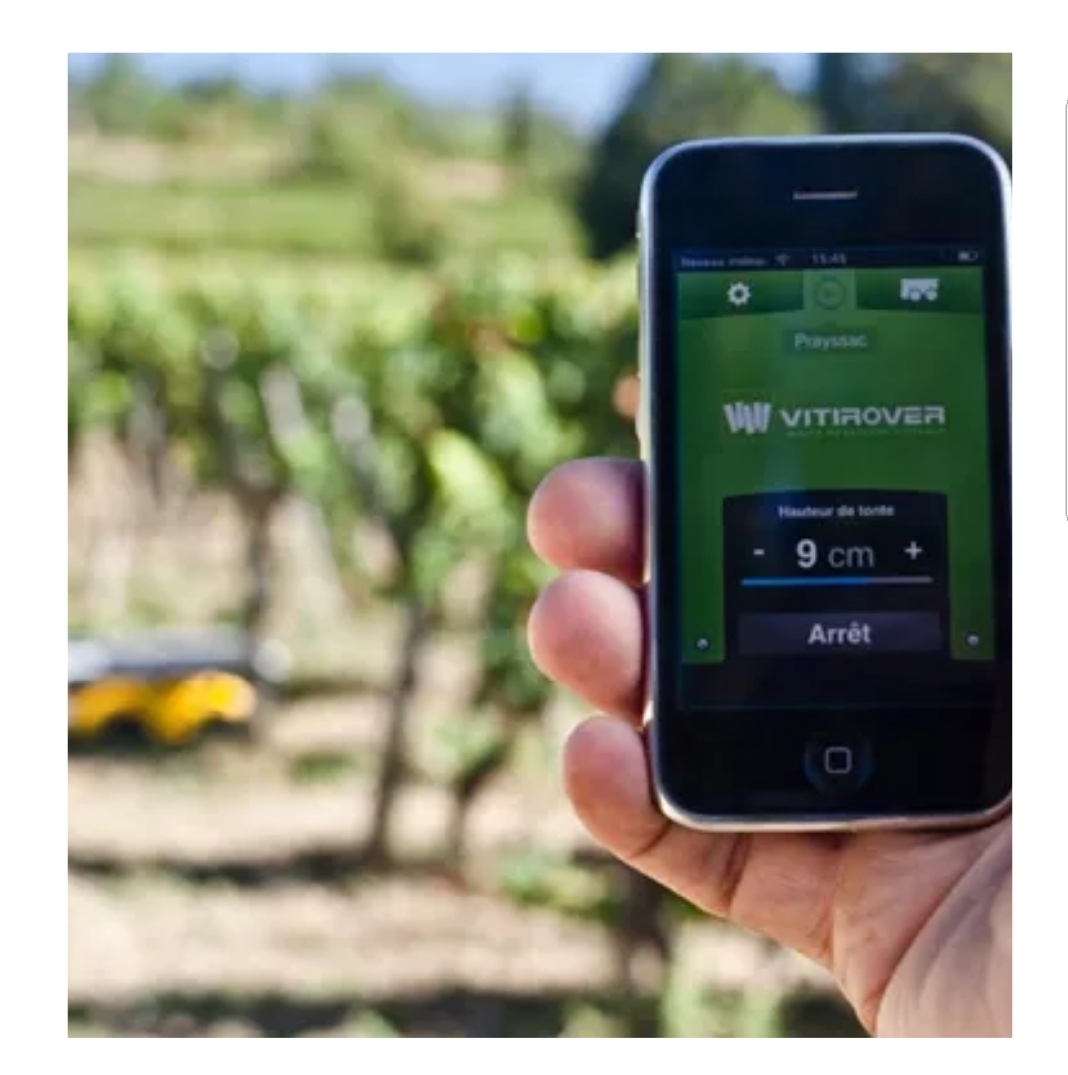
Anyway, why wait for Audi Quattro rovers  to crisscross Earth's spinoff? VitiRover smart lawnmowers already roam French wineyards. This Saint-Emilion-based startup provides autonomous, solar-powered, A.I.-loaded marvels that clean the place without breaking a sweat. Bonus: they can survive - and even reduce - DNA-altering levels of pesticides.


Note that VitiRover's team also includes a human Robot Shepherd. A refreshing retro touch our scary A.I. era.

mot-bile 2018


20161009

Pitching Google Pixel in 3 strikes

Google unveiled its Google Pixel and Google Pixel XL handsets.


What strikes first is the convergence of communication codes between Google, Apple, and Samsung, confirming the difficulties of differenciating in commoditization times. That said, Samsung has beefed up its human side, Google its pedagogy dimensions, and Apple... well Apple remained Apple.

What strikes next is the focus on image, from the name (Pixel), to the pitch ("highest rated smartphone camera", "Unlimited storage for all your photos and videos"). This is not only a Google Phone, but also a Google Camera, and a boost for Google Photos. The Pixel is marketed almost like a featurephone, with a message more... focused than its competitors, even if Apple did stress iPhone 7's "advanced new camera systems", and even if Samsung's ill-fated but polyvalent Galaxy Note 7 offered new arguments ranging from sensors and lenses to Samsung Cloud.

The third strike comes from Google Assistant. We knew it existed, we knew it had in its DNA the capacity to help you defeat LEE Sedol*, but its namelessness makes it an even scarier A.I. monster, plugged to both your personal environment (controled by Big G), and to Big G's phenomenal reach in queries about anything, anytime, on any platform. Yes, Siri has a name, but its brains have just been purchased by Samsung, who snatched Viv Labs, the startup created by Siri founders.

But if one player has been struck out here, it seems to be - for the moment at least - Andromeda: the OS of Google Pixel is Android 7.1 Nougat, not Google's hybrid Android-Chrome OS. And Pixel was the perfect alibi, since the brand was introduced on Chromebook...

For Google, launching a competitive smartphone was probably more urgent than rolling out its new convergent OS.


mot-bile 2016


* see "Man v. Machine, Garry v. Gary"


20140812

Freebies in? Mojo out!

If you're a frequent flyer on these miserable errlines (believe me, I feel your pain), you've been prepared years ahead for Apple's and Samsung's troubles.

The Apple case is very simple: Cupertino lost the leadership in smartphones the day they decided not to open their platforms to other manufacturers. You can't beat manufacturers and users demographics, and the Android community was bound to catch up very quickly.

For Samsung, the "Nokia Syndrom" hits a leader that can't cover all bases when commoditization strikes. It's not how far you stretch in today's range of products, but how deep you stretch into tomorrow's value chains. Nokia kept churning out great stuff from its research centers, yet didn't convert them into innovations because the leadership forgot to focus on innovation itself. Samsung is very much aware of the need to extend its leadership into fields more sustainable than hardware design, but that's easier said than done (Bada? Tizen?). And as smartphones become commodities, it's getting harder to differentiate from Chinese or Indian players that can themselves sell massively and invest massively in research (Xiaomi, Micromax... Motorolax?).

If plummeting market shares are only sanctions from the market, giving away freebies remains the ultimate sign that a leader is losing its mojo. Significantly, the freebies that signaled the end of the race for innovation leadership came in the form of cash for shareholders (see "Apple - the end of the affair"). Samsung chose to bribe endusers instead, by giving away gifts across Southeast Asia markets (see "" - WSJ 20140811). 

A quick fix before the next big hit. Maybe the Galaxy Note 4 next month, supposedly a LG G3 killer that could come in flat and curve versions, and preferably unbuzz the upcoming Apple iPhone 6.

But again*, we're talking Fall/Winter collections here, not game changers.

mot-bile 2014

* remember "Apple's Ready to Ware v. Fast-Fashion"?


20140225

Samsung Galaxy S5, The (Almost) Next Big Thing Is Here

"The Next Big Thing Is Almost Here", that's how Samsung Galaxy S5 is announced on Samsung.com US:


Of course, what you read is "The Almost Next Big Thing Is Here". Here? Barcelona, at the 2014 Mobile World Congress.

Analysts seem disappointed by the last generation of the leader's star product, but it simply confirms the long expected commoditization of smartphones. Like computers before, performances will keep improving, and more enablers shall bring interesting changes in the future, but the device itself has reached a plateau for a while.

Even smartwatches and smartwrists have become commodities*: meet Samsung Gear 2, Samsung Gear 2 Neo, and Samsung Gear Fit.

Boring? Not so much: Gear has switched to Tizen, the - of course Linux based - OS propelled by majors who don't want Google and Android to rule, but don't want to resurrect Microsoft or Jobs either. Samsung already launched a Tizen camera last fall, and continues its low-key approach from minor connected accessories... 

This Tizen ain't the world heavyweight champion yet

I'm waiting for Tizen on a heavyweight boxing ring, not just around a wrist.
Ah, if only Samsung had a iTunes to leverage, that could boost the launch of a Tizen smartphone. And unlike Apple 2007, Samsung 2014 can't afford to launch a technologically imperfect first model...


mot-bile 2014

* MWC confirms CES: see "CES 2014: Beep Beep Goes Bling Bling"


20130626

SK Telecom launches LTE-Advanced on Galaxy S4 LTE-A

Up to 150 Mbps? Not bad for a mobile network. That's twice the speed of my old 4G, and we call it 4G LTE-Advanced.

SK Telecom just announced* a launch for July in Seoul, a world first at the commercial level. Russia's Yota did do something last december, but the Korean operator has the handset to go with the network: the Samsung's Galaxy S4 LTE-A.

On SKT's T world shop, this SHV-E330S_32GR sells for KRW 954,800 (USD 826):


Customers will enjoy new services or rather richer / fuller ones: faster, with more splitscreens (up to 6), more HD... and they won't pay a premium for the Advanced speed. For their new, improved, and advanced usages? That could be a different story...

Coverage-wise, SKT plans progressively adapt 20,000 base stations and reach 84 cities, which should mean at least 75% of the population if the said cities are fully covered.

Speed is expected to increase even more next year, when Enhanced Inter-Cell Interference Coordination (eICIC) is ready. For the moment, we'll have to do with "Advanced minus" stuff: Carrier Aggregation (CA) and Coordinated Multi Point (CoMP). It may sound trivially geeky, but for the enduser experience to be as seamless as possible, algorithms do make a difference, particularly in HetNet environments (more geek lingua, this time for Heterogeneous Networks).

Now is this 4.5G, 4.66G, or 4.75G? That's marketing. And not yet 5G. "New generation" usually means new spectrum / new licenses.

Like pornography, you'll know it's 5G when you see it. Particularly if you're in the finance department.

mot-bile 2013
 
* see PR release today: "SK텔레콤, 2배 빠른 LTE 세계 최초 상용화"


20130226

Mobile World Congress 2013: Unleash The Fox! Back To The Nineties!

In Barcelona, the hunt for the next killer app after Lionel Messi has started again, but for the moment, Mobile World Congress 2013 delivers at the hardware, OS, MNO levels. Vintage stuff.

Adding more flesh to its recent CES promises*, Mozilla decided to disclose** an impressive starting lineup for Firefox OS:

  • devices? ZTE and Alcatel are there, LG's on board, Huawei will follow later this year
  • apps? Facebook stars from day one
  • cool factor? Mozilla unleashed its fox, and the long tail is now meant to set the whole sector on fire. Firefox OS joining Firefox Marketplace and Firefox fo Android, the predator is one search engine shy of splashing a Google-Android-Chrome-Killer tatoo across its chest. Even the Android dude got his tee:
  • operators? check! This neither-Apple-nor-Google-nor-Microsoft OS comes as a blessing for MNOs that are desperately trying to recover their 2G mojo (see "joyn or die? forget about KakaoTalk and Anipang?"). Telefonica sums best the industry's mood by saluting "a major step to bring balance back to the telco sector", and America Movil is "committed to launch Firefox OS phones in Mexico and all possible markets during 2013". Completing the 17 member list are China Unicom, Deutsche Telekom, Etisalat, Hutchison Three Group, KDDI, KT, MegaFon, Qtel, SingTel, Smart, Sprint, Telecom Italia Group, Telenor, TMN, and VimpelCom.

Google must be preparing its own announcements, probably further down value chains and value galaxies (e.g. a music streaming service, according to the Financial Times). And meanwhile, execs reassert that virtual reality is the future of mobile... the occasion to re-mention Ingress game platforms, or augmented-reality-enabled eyewear Google Glass(es).

Just like Firefox OS, the Nokia 105 is meant for the masses: a cheap candybar handset with a late nineties look, and a tempting price tag (EUR 15). It's resistant, it consumes little power, and it would sound smart as a fox if Chinese manufacturers were not able to deliver the same kind of object at an even cheaper price. Nokia seems to be stuck in the 1990s, at a time when global marketshare in volumes was all that mattered. They'll get less press coverage for their Lumia 520 on Windows 8, but maybe that was the aim of the game: avoiding the comparison with Samsung on image.


Will the Samsung Galaxy S4 and Samsung Galaxy Note 3 live up to the hype? Until we get the answer, the Suwon-based giant keeps leveraging its subbrand: after Samsung Galaxy Camera, here's a Samsung Galaxy Note 8 tablet (Q2 2013), a supposed iPad mini killer. I can't wait to drive my Renault Samsung Galaxy LTE-Wibro Hybrid, to e-mail e-icecubes from my Samsung Galaxy Fridge, or to airkies these fancy apartment plans to my Samsung Galaxy Augmented Reality Printer.

Augmented reality sounds like material for pre-Lehman bubbles, something from the early Noughties. If you want something really ninetiesish, dig MasterCard's marketplace approach: MasterPass, a Visa's V.me-too.

Aah, the nineties... In 1996, after surviving 3 start-ups in 3 years, I joined for 7 years a French start-up that would become Cegetel and later SFR Cegetel. The shareholders were:
- Compagnie Generale des Eaux (44%), a French conglomerate recently converted to telecoms (SFR, partly held by a pure mobile player called Vodafone)
- Mannessmann (15%), a German conglomerate recently converted to telecoms (D2, Mannesmann Arcor, Omnitel...)
- British Telecom (26%), an international telecom institution that needed to set foot on new territories as deregulation reached further across its empire, and
- SBC (15%), the most ambitious of all Baby Bells

If you followed the turn-of-the-millenium sit(ele)com featuring the trio Klaus Esser - Chris Ghent - Jean-Marie Messier, plus Li Ka-shing as guest star, you already know what happened to each party.

SBC would resurrect Ma Bell and become the new and improved ATandT. British Telecom would remain a serious player and drop its MNO activities, but still enjoy its moments of fun (BT just purchased ESPN's operations in UK and Ireland). Mannesmann would bite the forbidden fruit Orange before being wolfed down by Vodafone. CGE would become Vivendi, spin off its formerly-core-but-still-cash-cow utility business, become Vivendi Universal, then Vivendi again. Vodafone would remain Vodafone, only bigger.

Today, Vivendi is getting rid of its formerly-core-but-still-cash-cow telecom operations in France (SFR, eyed by - among others - Ypso/Cinven/Carlyle), Brazil (GVT), and Morocco (Maroc Telecom). Canal+ shall become the new "core utility", the other gems being Universal Music Group, and Activision Blizzard, both leaders in sectors subject to profound changes.

Is virtual reality truly the future of mobile?


mot-bile 2013

* "I see through you: City of Sin, Screens, and Smartpagers"
** see "Mozilla Announces Global Expansion for Firefox OS"


20121029

iPad me-too: an iPad Mini to stop the iBleeding?

With the iPad Mini, Apple catches up with rivals Samsung (Galaxy Tab 7.7), Google (Google Nexus 7), Amazon (Kindle Fire, also 7 inch screen), or Barnes & Noble (Nook, also 7 inch). As usual, connectivity comes second: WiFi enabled devices arrive before the 3-4G gizmos (TTM not specified for LTE).


At least, iPad mini is released before the Microsoft Surface 7 inch, for a good reason: it has not even been announced yet.

So Tim Cook is mocking at Microsoft, a company from the past. Steve Jobs was mocking at 7 inch tablets not so long ago, but that was a time when Apple was well ahead of the pack.

According to Strategy Analytics, Android claimed 41% of the tablet market on Q3 2012, up from 29.2% one year earlier, while Apple iOS dropped from 64.5 to 56.7%. Actually both are much lower, since some players don't disclose their sales figures, most notably Amazon, who will probably open up sooner or later anyway: Amazon is about distribution, not into OS.

Launching iPad Mini looks more defensive than proactive. The market leader was condemned to cover all bases. Now what's expected from a cultural leader reaches far beyond that.
 
mot-bile 2012


20120927

Anovations for Applelatres: Apple has lost its compass

A couple of weeks ago, I changed my Samsung Galaxy II for a Samsung Galaxy III. Hardware-wise, software-wise, performance-wise, connection-wise, they clearly don't belong to the same galaxy. Samsung even managed to made NFC look sexy! The only - minor - default I see was the way the thin back cover vibrates with the speaker, but it's perfectly OK with the flip cover.

If I were (still) an Apple customer, I'd be really disappointed by the iPhone 5: the only real innovation is Lightning, the new dock connector, yet another proprietary marketing trap.

I never considered taking an iPhone because I used to be a Mac user, and I knew Cupertino would do the same with handsets as what they did with desktops:
- start with the sexiest product and user interface,
- refuse to open the proprietary system to other manufacturers,
- progressively retreat to a niche of Appleatres ready to pay dearly even if the product is not the best one anymore,
- get a bounce or two much later, when computers/smartphones are commoditized, just by the grace of a new sexy design (the iMac, the iPhone 69)

This time, they did it all by themselves. Cupertino didn't even need as formidable a foe as Redmond. Mountain View is by no means a small fish, and it learned a lot of sharkisms from Redmond, but if Android claimed the leadership so easily, that's because iPhone refused to hold it by building the largest ecosystem. Actually, to me the last straw was when Apple copied Microsoft by playing short term against long term and dividends against investments, by putting innovation last ("Apple - the end of the affair", "Omnipatent v. Impatent").

So I'm not even disappointed by this iPhone 5. To me, Apple has lost its compass long before and far beyond its first attempt in mapping apps.

Speaking of apps, that's something Samsung seems to be eventually more comfortable with. Not to the point of becoming a reason to be loyal to the brand*, but less an embarrassment.


mot-bile 2012

* my last 4 handsets were Samsung, but I don't feel any special loyalty to the brand. I live in Korea, where their gizmos happen to be the best packages, and the customer service very efficient.


20120831

Omnipatent v. Impatent

The Samsung-Apple patent war saw Samsung claim a minor half victory in Korea and Apple a major win in the US. The difference in rulings between the USA and Korea rulings may be the difference between carrying a case and carrying a suitcase.

Samsung lawyers are used to rule the show at home: this army of Seoul University Law School alumnis and former judges know all the tricks of the trade. I don't think there was much jury vetting nor adequate preparation ahead of the US trial, but Apple might have won anyway.

This is not about innovation, but about Intellectual Property management, property meaning that you own the rights, not necessarily that you invented something. Particularly in a system where the date of the patent makes all the difference, regardless of market realities.

As everybody well knows, Apple was built on infrigements: from stealing the Beatles logo to stealing Xerox inventions (no need to remind this audience of Steve Job quoting Picasso about great artists). The iPhone's round square icons mentioned in the trial? We saw them more than ten years ago in early mobile internet portal prototypes. When the iPod, the iPad, and the iPhone hit the shelves, Job's genius was as always in selecting the right existing bricks at the right time more than about inventing something new.

I'm sad to see that what matters now is not anymore to have the best Research and Developpment center and the best inventors anymore, but to have the quickest vultures and to snatch the best patent portfolios. The best product? Look at nowaday's rush for Samsung Galaxy. And anyway, the commoditization of smartphones is already well advanced. Apple is only gaining time*.

I'm interested in innovation. The NTP-RIM farce was not about innovation. Interval Licensing suing Microsoft rivals** was not about innovation. Google purchasing Motorola was not about innovation. This Samsung-Apple war is certainly not about innovation.

mot-bile 2012

* see "Apple - the end of the affair"
** see "Paul Allen v. Rest Of The Web : NTP Redux ?"


20120723

VoLTE pricing updates

Korean MNOs are still scratching their heads to find the optimal pricing system for Voice over LTE. LTE has been around for a while, but voice is basically using older routes (VoIP, 3G...).

VoLTE is not totally transparent for the user: theoretically, connections will come much quicklier, and sound quality will improve ("HD voice"). Of course, with the boom in smart device usages, the massive transfer of voice to data scares network owners. And the government is adding some pressure to prevent consumers from being charged too dearly (said consumers happen to vote for the next President this December).

One thing is sure: unlimited plans will not be offered as easily, and operators cannot abandon totally the time reference (minutes). More than ever, in-network calling will be promoted.

MNOs met to find common ground in the future, following the disclosure by KT of key elements of their LTE strategy ("HD Mobile Wonderland") and roadmap:
- "HD Voice" trials are under way for KT, with 300 testers and a target TTM of October 2012.
- August 1, 2012: LTE-only rate plans (see below), LTE roaming.
- September 2012: LTE upgrade for ABC Services (Always Best Connected is about seamless 3G and WiFi)
- October 2012: Joyn (HD "Rich Communications Suite") -  HD Games by the end of the year
- November 2012: Olleh TV LTE upgrade from 500Kbps to 2Mbps
- Q3 2013 Multi Carrier LTE starting in Seoul. Quad Antenna


KT's LTE Warp, a service twice faster than standard LTE, already covers 84 cities nationwide, and all KTX lines. The operator aims at 4 million LTE subs by EOY 2012 (1.4 M nowadays), and stopped introducing new 3G smartphones. Note that Samsung Galaxy Note II LTE is also expected for October, and that KT's latest promotions are already preparing the transition, leveraging on the successful launch of Samsung Galaxy III LTE.

The LTE rates introduced in July ranged from KRW 37,400 to 137,500 (USD 37.5 to 119.6):
. LTE-340 (750 MB, 160 mn) adds a discount of KRW 7,700, and if you take the KRW 924,000 Galaxy III for a 24 month engagement, it will cost you KRW 68,200 (USD 59.3)
. LTE-1250 (25 GB, 1250 mn)  adds a discount of KRW 33,000, plus KRW 32,000 for the smartphone, which adds up to KRW 141,667 per month (USD 123.2) over 2 years.
If you replace your phone, KT throws in a lot of free on-network calls to keep you onboard.

The LTE rates starting on August 1 allow data roll over:
. LTE-G650 (KRW 65,000): 6GB, 350 minutes + 3000 minutes in-network
. LTE-G750 (KRW 75,000): 10GB, 450 + 3000 minutes in-network
. LTE-1250 (KRW 125,000): 25GB, 1250 minutes + unlimited in-network (KT wired/wireless)
Now if they could do something about international calls...


mot-bile 2012


20120626

Aakash Tablet, Sony Google TV, Samsung Chromebook, Baidu and Alibaba Smartphones...

Last January, Aakash made a splash with its $41 Android tablets (1.4 M UbiSlates booked online within a fortnight). Still made by UK's Datawind but slightly improved, the device is now sold $61. WiFi enabled, it can be also connected to a broadband device via USB. Otherwise, Airtel provides an internet connection for $1.7 per month, but that's on GPRS. Not exactly LTE... but then again, the iPhone was launched on 2G when 3G was all the rage. Since January, Aakash made a quantum leap from Froyo to Gingerbread (Android 2.2 and 2.3, both vintage 2010 stuff).

As announced during CES2012, Sony will launch its Google TV in Europe this summer. Sony NSZ-GS7 will cost $200, and combine a stylish set top box with a 1990sh remote control. The design tells a lot about Sony: a manufacturer who cares about how the most visible hardware looks, but pays little attention to the user experience. Software-wise, Google TV on Android remains behind Apple TV, but there's still some time until Xmas season. And the smart TV wars may be postponed because of The Great Depression.

$550 for a Samsung Chromebook Series 5 550 3G? A relief for Windows.

$650 for a Samsung Galaxy S3? Instead, you can get 4 Baidu smartphones in China: the Changhong H5018 goes for RMB 1000 (about $158 apiece), comes with a 100 GB cloud service, and runs on yet another Linux-based OS. After Alibaba's Aliyun, Baidu Cloud: the Google and the Amazon of China may be able to build decent user bases within months, and I wouldn't be surprised to see local players target emerging markets.

Nevermind the hardware: cloud-wise, it may become more interesting.
mot-bile 2012


20120316

Nokia Tablet Windows 8

Saying Nokia must not fail for its future tablet is an outrageous understatement. The 10.1 inch, Windows 8 device must at least close some of the brand's gaping gap with Samsung's Galaxy series, and if possible propose an alternative to the Android - Apple duet (a more sustainable alternative than BlackBerry, that is).

A disruptive design could help, preferably one that would not be too reminiscent of the Nokia Communicator, or of the Sony Tablet P (the Terminator version of a clamshell, if not the Transformers version of a scallop).

Considering how RIM and HP fared, surviving next Xmas season could already be a noticeable achievement within 1.0 techie communities.

Nok-nok would be also working on a 'revolutionary phone'... Whatever that means (a Nokia Windows smartphone that sells, maybe?).

mot-bile 2012


20111124

Amazon, Facebook Smartphones? Who cares for Nokia Siemens Networks?

The coming holiday season is strategic for tablet market shares, and that's one of the main reasons why Apple blocked the Samsung Galaxy Tabs in key countries. Cupertino lawyers didn't even try to stop Amazon's Kindle Fire in spite of its vague iPhone 1G design: this low cost gizmo is not a direct competitor, it contributes to democratize the tablet format, and by contrast enhances the coolness of iPad in places where Galaxy's not available.

If the commoditization of tablets will take more time than it did for smartphones, it won't take ages either. Apple obviously intends to milk the cow as long as it can, and to make sure it doesn't miss the next wave. Meanwhile, Samsung doesn't seem to make the most of its leadership in bigger screens because what Smart TV needs is a leader in value aggregation. Unless your TV remains a dumb screen and your smartbox grows wings.

Smartphones will keep getting smarter, but frankly I don't care if Facebook, Amazon, and the countless players rumored to work on them launch one or not.

I care for the 17,000 people kindly fired by Nokia Siemens Networks by the end of next year, a measure shamelessly presented as a "new strategy" ("
Nokia Siemens Networks puts mobile broadband and services at the heart of its strategy; initiates restructuring to maintain long-term competitiveness and improve profitability").

Fair enough, networks have never been sexy in this sector. Except maybe when there were more base stations than mobile subscribers, and when handsets were bigger than Macintoshes. But NSN can sound as attractive as SNS, and if it really wants to put "services at the heart of its strategy", all it has to do is to rephrase its press release.

I'd suggest: "Introducing "Newstrategization", our latest killer app".

mot-bile 2011


20111025

NFC goes shopping : live in Seoul

As announced (see "Grand NFC Korea Alliance"), the heart of Myeongdong, a major shopping neighborhood popular among younger generations and Japanese tourists, will be a key test bed for NFC transactions in Korea next month.

This "NFC special district" operation is organized by the KCC (since security is key, the national authority delegated the mission to its KISA unit / Korea Internet Security Agency) and involves all 3 operators (SKT, KT, LGT/LGU+), 9 credit card companies, and key players and enablers
listed last June (more are expected soon, particularly in ticketing / couponing applications).

Now for the hard(ware) part ? Terminals are ready on both ends : 100 shops will be equipped with dongles, and enough enduser should be enabled from day one. The NFC payment solution has already been embedded in the Samsung Galaxy S II and other recent models, and rival iPhones can join in thanks to a plug-in developped for Korea Telecom.

Microsoft might join later, but I'm not sure the Samsung Series 7 Slate has already the solution.

mot-bile 2011


20110816

Supercharging Whom ? Google to Acquire Motorola Mobility

"Our acquisition of Motorola will increase competition by strengthening Google's patent portfolio, which will enable us to better protect Android from anti-competitive threats from Microsoft, Apple and other companies." That's how Larry Page explains the twelve billion purchase in the official Google blog.

The blog is titled "
Supercharging Android: Google to Acquire Motorola Mobility"*, but one could wonder who will be supercharged in the end. Third parties and endusers may start asking themselves what will come out of a landscape where former archrivals Microsoft and Nokia tie the knot, or where the mother of all netcos swallows a former giant manufacturer. SonyEricsson theoretically went even further on the value chain, but the union was celebrated in completely different times, when networks were not precisely clogged with mobile internet traffic.

More moves are expected. Apple has been rumored to be in a mega purchasing mood for quite awhile, and I wouldn't be surprised to see Samsung making something big. Lee Kun-hee just pointed out the necessity for the company to evolve, an evidence we recently repeated (see "
Huawei Vision : a view from the cloud"). This should go beyond such acquisition as Grandis, a specialist in memory wolfed down earlier this month by the South Korean chaebol.

Anyway, the Motorola episode reassesses the importance of patents in the legal war raging worldwide. Apple claimed a few significant victories : a big chunk of Nortel patents, plus a suspension of Galaxy Tab 10.1 sales in key markets.

The problem is Apple is not John Grisham, an entity that makes money with legal stuff. Being the next NTP is not exactly "cool".

And the consumer is not likely to beg "supercharge me".

mot-bile 2011

* where the king of the 80s is kindly put at the same level as bankrupt Nortel : an empty shell with a collection of patents


20110420

Apple heart(break)s Samsung

Copycats. That's how Apple sees iPhone / iPad rivals. The main culprit and market share holder with its Galaxy lines, Samsung would have infringed no less than 10 patents, 2 trademarks, and 3 trade dress. As much as it hates suing a good client (Apple devices scream "Samsung Inside" from many angles), Samsung will file a counter-suit for less specific motives.

Nokia, HTC, or Motorola also have two-way legal battles with Cupertino, who also faces lawsuits from H-W Technology, or Robocast.

It's like a poke game : sue me ? suits me: I poke back. Forget hardware, OS, platform, or app wars : lawyer layer's all the rage now, and that's where innovation will come from...

Speaking of upgrades : LTE will be commercialized in July 2011 by SK Telecom and LG U+. Korea Telecom will follow suit (no lawyer needed) the following year : if they haven't decided yet with which infrastructure, they can until then rely on a strong nationwide Wifi presence to absorb the smartphone boom (unlimited wireless data plans include free access to Nespot). LG Telecom is probably eager to switch as quickly as possible to a more universal technology than the CDMA allowed by its own 3G license.

4G in SK ? 3G in NK ! On the other side of the DMC, North Korea's mobile market keeps booming : 430,000 subs EOY 2010, not much for a 24 M strong country, but quite big for a place with so few strong people. Mobility reaches far beyond the first nomenklatura circles : this is the place where not so long ago, only a few priviledged people were allowed to have a radio, locked on official frequencies. Here, suits to be feared are less of the law than of the military kind.

mot-bile 2011


20100708

Cisco Cius ? Put it on my Samsung Galaxy Tab

With its Android based Galaxy series, Samsung seems to have packaged a nice alternative to the iPhone / iPad duet. Or is it the whole industry that's growing tired of the Cupertino arrogance ?

Anyway, the Galaxy S is already selling very well in Korea (over 200,000 units within days) and overseas (the top 5 MNOs went for it, 100 worldwide), and NTT DoCoMo already announced the launch of Galaxy Tab in October 2010 (LG's tablet is still expected in Q4).

Meanwhile, Cisco gave a new shot at the business tablet concept : the Cisco Cius is expected H1 2011. Also based on Android, the Cius looks much smaller than the 7 Inch Galaxy Tab, and seems to focus on video calls : "HD video (720p) with Cisco TelePresence solution interoperability for lifelike video communication with the simplicity of a phone call"*... That, of course, is provided you're connected to a big pipe, say Wi-Fi for instance.

Funny how Wi-Fi coverage is getting popular again : MNOs are abandoning flat rates for data... and all hopes that LTE can support the boom in heavy mobile / nomadic usages.

Cisco also throws in EVO 4G, Bluetooth, USB, the last one a sure bet.

But I would rather bet on RIM than Cisco for a hit in business circles, even if the BlackBerry Tablet is supposed to rely on the Blackberry handset for connectivity. Actually, that major drawback for the enduser could prove an excellent argument for CIOs and CFOs.

Nevermind that geeky CEO.


mot-bile 2010

* other applications apabilities (see
Cisco Cius website) :
• 802.11a/b/g/n Wi-Fi, 3G/4G data and Bluetooth 3.0 help employees stay connected on and off-campus
• Virtual desktop client enables highly secure access to cloud-based business applications
• Android operating system, with access Android marketplace applications
• Collaboration applications including Cisco Quad, Cisco Show and Share, WebEx, Presence, and IM
Tablet Highlights:
• 7” diagonal, high-resolution color screen with contact-based touch targets delivers an elegant, intuitive experience
• HD Soundstation supports Bluetooth and USB peripherals, 10/100/1000 wired connectivity and a handset option
• Detachable and serviceable 8-hour battery for a full day of work
• Highly secure remote connections with Cisco AnyConnect Security VPN Client
• HD audio with wideband support (tablet, HD Soundstation)


Copyright Stephane MOT 2003-2025 HOME - Today's wireless headlines - Korea wireless news - all posts (full list) - useful links - stephanemot.com (personal portal)
my books : "dragedies" - "La Ligue des Oublies"
my other sites : blogules - blogules (VF) - Seoul Village - footlog - Citizen Came - Copyright Stephane MOT 2003-2022